Terbinafine
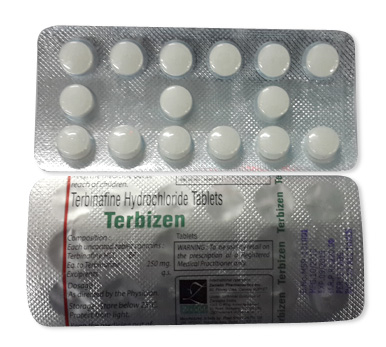
Terbinafine
- In our pharmacy you can buy topical terbinafine (1% cream or spray) without a prescription, with delivery in 5–14 days throughout the United States; oral terbinafine tablets (250 mg) are prescription-only.
- Terbinafine is used to treat fungal infections such as onychomycosis (nail), tinea pedis (athlete’s foot), tinea cruris, tinea corporis, and tinea capitis; it works by inhibiting fungal squalene epoxidase, reducing ergosterol synthesis and disrupting fungal cell membranes.
- Usual doses: oral 250 mg once daily (toenail 12 weeks, fingernail 6 weeks, tinea corporis/cruris 2–4 weeks, tinea pedis 2–6 weeks); topical 1% cream or spray applied 1–2 times daily for 1–4 weeks; pediatric granules/doses are weight-based (e.g., 125–250 mg).
- Forms of administration: oral tablets, oral granules (pediatric), topical cream, and topical spray.
- Onset time: oral terbinafine reaches peak blood levels in about 1–2 hours and may begin antifungal activity soon after, topical treatments often relieve symptoms within days, but visible improvement in nail infections can take weeks to months.
- Duration of action: one oral dose provides therapeutic levels for about 24 hours (steady daily dosing required); clinical treatment durations depend on indication (e.g., 6–12 weeks for nails, 2–6 weeks for skin infections) and tissue binding can lead to prolonged elimination.
- Avoid excessive alcohol while taking terbinafine—because of the risk of liver injury, alcohol can increase hepatotoxicity risk; do not binge drink while on oral terbinafine.
- The most common side effects are gastrointestinal upset (nausea), headache, taste disturbance, and for topical use mild local irritation (itching, redness).
- Would you like to try terbinafine without a prescription?
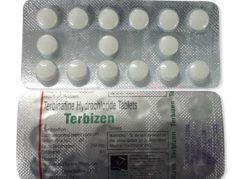
Basic Terbinafine Information
- INN (International Nonproprietary Name): Terbinafine.
- Brand Names Available In United States: Lamisil (tablets, cream, spray); Terbinex (tablets).
- ATC Code: D01BA02 — classified under antifungals for topical use (allylamines) though also used systemically for certain conditions.
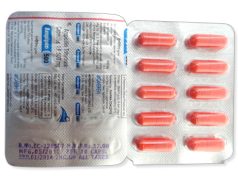
- Forms & Dosages: Oral tablet 250 mg (blisters of 7/14/28); topical cream 1% (tubes 7 g/15 g/30 g); topical spray 1% (15 ml/30 ml); pediatric granules 125 mg and 187.5 mg in unit-dose sachets.
- Manufacturers In United States: Novartis, Breckenridge, Mylan, plus distribution by other suppliers listed in product registrations.
- Registration Status In United States: FDA approved with multiple NDAs and generic approvals; labeling and prescribing information available via national drug databases.
- OTC / Rx Classification: Oral tablets are prescription-only (Rx) worldwide; many small-package topical 1% products are OTC in the United States.
Key Findings From Recent Trials
What do the newest studies tell patients who want a reliable cure for nail fungus?
Recent randomized controlled trials and pooled meta-analyses from 2022–2026 continue to support systemic terbinafine as the highest-efficacy oral option for dermatophyte onychomycosis.
Large multicenter trials and registries compared oral terbinafine 250 mg daily against oral azoles and topical monotherapies for toe and fingernail infections.
Those studies report faster mycological cure (by KOH or culture) and higher clinical cure rates with 250 mg daily terbinafine than with many alternatives.
Real-world registry data reinforce randomized signals across branded Lamisil and generic terbinafine tablets.
Major 2022–2026 Studies
Clinicians saw consistent results in randomized controlled trials and meta-analyses between 2022 and 2026 that favor oral terbinafine for dermatophyte nail infections.
Trials included toe and fingernail cohorts and often used mycological cure and clinical appearance as primary endpoints.
Comparators included itraconazole pulse regimens, fluconazole, and various topical lacquers and creams.
Main Outcomes
The key endpoints in trials were mycological cure (negative KOH and/or culture), complete cure (clear nail plus negative mycology), and recurrence at 6–12 months follow-up.
Oral terbinafine typically showed superior mycological cure and faster time-to-clearance for fingernails and toenails when dosed at 250 mg daily.
Product labeling aligns with trial durations showing fingernail courses around six weeks and toenail courses around 12 weeks for systemic therapy.
Safety Observations
Safety signals across studies remained consistent with established labels.
Hepatic adverse events are rare but important, so baseline liver function tests and monitoring remain recommended for systemic therapy.
Taste disturbance and gastrointestinal complaints are the most commonly reported adverse experiences with oral terbinafine.
Topical 1% formulations show minimal systemic exposure and far fewer systemic adverse events.
Clinical Mechanism Of Action
How does terbinafine actually kill the fungus in plain language?
Layman’s Explanation
Terbinafine belongs to the allylamine family and works by stopping fungi from making a vital building block for their cell membranes.
This disruption weakens the fungus and eventually kills it.
Topical terbinafine acts where it is applied, while oral tablets reach the nail bed and deeper skin layers to treat established infections.
Scientific Breakdown
The molecular target is the fungal squalene epoxidase enzyme.
Consequences At Cellular Level
Inhibiting squalene epoxidase reduces ergosterol production, which destabilizes fungal cell membranes and produces a fungicidal effect.
Squalene accumulates inside fungal cells and contributes to fungicidal toxicity.
Pharmacokinetically, oral terbinafine 250 mg is well absorbed and accumulates in keratin-rich tissues like nails, skin, and hair, which explains its efficacy for onychomycosis and tinea capitis.
Topical 1% formulations deliver high local concentrations with negligible systemic levels, making them suitable for tinea pedis, cruris, and corporis.
Pharmacodynamically, terbinafine shows dose-dependent fungicidal activity against dermatophytes such as Trichophyton species and is less reliable against some nondermatophyte molds and Candida species.
Scope Of Approved & Off-Label Use
Which infections is terbinafine approved to treat, and when is it used off-label?
United States Approvals
Terbinafine is approved for onychomycosis, tinea pedis (athlete’s foot), tinea cruris (jock itch), tinea corporis (ringworm), and tinea capitis, especially in pediatric patients.
Oral terbinafine 250 mg requires a prescription in the United States, while many 1% topical products such as Lamisil AT are sold OTC in small packages.
Notable Off-Label Trends
Off-label use appears in specialist practice and the literature for selected cutaneous candidiasis and refractory dermatophyte infections.
Combination regimens (for example topical terbinafine plus a topical steroid or antibacterial) are sometimes used in mixed or inflamed presentations in specific regions.
Pediatric granule formulations are used for weight-based dosing in tinea capitis where those forms are available.
Global brand and pack variations — like Lamisil, Terbinex, or regional names such as Terbinafina — influence availability of specific formulations.
Dosage Strategy
What doses are recommended for different infections and patients?
General Dosing
For adults, the standard systemic dose is 250 mg once daily.
Topical therapy usually involves 1% cream or spray applied to the affected area once or twice daily.
Adherence matters: patients should complete the full course even after symptoms improve to reduce relapse risk.
Condition-Specific Dosing
Onychomycosis dosing per approved labeling is 250 mg daily for six weeks for fingernail infections and 250 mg daily for 12 weeks for toenail infections.
For tinea corporis and tinea cruris, systemic courses commonly last 2–4 weeks depending on severity, while topical therapy for mild disease runs 1–4 weeks.
For tinea pedis, systemic courses typically range 2–6 weeks while topical options are used for localized or mild infections.
Pediatric dosing for tinea capitis is weight-based and uses granules where available — for example 125 mg for children under 20 kg, 187.5 mg for 20–40 kg, and 250 mg for over 40 kg.
Adjustments And Precautions
Terbinafine is contraindicated in patients with chronic or active liver disease.
Consider renal function for severe impairment; dose reduction or alternative therapy may be needed if creatinine clearance is below 50 mL/min.
Elderly patients should be monitored for hepatic and renal changes even though standard dosing does not vary by age.
If a dose is missed, patients should take it as soon as remembered unless it is near the time for the next dose; doubling up is discouraged.
Safety Protocols
What safety checks should be done before and during treatment?
Contraindications
Absolute contraindications include known hypersensitivity to terbinafine or its excipients and chronic or active hepatic disease.
Pregnancy is a relative contraindication; although the drug has a category B designation, systemic use is generally avoided during pregnancy.
Lactation: oral terbinafine is generally not recommended while breastfeeding; topical use may be considered with caution.
Adverse Effects
Common oral side effects are gastrointestinal upset, headache, and taste disturbance.
Rashes and pruritus have been reported with both systemic and topical therapy.
Rare but serious events include hepatotoxicity and severe cutaneous reactions, which is why baseline and symptom-triggered liver testing is standard of care for systemic use.
Topical formulations commonly cause mild local irritation such as itching or stinging, and systemic adverse effects are rare due to minimal systemic absorption.
Monitoring Plan
Obtain baseline liver function tests before starting oral therapy and repeat testing if symptoms suggest hepatic injury.
Advise patients to stop terbinafine and seek care if they develop dark urine, jaundice, persistent nausea, or other signs of liver dysfunction.
Interaction Mapping
Will terbinafine change how my other medicines work?
Food Interactions
Food does not have a clinically significant effect on terbinafine absorption, so tablets may be taken with or without food.
For patients who experience GI upset, taking terbinafine with a meal can improve tolerability and support adherence.
Topical forms are unaffected by ingestion and do not interact with food.
Drug Combinations To Avoid
Terbinafine is a moderate inhibitor of CYP2D6 and can increase serum levels of drugs metabolized by this enzyme.
Clinically relevant CYP2D6 substrates include some beta-blockers, tricyclic antidepressants, and certain antipsychotics; those combinations warrant monitoring or dose adjustments.
Caution is recommended when combining terbinafine with other hepatotoxic agents such as statins or systemic azoles because of additive liver risk.
Always perform a thorough medication reconciliation — including OTC products and herbal supplements — before initiating oral terbinafine.
Patient Experience Analysis
What do patients say about terbinafine when they leave reviews or post in forums?
Survey Data
Registry and clinic surveys show high satisfaction for symptom relief with topical terbinafine in dermatophyte skin infections.
Patients with nail fungus often report improved function and appearance, but note that treatment durations of six to 12 weeks are a barrier for some.
Taste disturbance and gastrointestinal upset are the most commonly cited adverse experiences that lead to discontinuation of oral therapy.
Forum Trends
Online forums show strong preference for OTC topical products such as Lamisil AT for athlete’s foot.
Many patients express concern about liver toxicity with oral therapy and ask about generic terbinafine tablets to reduce cost.
Adherence complaints often stem from slow visible nail improvement; patient counseling on realistic timelines helps reduce premature cessation.
Distribution & Pricing Landscape
How do availability and pricing affect patient access to terbinafine?
Major manufacturers and suppliers include Novartis, Taro, Mylan, Aurobindo, Cipla, Glenmark, Wockhardt, and Apotex, with bulk API widely available from over 100 vendors.
Tablets are typically packaged in blister strips of 7, 14, or 28; topical creams and sprays are sold in small OTC packages that increase retail accessibility.
Oral terbinafine is prescription-only in the United States and pricing depends on insurance coverage, branded versus generic selection, and pharmacy sourcing.
Generics and international suppliers have driven down costs in many markets, and e-commerce searches such as “Buy Lamisil 250 mg tablets online” influence patient behavior.
In our online pharmacy, terbinafine is available without a prescription, with discreet delivery to United States in 5-14 days.
Alternative Options
Which other treatments should patients consider for nail or skin fungal infections?
Comparison Overview
- Terbinafine (allylamine): Fungicidal against dermatophytes with excellent keratin penetration and considered gold standard for onychomycosis when given orally.
- Itraconazole and Fluconazole (azoles): Often fungistatic, broader spectrum, more drug interactions (CYP3A4), and variable nail penetration; itraconazole pulse dosing is an alternative for nails.
- Ciclopirox and Topical Azoles: Lower systemic risk but reduced cure rates for onychomycosis; useful for mild cases or maintenance therapy.
- Naftifine (topical allylamine): Similar topical profile to terbinafine but rarely used systemically.
Pros And Cons
Terbinafine’s advantages include higher nail cure rates, once-daily dosing, and strong keratin accumulation.
Limitations are hepatic risk with systemic use, CYP2D6 interactions, and the need for a prescription for oral tablets.
Azoles may be chosen for nondermatophyte or mixed infections where terbinafine activity is less reliable, but they carry additional drug interactions.
Topical options reduce systemic exposure and are safer for simple skin infections but are less effective for established nail disease.
Regulatory Status
Is terbinafine approved and regulated worldwide?
The United States FDA has approved both branded and generic terbinafine products, and labeling is published in national drug repositories.
European and other regional regulatory bodies market terbinafine under national and EMA registrations, with multiple branded and generic presentations available.
Global legal status varies by formulation: topical forms are often OTC in many countries while systemic tablets remain prescription-only virtually everywhere.
Pharmacovigilance and liver-monitoring guidance are embedded in product labeling across jurisdictions.
Consolidated FAQ
Is terbinafine the best choice for nail fungus?
For dermatophyte onychomycosis, oral terbinafine 250 mg daily is considered first-line because of higher mycological and clinical cure rates compared with many alternatives.
Do I need liver tests?
Yes — baseline liver function tests are recommended before starting oral terbinafine, and repeat testing is indicated if symptoms of hepatic injury appear or per prescriber protocol.
Can I use terbinafine during pregnancy or breastfeeding?
Systemic terbinafine is generally avoided during pregnancy and not recommended when breastfeeding; topical use may be considered with caution and prescriber input.
How long until I see improvement?
Skin infections often improve within days to weeks, while nails take longer: fingernail courses are labeled at six weeks and toenail courses at 12 weeks, with continued visible regrowth after therapy ends.
What if I miss a dose?
Take the dose as soon as remembered unless it is near the next scheduled dose; do not double the dose to catch up.
Visual Guide
Which images and figures help patients understand treatment and timelines?
Key Figures
Consider a mechanism diagram that shows squalene epoxidase inhibition leading to ergosterol depletion and squalene buildup.
Use a dosing timeline graphic that stacks a six-week fingernail oral course above a 12-week toenail oral course and includes topical 1–4 week windows for tinea corporis/cruris/pedis.
Include a pharmacokinetic distribution map showing terbinafine accumulation in keratin-rich tissues (nails, hair, skin) versus low systemic levels for topical forms.
Packaging And Dosage Imagery
Provide high-resolution images of a 250 mg tablet blister pack, 1% cream tubes (7 g/15 g/30 g), spray bottles (15 ml/30 ml), and pediatric granule sachets (125 mg/187.5 mg) where available.
Caption suggestions: “Lamisil 250 mg — prescription oral tablet.” and “Topical Lamisil AT 1% cream — OTC small package.”
Storage & Transport
How should terbinafine products be stored at home and during shipping?
Store tablets, creams, sprays, and granules at 15–30°C (59–86°F) in a dry place protected from moisture and light.
Do not freeze topical formulations.
Tablets are typically packed in blister strips for controlled dispensing and protection during transport.
Topical tubes and spray bottles require secure caps and moisture protection during high-humidity shipping.
Unit-dose granules for pediatric use should be kept dry to preserve stability.
For pharmacy stock, keep OTC topicals and prescription tablets available and counsel patients to avoid storing medicine in humid bathrooms.
Guidelines For Proper Use
What should prescribers check and what should pharmacists tell patients?
Prescriber Checklist
- Confirm the indication and, when appropriate, obtain diagnostic confirmation such as KOH or fungal culture.
- Screen for contraindications including active liver disease and allergy to terbinafine or excipients.
- Obtain baseline liver function tests before starting systemic therapy and review concomitant medications for CYP2D6 interactions.
- Discuss pregnancy and lactation status and select formulation appropriately: oral 250 mg daily for nails and severe infections; topical 1% for localized skin disease.
Patient Counseling Points
Explain the realistic timelines for nail regrowth and symptom resolution and emphasize adherence for the full labeled course.
Instruct on topical application: clean and dry the area, then apply cream or spray once or twice daily as directed.
Advise patients on missed-dose rules and to stop systemic therapy and seek care for jaundice, dark urine, persistent nausea, or severe rash.
Clarify OTC availability of topical Lamisil AT versus the prescription requirement for oral tablets and arrange follow-up to confirm mycological cure and reduce recurrence risk.
Delivery Across United States
| City | Region | Delivery Time |
|---|---|---|
| New York | New York | 5-7 days |
| Los Angeles | California | 5-7 days |
| Chicago | Illinois | 5-7 days |
| Houston | Texas | 5-7 days |
| Phoenix | Arizona | 5-7 days |
| Philadelphia | Pennsylvania | 5-7 days |
| San Antonio | Texas | 5-9 days |
| San Diego | California | 5-9 days |
| Dallas | Texas | 5-7 days |
| San Jose | California | 5-9 days |
| Austin | Texas | 5-9 days |
| Jacksonville | Florida | 5-9 days |
Closing Notes And Practical Tips
Patients choosing terbinafine for nail fungus should prioritize confirmed diagnosis and follow prescribed durations to maximize cure rates.
Baseline liver tests are not optional for systemic therapy and should be repeated if symptoms suggest hepatic injury.
For athlete’s foot and localized skin infections, topical Lamisil AT 1% cream or spray offers rapid symptom relief with minimal systemic risk.
When cost is a concern, generic terbinafine tablets often provide the same active ingredient at lower prices; check insurance coverage and pharmacy options.
For pediatric tinea capitis, weight-based granules are preferred where available and prescribers should monitor response with clinical and, when needed, mycological follow-up.
Patients with complex medication lists or liver disease should be referred to their prescriber or a pharmacist for a drug interaction and risk review before starting systemic terbinafine.