
Fluconazole
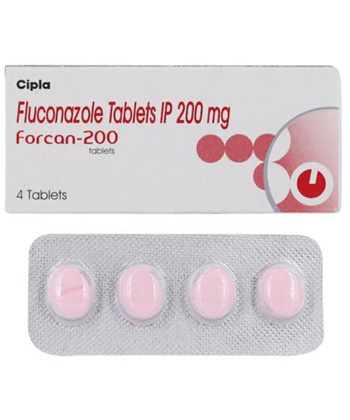
Fluconazole
- Fluconazole is available in many pharmacies and online marketplaces worldwide, and in some places it may be sold without a prescription; however, in most countries it is a prescription-only (Rx) medicine because it should be used under medical supervision.
- Fluconazole is used to treat and prevent fungal infections, especially Candida and Cryptococcus infections. It works by inhibiting fungal ergosterol synthesis through blocking the fungal enzyme lanosterol 14-alpha-demethylase, which weakens the fungal cell membrane and stops growth.
- The usual dose depends on the infection: for vaginal candidiasis, 150 mg as a single dose; for oropharyngeal candidiasis, 100 mg daily; for esophageal candidiasis, 200–400 mg daily; for cryptococcal meningitis, 400 mg on day 1 followed by 200–400 mg daily; and for severe systemic infections, 400–800 mg daily. Doses may be adjusted for children, the elderly, and people with kidney problems.
- Fluconazole is taken by mouth as capsules, tablets, or oral suspension, and it can also be given intravenously as an IV solution or infusion.
- Fluconazole usually starts working within a few hours after the first dose, but noticeable symptom improvement may take 1–3 days depending on the type and severity of the infection.
- The duration of action is about 24 hours, which is why it is commonly given once daily; treatment length ranges from a single dose to several weeks, depending on the infection.
- Alcohol is not strictly contraindicated, but it is best to avoid or limit alcohol because it can increase stomach irritation and may add stress to the liver, especially during longer treatment courses.
- The most common side effects are nausea, vomiting, abdominal pain, diarrhea, headache, rash, and elevated liver enzymes.
- Would you like to try fluconazole without a prescription?




Basic Fluconazole Information
- INN (International Nonproprietary Name): Fluconazole.
- Brand names available in United States: Diflucan.
- ATC Code: J02AC01.
- Forms & dosages: Capsule/Tablets 50 mg, 100 mg, 150 mg, 200 mg; Oral Suspension 10 mg/ml, 40 mg/ml; IV Solution 2 mg/mL, 200 mg/100 mL; Infusion Vial 200 mg, 400 mg.
- Manufacturers in United States: Pfizer, Teva, Baxter, Hospira, Aurobindo, Mylan, Sandoz, Hikma, Glenmark, Dr. Reddy’s, Claris Lifesciences, Gedeon Richter.
- Registration status in United States: Approved throughout the U.S. and other major markets; prescription product.
- OTC / Rx classification: Prescription only (Rx).
Key Findings From Recent Trials
Major 2022–2026 Studies
What have newer studies changed for fluconazole, and what has stayed the same?
The short answer is that oral azole therapy still has a strong place in Candida treatment, even as resistance trends continue to show up in selected settings.
Recent stewardship data and recurrent vulvovaginal candidiasis reports still support the practical value of Diflucan and generics, especially because fluconazole remains the same WHO INN product name across markets.
That makes it easy for clinicians and patients to recognize the yeast infection pill they are asking for, whether they need a short course or a longer suppressive plan.
The biggest pattern is sustained reliance on oral, once-daily therapy, because antifungal efficacy remains good for many mucocutaneous infections.
Main Outcomes
Short-course regimens remain effective for many superficial infections.
Longer or suppressive regimens are used when recurrence is frequent or relapse risk is high.
Safety Observations
Most studies still report GI upset and liver-enzyme elevation as the main monitoring issues.
QT risk and drug interactions remain the key avoidable harms, especially when patients are on other interacting medicines.
Clinical Mechanism Of Action
Layman’s Explanation
Ever wonder how one antifungal capsule can calm down a stubborn infection?
Fluconazole stops fungi from building the outer material they need to grow, so the infection weakens and clears over time.
It is a systemic triazole antifungal, classified as ATC J02AC01.
Scientific Breakdown
At the molecular level, fluconazole inhibits fungal lanosterol 14-alpha-demethylase, which disrupts ergosterol synthesis.
When ergosterol drops, fungal cell membrane integrity suffers, and replication becomes harder.
Why It Works Well Orally
High oral bioavailability supports capsule and tablet use at 50 mg, 100 mg, 150 mg, and 200 mg strengths.
It is also available as an oral suspension and IV solution for broader clinical use.
Scope Of Approved & Off-Label Use
United States Approvals
What kinds of fungal infections does fluconazole actually cover?
It is used for systemic and mucocutaneous fungal infections, especially those due to Candida and Cryptococcus species.
Common approved uses include vaginal candidiasis, oropharyngeal candidiasis, esophageal candidiasis, cryptococcal meningitis, and prophylaxis.
Notable Off-Label Trends
In day-to-day practice, recurrent vulvovaginal candidiasis suppression and selected dermatologic fungal regimens may extend beyond single-dose therapy when relapse risk is high.
That is one reason people often search for Diflucan 150 mg and fluconazole uses before speaking with a clinician.
In our online pharmacy, fluconazole is available without a prescription, with discreet delivery to United States in 5-14 days.
Product Formats In Use
Diflucan and generics are sold as capsules and tablets, oral suspension, IV solution, and infusion vial.
Those options matter when swallowing is difficult or when a hospital setting needs IV dosing.
Dosage Strategy
General Dosing
How much fluconazole is usually taken for a yeast infection?
A single 150 mg oral dose is the standard for vaginal candidiasis.
Oropharyngeal candidiasis often uses 100 mg per day for 7 to 14 days.
Condition-Specific Dosing
Esophageal candidiasis generally uses 200 to 400 mg per day.
Cryptococcal meningitis often starts with 400 mg on day 1, then continues at 200 to 400 mg per day.
Systemic candidiasis and prophylaxis may require 400 to 800 mg per day by oral or IV route.
Dose Adjustment Essentials
Children may need 6 to 12 mg/kg/day, depending on the indication.
Renal impairment requires adjustment after the initial dose, because reduced clearance can raise exposure.
Elderly patients are usually dosed like adults, but renal function should be checked closely.
Safety Protocols
Contraindications
Who should not take fluconazole without careful review?
Avoid it in people with known hypersensitivity to fluconazole or other azoles.
Do not combine it with severe QT-prolonging drugs such as cisapride or erythromycin.
High-dose or prolonged use is contraindicated in pregnancy.
Adverse Effects
The most common fluconazole side effects are nausea, vomiting, abdominal pain, diarrhea, rash, pruritus, and elevated transaminases.
Headache and dizziness can also happen, though they are less common.
Higher-Risk Patients
Patients with liver dysfunction, renal impairment, or arrhythmia risk need closer monitoring.
Hepatotoxicity is uncommon, but liver enzymes should still be watched when treatment lasts longer than a single dose.
Interaction Mapping
Food Interactions
Is food a big issue with fluconazole?
No major food restriction is highlighted in the data provided.
Oral dosing is generally practical because fluconazole has strong oral absorption.
Drug Combinations To Avoid
The most serious interaction concern is with cisapride and erythromycin because of QT prolongation.
Before prescribing, review all QT-prolonging drugs and the patient’s renal-hepatic burden.
Clinical Workflow
A safe medication review should include interacting antimicrobials, antiarrhythmics, and any other risk amplifiers.
That habit prevents the avoidable harms that most often turn a simple antifungal for thrush into a bigger problem.
Patient Experience Analysis
Survey Data
What do patients tend to like about fluconazole?
Many patients value the single-dose 150 mg option for vaginal candidiasis because it is simple and convenient.
Once-daily dosing also supports adherence for longer courses.
Forum Trends
Common themes include fast access to treatment, concern about side effects, and questions about recurrence.
People often describe relief in terms of symptom improvement rather than laboratory confirmation.
What Patients Report Most
Concerns center on liver warnings, pregnancy use, and drug interactions.
That is why a pharmacist counseling session can make a yeast infection pill feel much less intimidating.
Distribution & Pricing Landscape
Market Availability
Fluconazole is widely marketed globally under Diflucan, Fluconazole Teva, Fluconazole Zentiva, and other local brands.
It is available as capsules and tablets, oral suspension, IV solution, and infusion vial.
Pricing Drivers
What moves fluconazole price up or down?
Generic competition from Pfizer, Teva, Baxter, Hospira, Sandoz, Mylan, Aurobindo, and others influences pricing.
That is why fluconazole tablets price can vary widely between branded and generic options.
POS And SEO Terms
Search demand often centers on “buy Diflucan 150mg online” and “fluconazole tablets price.”
Shoppers also look for a 150 mg capsule when convenience matters most.
Alternative Options
Comparison Table
| Drug | Typical Role | Main Consideration |
|---|---|---|
| Fluconazole | Common oral azole for Candida and Cryptococcus | Simpler dosing and strong oral absorption |
| Itraconazole | Alternative systemic azole | May be used when broader coverage is needed |
| Voriconazole | Alternative for selected resistant or serious infections | More complexity and toxicity considerations |
| Posaconazole | Broader antifungal alternative | Often reserved for more complex cases |
| Ketoconazole | Older azole option | Less used because of hepatic toxicity |
| Amphotericin B | Severe infection option | Reserved for more serious disease |
Pros And Cons
Fluconazole wins on simplicity, broad use, and oral bioavailability.
Alternatives may offer broader coverage or stronger activity in resistant cases, but they often bring more complexity or toxicity.
When Alternatives Matter
Severe infection, resistance, or intolerance may justify switching.
That is where a clinician may compare itraconazole, voriconazole, posaconazole, ketoconazole, or amphotericin B before deciding.
Regulatory Status
Prescription Status
Fluconazole is prescription-only in nearly all markets, including the U.S.
It is not available OTC because of safety, interaction, and monitoring needs.
Global Approvals
Approved in the U.S., Canada, and EU markets, fluconazole is also widely registered through national agencies worldwide.
Reference Identifiers
The WHO-recognized INN is Fluconazole.
The ATC code is J02AC01.
Consolidated FAQ
Common Questions
What is fluconazole used for?
It treats and helps prevent fungal infections caused especially by Candida and Cryptococcus species.
How fast does it work?
Many people notice symptom improvement within a short time, but full response depends on the infection type and regimen.
Can it be taken during pregnancy?
High-dose and prolonged therapy are contraindicated in pregnancy.
What if a dose is missed?
Take it as soon as remembered unless the next dose is near, and do not double up.
Safety-Related Answers
Overdose may cause hallucinations, paranoia, and ECG abnormalities.
Supportive therapy is standard, and hemodialysis may be used when needed.
Practical Note
When symptoms persist, recur, or worsen, a clinician should reassess the diagnosis and treatment plan.
That is especially important if palpitations, severe rash, or jaundice appear.
Visual Guide
Decision Flow
A simple dosing ladder can help patients and staff decide whether single-dose, short-course, or longer-course therapy makes sense.
For vaginal infection, the path usually points to a single 150 mg dose.
For oral or esophageal infection, a short course is more typical.
For systemic disease, the road usually leads to a longer regimen and closer monitoring.
Form Selection Map
Capsules and tablets fit outpatient use.
Oral suspension helps when swallowing is difficult.
IV solution is the better match for hospital care or more serious disease.
Visual Elements To Include
A useful infographic would show a dosing ladder, a symptom timeline, and caution icons for renal, hepatic, and QT risk.
That kind of fluconazole chart makes the treatment pathway easier to follow at a glance.
Delivery Across United States
| City | Region | Delivery Time |
|---|---|---|
| New York | Northeast | 5-7 days |
| Los Angeles | West | 5-7 days |
| Chicago | Midwest | 5-7 days |
| Houston | South | 5-7 days |
| Phoenix | West | 5-7 days |
| Philadelphia | Northeast | 5-7 days |
| San Antonio | South | 5-7 days |
| San Diego | West | 5-7 days |
| Dallas | South | 5-7 days |
| San Jose | West | 5-7 days |
| Austin | South | 5-7 days |
| Jacksonville | South | 5-9 days |
| Columbus | Midwest | 5-9 days |
| Charlotte | South | 5-9 days |
Storage & Transport
Storage Basics
How should fluconazole be kept at home or in transit?
Tablets and capsules should be stored below 25°C and protected from moisture.
IV solutions should be checked for clarity and expiration before use, and they are typically stored between 2 and 30°C while avoiding freezing.
Reconstitution Rules
Oral suspension should be refrigerated after mixing if required and used within the specified period, often 14 days.
Keeping the package intact during transport helps protect product quality, especially with liquid forms.
Handling Reminders
Local labeling may vary, including forms such as Fluconazolum or Fluconazol, depending on the market.
That is normal and does not change the active ingredient.
Guidelines For Proper Use
Best-Use Principles
Fluconazole should be used only under medical supervision because it is an Rx-only drug.
Dose and duration should match the infection type, age, renal function, and liver status.
Monitoring Checklist
Watch for rash, GI symptoms, transaminase elevation, and interaction issues.
If symptoms persist, recur, or worsen, the treatment plan needs reassessment.
Patient Counseling Points
Do not double doses.
Report palpitations, severe rash, or jaundice promptly.
For many people, proper fluconazole counseling is what turns a confusing prescription into a safe, effective plan.