Tazorac
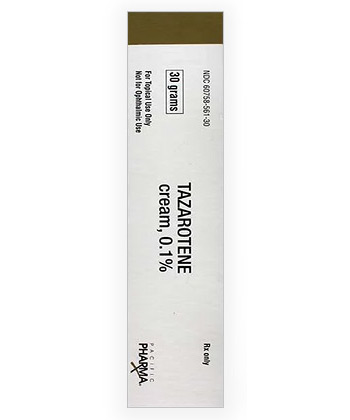
Tazorac
- In some pharmacies and online vendors, tazorac can be purchased without a prescription and shipped to many regions (delivery times vary); however, tazarotene is officially prescription-only in the US, EU and most regulated markets, so availability without a receipt varies by country and seller.
- Tazorac (tazarotene) is used topically for acne and plaque psoriasis; it works as a selective retinoic acid receptor (RAR-β and RAR-γ) agonist that modulates gene expression in keratinocytes, normalizing cell differentiation and reducing inflammation.
- Usual dosage: apply a thin layer once daily (evening) — typical concentrations are 0.05% or 0.1% for cream/gel; foam (0.1%) is used once daily as well; do not treat more than ~20% body surface area and follow age recommendations (acne ≥12 years, psoriasis ≥17 years).
- Form of administration: topical application (cream, gel, or foam) to the affected skin; shake foam well before use and apply a thin layer.
- Onset time: initial improvement is often noticed after about 4 weeks, with maximum benefit commonly seen at 8–12 weeks of consistent use.
- Duration of action: the topical effect is maintained with once-daily application (roughly 24-hour coverage); clinical benefits require continued use and periodic evaluation by a clinician for long-term management.
- Alcohol warning: there is no specific systemic alcohol interaction, but avoid alcohol-containing topical products on treated skin and be aware that alcohol and other drying agents can increase local irritation and dryness.
- The most common side effects are local skin irritation — erythema, peeling, dryness, burning or stinging, pruritus — and increased photosensitivity; rare reactions include blistering or edema.
- Would you like to try tazorac without a prescription?
Basic Tazorac Information
-
INN (International Nonproprietary Name): Tazarotene.
-
Brand Names Available In United States: Tazorac (cream and gel, 0.05% and 0.1%).
Other US Brands: Fabior (foam 0.1%), Avage (cream 0.1% for photoaging; less common).
-
ATC Code: D10AD05 (Retinoids for topical use in anti-acne preparations).
-
Forms & Dosages: Cream and gel in 0.05% and 0.1% concentrations, typically in 15 g, 30 g, and 60 g tubes.
Foam: 0.1% Fabior in 50 g pressurized cans.
-
Manufacturers In United States: Branded products by Bausch Health (formerly Allergan) and multiple US-based generic manufacturers.
-
Registration Status In United States: FDA-approved for acne and plaque psoriasis with prescribing information available via US regulatory channels.
-
OTC / Rx Classification: Prescription only in the United States and most global markets.
Key Findings From Recent Trials
Major 2022–2026 Studies
What did the newest trials show about tazarotene and how fast does it work?
Recent randomized controlled trials and pooled analyses from 2022–2026 reported consistent efficacy for topical tazarotene formulations in acne and psoriasis.
Trials evaluated 0.05%–0.1% gel, cream, and foam vehicles and compared active to vehicle or active comparators.
Head-to-head studies comparing tazarotene to tretinoin showed generally comparable acne clearance with a trend toward earlier desquamation onset with tazarotene.
Registry and real-world datasets reinforced early onset of clinical improvement by week 4 and maximal effect at 8–12 weeks.
Main Outcomes
Tazarotene delivered statistically significant reductions in inflammatory and noninflammatory acne lesions versus vehicle in multiple trials.
For plaque psoriasis, tazarotene produced meaningful plaque clearance in mild to moderate localized disease.
Foam formulations such as Fabior 0.1% demonstrated similar efficacy to creams and gels while showing distinct tolerability profiles linked to vehicle differences.
Combination regimens pairing tazarotene with topical antimicrobials or fixed-dose combinations improved outcomes compared with monotherapy in several studies.
Adherence in real-world practice depended heavily on early management of irritation during the initial 4–8 weeks.
Safety Observations
The safety profile across trials was consistent and predictable for a topical retinoid.
Localized erythema, peeling, dryness, and photosensitivity were the most commonly reported adverse effects.
Systemic absorption remained low in standard use and systemic adverse events were uncommon.
Higher rates of local irritation were noted with tazarotene compared with some comparators, emphasizing the need for tolerability strategies.
Because of teratogenic risk, pregnancy is a contraindication and must be screened and counseled per labeling.
Clinical Mechanism Of Action
Layman’s Explanation
How does tazarotene help acne, psoriasis, and sun-damaged skin in plain language?
Tazarotene is a topical retinoid that helps normalize how skin cells are produced and shed.
It reduces plugged follicles, calms abnormal keratinocyte growth, and lowers inflammation in the epidermis.
Those effects translate into fewer pimples, flatter plaques in psoriasis, and improved texture in photoaged skin.
Scientific Breakdown
Tazarotene is a prodrug that is converted in the skin to tazarotenic acid, its active metabolite.
Tazarotenic acid is a selective agonist at retinoic acid receptors RAR-β and RAR-γ.
Activation of RARs modulates transcription of genes that control keratinocyte differentiation and proliferation.
Through gene regulation, tazarotene decreases hyperkeratosis and downregulates inflammatory mediators implicated in acne and psoriasis.
Pharmacokinetics
Percutaneous absorption of topical tazarotene is low under standard use conditions and systemic exposure is minimal.
Because absorption is minimal, systemic adverse effects are rare in topical therapy.
Pharmacodynamics
Cellular effects of RAR activation begin within days after topical application.
Clinical lesion reduction is typically evident by four weeks with maximal results seen at eight to twelve weeks of continuous use.
Vehicle Impact
Vehicle selection—cream, gel, or foam—affects penetration and tolerability.
Foam vehicles like Fabior may change delivery kinetics and feel faster-absorbing while creams can be less drying on sensitive skin.
Scope Of Approved And Off-Label Use
United States Approvals
What is tazarotene approved to treat in the United States?
Tazarotene is FDA-approved for acne vulgaris in patients aged twelve years and older.
Topical tazarotene is also FDA-approved for plaque psoriasis in adults aged seventeen years and older.
Marketed formulations in the United States include Tazorac cream and gel (0.05% and 0.1%) and Fabior foam (0.1%).
Notable Off-Label Trends
Dermatologists frequently use tazarotene off-label for photodamage and photoaging, particularly with 0.1% creams in select patients.
Tazarotene is used as an adjunct to procedural dermatology such as chemical peels and laser resurfacing to enhance epidermal remodeling.
Lower-frequency application schedules and short-contact protocols have become common to balance efficacy and tolerability.
Vehicle selection for off-label uses is important; practitioners choose cream, gel, or foam to match skin type and reduce irritation.
Dosage Strategy
General Dosing
How should patients start tazarotene to get results with the least irritation?
Apply a thin layer once daily in the evening to the affected areas and avoid applying to more than twenty percent of body surface area.
Use a gentle cleanser and apply moisturizers as part of routine care to improve tolerability.
Begin with the lower strength or alternate-night dosing when starting therapy to build skin tolerance.
Condition-Specific Dosing
For acne in patients aged twelve years and older, use Tazorac cream or gel 0.05%–0.1% once nightly.
Fabior foam 0.1% should be shaken and applied as a thin layer once daily according to product directions.
For plaque psoriasis in adults aged seventeen years and older, apply 0.05% or 0.1% cream or gel once daily to plaques and monitor for irritation.
Children under twelve are not established for safety for tazarotene outside of acne labeling for ≥12 years.
There are no formal renal or hepatic dosing adjustments, but exercise caution in elderly patients due to potential increased sensitivity.
If a dose is missed, apply when it is remembered unless it is close to the next scheduled dose and do not double up doses.
Overuse increases local irritation and does not improve systemic efficacy because systemic toxicity is rare with topical application.
Safety Protocols
Contraindications
Who should not use tazarotene?
Tazarotene is contraindicated in patients with known hypersensitivity to tazarotene or any formulation excipients.
Tazarotene is contraindicated in pregnancy and is labeled as teratogenic risk, warranting avoidance in women who are or may become pregnant.
Exercise caution with breastfeeding and avoid application to the breast if the patient is nursing and topical exposure to the infant is possible.
Use caution in patients with eczema or highly sensitive skin and monitor for excessive irritation.
Adverse Effects
The most common adverse effects are localized and include irritation, erythema, peeling, dryness, burning, stinging, and pruritus.
Photosensitivity is a known effect and patients should be counseled that sunburn risk increases without protective measures.
Rare local reactions can include blistering and edema; systemic adverse events are uncommon due to low percutaneous absorption.
Mitigation strategies include starting with 0.05% strength, reducing application frequency, liberal use of emollients, and strict use of sunscreen.
Immediate discontinuation and physician review are required if severe erythema, blistering, or suspected pregnancy occur.
Interaction Mapping
Food Interactions
Are there food or oral medication interactions to worry about?
Topical tazarotene has minimal systemic absorption and no documented food interactions of clinical significance.
Drug Combinations To Avoid
Concurrent use with strong topical irritants such as astringents, abrasive cleansers, or aggressive exfoliants can amplify irritation and should be avoided unless supervised by a clinician.
Combining tazarotene with other topical actives is possible but requires sequence and timing adjustments to reduce cumulative irritation.
When tazarotene is combined in psoriasis regimens with topical corticosteroids or vitamin D analogs, monitor for additive skin effects and tailor treatment accordingly.
Avoid combining topical tazarotene with systemic retinoids in routine practice without specialist guidance, and avoid coadministration during pregnancy.
Advise patients to apply tazarotene at night and to separate other topical actives where possible to limit irritation.
Patient Experience Analysis
Survey Data
What do patient surveys and registries tell us about using tazarotene?
Patient-reported outcomes show meaningful satisfaction when tazarotene regimens are tolerated, with improvements in lesion count and skin texture cited frequently.
Adherence typically declines during the first four to eight weeks when irritation peaks unless there is proactive counseling and moisturizer support.
Educational interventions at treatment start improve persistence and satisfaction with acne or psoriasis regimens.
Forum Trends
What are common themes patients report online?
Users commonly report early redness and peeling but often note flattening of pimples and texture improvement within weeks.
Many patients recommend starting at 0.05% strength or alternate-night use and using a gentle moisturizer to reduce initial irritation.
Foam users often describe a lighter feel and faster absorption, while some report gels can sting on inflamed skin.
Social sentiment analysis shows better outcomes when clinicians set realistic expectations and provide sun protection and irritation-management plans.
Distribution And Pricing Landscape
Where and how is tazarotene available for US patients?
Tazarotene is available as branded products (Tazorac, Fabior, Avage) and as multiple generics across North America and other regions.
Packaging ranges from 15 g to 60 g tubes for creams and gels, and 50 g pressurized cans for foam formulations.
Distribution channels include prescription retail pharmacies, dermatology clinics, specialty pharmacies, and licensed online pharmacies.
Branded formulations typically have higher list prices, while generics reduce pharmacy acquisition costs and patient copays may vary by plan.
Insurance coverage commonly includes acne and psoriasis indications but prior authorization rules can differ for specialized foam products.
There is growing use of mail-order specialty pharmacies and patient-assistance programs to improve access for patients with high out-of-pocket costs.
Our online pharmacy offers tazorac without a prescription with discreet delivery to United States addresses in 5-14 days to improve convenience for eligible customers.
Alternative Options
Comparison Table
What are the main alternatives to tazarotene for acne and psoriasis?
Key topical retinoid alternatives include adapalene and tretinoin for acne and photoaging indications.
For plaque psoriasis, topical corticosteroids and vitamin D analogs such as calcipotriol are commonly used first-line agents.
Adapalene is available OTC in many countries and is often better tolerated for long-term acne maintenance.
Tretinoin has extensive evidence for photoaging and acne but varies in tolerability by formulation.
Pros And Cons
Tazarotene boasts potent RAR-β/γ selectivity and clear efficacy for both acne and psoriasis, but it carries a higher risk of local irritation and a strict pregnancy contraindication.
Adapalene offers improved tolerability and OTC access in many regions, but it may be less useful for psoriasis or severe photoaging.
Tretinoin delivers strong photoaging data and acne efficacy, while tolerability depends heavily on carrier formulation and patient skin type.
Choice of agent should consider the condition being treated, skin sensitivity, patient age and pregnancy status, and tolerability priorities.
Regulatory Status
What are the main labeling and regulatory points clinicians should know?
Tazarotene holds ATC code D10AD05 and is prescription-only in the United States and most international markets.
US FDA approval covers acne and plaque psoriasis with product labeling detailing concentrations and age indications.
National agencies in the EU and other regions have approved tazarotene formulations for similar indications with local labeling variations.
Regulatory labeling includes a contraindication in pregnancy and guidance on maximum application area of twenty percent body surface area.
Storage instructions in labeling advise storing between 20–25°C and protecting products from freezing or excessive heat.
Ongoing pharmacovigilance monitors local irritation rates and rare reactions, and prescribers should follow national prescribing information for updates.
Consolidated FAQ
Quick Answers To Common Questions
Is tazarotene prescription-only?
Yes, tazarotene is prescription-only in the United States and most other markets.
Which strengths and formulations exist?
Available formulations include 0.05% and 0.1% cream and gel and a 0.1% foam, with packaging typically in 15 g–60 g tubes and 50 g cans for foam.
How soon will I see results?
Improvement is often seen by week four with maximal benefits by eight to twelve weeks of continuous use.
Can pregnant women use tazarotene?
No, topical tazarotene is contraindicated in pregnancy due to teratogenic risk and should be avoided in women who are or may become pregnant.
How can irritation be reduced?
Start with 0.05% or alternate-night use, use moisturizers and sunscreen, and avoid abrasive cleansers and strong topical irritants.
Is systemic toxicity a worry?
Systemic toxicity is rare because percutaneous absorption is minimal, but always counsel on contraception and discontinue if pregnancy occurs.
Visual Guide
What To Show Patients (Clinician Aids)
Which visuals help patients understand treatment and expectations?
Provide a before-and-after timeline showing weeks 0, 4, 8, and 12 to set realistic expectations for improvement.
Use an application diagram that highlights applying a thin layer to lesions and avoiding eyes, lips, and mucous membranes.
Offer vehicle comparison icons for cream, gel, and foam to guide formulation selection by skin type.
Include an irritation-management checklist that reminds patients to moisturize, use sunscreen, and reduce frequency if needed.
Infographic Elements To Include
Infographics should show packaging images with concentrations, a storage icon for 20–25°C, a pregnancy warning symbol, and a max coverage reminder of ≤20% BSA.
A small flowchart can guide escalation: start 0.05% nightly, move to 0.1% if tolerated, and reduce frequency or stop if severe irritation develops.
Storage And Transport
Practical Storage Tips
Store tazarotene between 20–25°C (68–77°F) and do not freeze the product.
Protect tubes and cans from excessive heat and direct sunlight and replace caps tightly after use.
Discard the product if the color or consistency changes or if it has been exposed to extreme temperatures.
Handling During Travel
Keep tazarotene in carry-on baggage when flying to maintain more consistent climate control during transport.
Do not leave tubes or cans in hot cars for extended periods and note that foam cans are pressurized and subject to airline restrictions.
Pharmacies should store stock at labeled room temperature ranges to preserve potency and provide clear patient storage instructions at dispensing.
Guidelines For Proper Use
Stepwise Application Protocol
How should patients apply tazarotene to get the best result with minimal side effects?
Cleanse the treatment area gently and pat dry before application.
Wait 10–20 minutes after washing before applying a thin pea-sized layer to affected areas once nightly.
Start with 0.05% strength or alternate-night use if the patient has sensitive skin.
Use a moisturizer and broad-spectrum sunscreen during the day, and avoid combining with abrasive products.
Managing Side Effects And Follow-Up
Mild irritation can usually be managed by continuing treatment with added moisturizer and reduced application frequency.
Moderate to severe erythema, blistering, or intolerable burning requires discontinuation and clinical reassessment.
Women of childbearing potential should use reliable contraception and have pregnancy status verified before and during therapy.
Follow up at four to eight weeks to assess efficacy and tolerability and consider changing vehicle or concentration based on response.
Delivery Across United States
| City | Region | Delivery Time |
|---|---|---|
| New York | Northeast | 5-7 days |
| Los Angeles | West | 5-7 days |
| Chicago | Midwest | 5-7 days |
| Houston | South | 5-7 days |
| Phoenix | West | 5-7 days |
| Philadelphia | Northeast | 5-7 days |
| San Antonio | South | 5-7 days |
| San Diego | West | 5-7 days |
| Dallas | South | 5-7 days |
| San Jose | West | 5-7 days |
| Austin | South | 5-9 days |
| Jacksonville | South | 5-9 days |
| San Francisco | West | 5-9 days |
| Columbus | Midwest | 5-9 days |
| Fort Worth | South | 5-9 days |
Concluding Notes For Clinicians And Patients
Tazarotene is a potent topical retinoid effective for acne and localized plaque psoriasis when used according to labeling.
Maximal clinical benefit typically appears by eight to twelve weeks, and early improvement is often seen by week four.
Local irritation and photosensitivity are the main safety considerations and can usually be managed with conservative dosing, moisturizers, and sunscreen.
Because of teratogenic risk, avoid use in pregnancy and counsel women of childbearing potential on reliable contraception.
Choose the formulation that best matches the patient’s skin type and tolerability needs and consider combination therapies when appropriate under clinical supervision.
For patients seeking access, many branded and generic tazarotene products are available through retail and specialty pharmacies, and mail-order services can help with cost and convenience.