
Permethrin
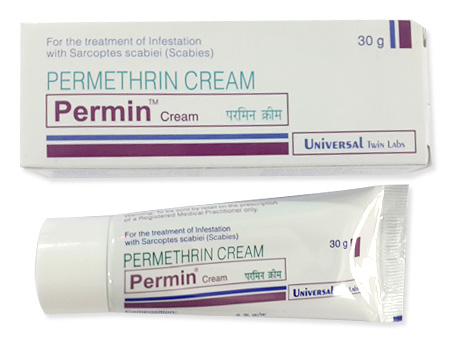
Permethrin
- Permethrin can be purchased in pharmacies and online in many countries; 1% lice formulations are commonly available over the counter (no prescription), while 5% cream for scabies often requires a prescription depending on local regulation — availability varies by country but many pharmacies sell 1% products without a receipt.
- Permethrin is used to treat scabies and head lice; it is a synthetic pyrethroid that disrupts parasite nerve cell sodium channels, causing paralysis and death of mites and lice.
- Usual dosages: for scabies in adults and children ≥12 years a full tube of 5% cream (commonly 30–60 g) applied head-to-toe; smaller proportionate amounts for younger children (½ tube for 6–12 yrs, ¼ tube for 1–5 yrs, etc.); for head lice use the labeled 1% lotion/cream rinse applied to washed hair, saturate, leave ~10 minutes, then rinse and repeat after 7 days if live lice persist.
- Administered topically as a cream, lotion, spray or lice-treatment kit applied to skin or hair; not for oral or ocular use.
- Onset: permethrin begins to kill lice and mites on contact (minutes to hours); symptom relief (itching, inflammation) may lag and often improves over days as skin recovers.
- Duration of action: a single scabies treatment is typically left on 8–14 hours with effects lasting several days and repeat treatment considered at 7 days if needed; lice treatments may require a repeat at day 7 to catch newly hatched nits.
- Alcohol warning: there is no known interaction between drinking alcohol and topical permethrin, but avoid applying alcohol-based products or flammable materials to skin immediately after treatment and do not ingest the product.
- The most common side effect is local skin irritation (burning, stinging, itching, redness); less commonly numbness, tingling, headache or dizziness may occur.
- Would you like to try permethrin without a prescription?
Basic Permethrin Information
- INN (International Nonproprietary Name): Permethrin
- Brand Names Available In United States: Nix (cream rinse 1% lice kit), Acticin (cream 5%), Elimite (cream 5%), Lice Bedding Spray (spray 0.25% and 0.5%)
- ATC Code: P03AC04 — Antiparasitic products, ectoparasiticides; pyrethrins and pyrethroids; permethrin
- Forms & Dosages: Cream 5%; Lotion 1%; Spray 0.25% and 0.5%; Combination lice kits (cream rinse 1%)
- Manufacturers In United States: Reckitt (Nix), Taro Pharmaceuticals (Acticin), GlaxoSmithKline (Lyclear available in other markets), plus regional suppliers and generics
- Registration Status In United States: FDA approved for topical treatment of scabies and lice
- OTC / Rx Classification: 1% formulations for lice are commonly OTC; 5% cream for scabies is prescription-only in many countries, including typical US practice
Major 2022–2026 Studies
Worried that permethrin no longer works like it used to?
Recent randomized trials and surveillance from 2022–2026 reaffirmed clinical effectiveness of topical permethrin for its approved uses.
Five-percent permethrin cream continues to be used as a first-line scabicide with high cure rates after a single 8–14 hour application in the majority of published trials.
One-percent permethrin formulations maintain utility for head lice when paired with mechanical nit removal and follow-up combing.
Surveillance studies during this time increasingly reported reduced pediculicide susceptibility in some regions, which has been linked to more frequent retreatment and switching to alternative agents in affected areas.
Main Outcomes
What did trials actually measure?
Primary endpoints across the studies were clinical cure of scabies, absence of live lice and nits after treatment, and patient-reported symptom relief.
Secondary outcomes commonly focused on safety signals and the need for repeat treatment at day 7 or later.
Safety Observations
Is topical permethrin safe in routine use?
Large cohort analyses showed mostly local adverse events such as burning, stinging, pruritus, and erythema.
Systemic effects were rare given minimal topical absorption reported in labels and trial data.
Pediatric subgroups in trials followed recommended age cutoffs, and neonatal safety remained not established in available datasets.
Layman’s Explanation
How does permethrin stop mites and lice?
Permethrin paralyzes and kills mites and lice on contact by disrupting their nervous system so they lose mobility and die within hours.
The effect is mostly local because only a tiny amount crosses the skin into the bloodstream after correct topical use.
Scientific Breakdown
What is happening at the molecular level?
Permethrin is a synthetic pyrethroid (ATC: P03AC04) that targets arthropod voltage-gated sodium channels, prolonging channel opening and producing repetitive nerve firing that leads to paralysis.
At higher concentrations it may also affect GABA-gated chloride channels in arthropods.
Selectivity for insects and mites over humans results from differences in those ion channels and from limited percutaneous uptake with standard topical formulations.
Pharmacokinetics (Concise)
What happens to permethrin after it is applied?
Topical 5% and 1% formulations show minimal systemic absorption under labeled use.
If absorbed, hepatic metabolism handles permethrin and labels do not require specific dose adjustments for renal or hepatic impairment for topical use.
United States Approvals
Can I buy permethrin products in the US?
Permethrin is FDA-approved in the United States for topical treatment of scabies and head lice.
Common US brands include Nix (1% cream rinse/kit), Acticin (5% cream), and Elimite (5% cream) as noted in product registries.
Notable Off-Label Trends
Are there ways people use permethrin that aren’t on the label?
Off-label trends include using low-concentration sprays (0.25–0.5%) for bedding and surfaces, and occasional compounding for pediatric weight-based tube fractions.
Veterinary formulations with higher concentrations are not interchangeable with human products and should never be applied to people.
Global practice varies: some countries allow 5% creams OTC while others restrict 5% to prescription-only use.
General Dosing
How should permethrin be applied in everyday situations?
Always follow product-specific directions printed on the label for dose and duration.
For scabies, use the 5% cream applied to the whole body and left on for 8–14 hours.
For head lice, use the 1% lotion or cream rinse on washed hair, saturate, leave approximately 10 minutes, then rinse and comb.
Surface sprays at 0.25–0.5% are used on bedding and furniture, not on skin.
Condition-Specific Dosing
What doses should different age groups use?
Scabies (Adults/12+): apply a full tube of 5% cream (commonly 30 g or 60 g) from head to toe and leave on 8–14 hours; repeat at 7 days if live mites persist.
Children: suggested tube fractions from product guidance include children 6–12 years up to half a tube, 1–5 years up to one-quarter tube, and infants 2 months–1 year up to one-eighth tube when indicated; do not use in neonates under 2 months.
Head Lice: apply 1% permethrin to saturated hair for about 10 minutes, rinse, and repeat after 7 days if live lice are seen.
Contraindications
Who should not use permethrin?
Absolute contraindications include known hypersensitivity to permethrin, synthetic pyrethroids, or any formulation excipient.
Neonates younger than 2 months are excluded because safety is not established.
Relative contraindications include severely inflamed or weeping skin and known ragweed allergy where cross-reactivity is a theoretical concern.
Adverse Effects
What side effects should patients expect and when to seek help?
Common local reactions are burning, stinging, pruritus, erythema, and edema at the application site.
Neurologic sensations such as numbness or tingling have been reported rarely, along with headache, dizziness, or occasional fever or rash.
Systemic toxicity after topical use is uncommon, but accidental ingestion requires emergency care and monitoring for nausea, vomiting, or CNS effects.
Advise patients to avoid ocular contact and to seek medical review for severe irritation, signs of skin infection, or treatment failure.
Food Interactions
Will diet affect permethrin treatment?
There are no clinically relevant food interactions documented for topical permethrin.
Minimal systemic absorption makes diet-based interactions improbable.
Drug Combinations To Avoid
Can other medicines interfere with topical permethrin?
Systemic drug interactions are rare with topical use.
Avoid combining permethrin with other topical pyrethroids or neurotoxic scabicides like lindane without clinical oversight because of potential additive local irritation or theoretical CNS risk.
Review concurrent topical products such as corticosteroids or antiseptics to prevent increased irritation or premature removal of the product by washing.
Survey Data
What do patients report after treatment?
Patient surveys and clinic reports show rapid symptom relief for scabies itch within days after application of 5% cream and high satisfaction overall.
For lice, satisfaction varies: initial kill rates with 1% permethrin are typically high but reinfestation and regional reduced susceptibility lower perceived effectiveness.
Forum Trends
What common concerns come up on patient forums?
Forums often report lingering itch after mites are killed (post-scabetic itch), the need for household laundering, and frustration removing nits.
Many users recommend mechanical combing alongside permethrin and report only mild local irritation as their main complaint.
Store-brand variability and reports of resistance appear in online discussions, reflecting product differences and regional susceptibility patterns.
Distribution & Pricing Landscape
Where can permethrin be bought and how much should it cost?
Permethrin is widely distributed in the United States as OTC for lice (1%) and by prescription for 5% scabies cream.
Major manufacturers and suppliers include Reckitt (Nix), Taro Pharmaceuticals (Acticin), and GlaxoSmithKline (Lyclear in some markets), with generics and regional suppliers available.
OTC 1% lice kits like Nix are broadly available at community pharmacies; 5% creams such as Elimite usually require a prescription, which affects point-of-care pricing and insurance coverage.
Generics and surface spray options add lower-cost choices and generics frequently reduce cost barriers.
Note that dermatologic demand spikes during outbreaks or school clusters can cause local short-term shortages.
In our online pharmacy, permethrin is available without a prescription, with discreet delivery to United States in 5-14 days.
Comparison Table (Descriptive)
What are common alternatives if permethrin is inappropriate or ineffective?
- Malathion (Topical): ovicidal activity and effective in some resistant lice infestations; often prescription-only and formulations may be flammable.
- Lindane: historically effective but has neurotoxicity concerns and is restricted or discouraged in many regions.
- Benzyl Benzoate: used for scabies in some countries but can be more irritating to skin.
- Crotamiton: scabicide option with lower efficacy in some trials; used where permethrin is unavailable.
- Ivermectin: oral or topical systemic option for crusted scabies or permethrin failure; oral ivermectin is used under clinical supervision.
Pros And Cons
How does permethrin compare to these alternatives?
Permethrin advantages include established efficacy, low systemic absorption, and broad availability for lice and scabies within approved strengths.
Disadvantages include emerging lice resistance in some regions, possible local irritation, and prescription requirement for 5% scabies cream in many areas.
Alternatives may offer better ovicidal action (malathion), but carry trade-offs such as higher toxicity (lindane), greater irritancy (benzyl benzoate), or access limitations (ivermectin).
Regulatory Status
Is permethrin approved worldwide?
Permethrin has a broad regulatory footprint: FDA approval in the United States for topical scabies and lice treatment, EMA approvals across EU/EEA states, and national listings such as ANMDMR in Romania.
Regulatory classification typically depends on strength: 1% lice formulations are commonly OTC while 5% scabies creams are prescription-only in many countries.
Human and veterinary uses are regulated separately, and animal formulations are not authorized for human application.
The ATC classification for permethrin is P03AC04.
Consolidated FAQ
What are the short answers patients ask most often?
Q: How long to leave permethrin on for scabies?
A: Five-percent cream should be left on for 8–14 hours with whole-body application and repeated at 7 days if live mites persist.
Q: Can I use permethrin on infants?
A: Avoid use in infants younger than 2 months; for infants 2 months–1 year suggested tube fraction guidance is up to one-eighth of a standard tube when treatment is indicated.
Q: Is permethrin safe in pregnancy or breastfeeding?
A: Topical permethrin has minimal systemic absorption and is generally used when benefits outweigh risks; consult the prescribing clinician for individual advice.
Q: What if itching persists after treatment?
A: Post-scabetic itch can continue despite eradication of mites; symptomatic measures and clinic follow-up are recommended if itching is severe or prolonged.
Q: How to prevent reinfestation?
A: Treat close contacts, launder bedding and clothing, use sprays for non-washable items, and incorporate mechanical nit removal and combing for lice management.
Visual Guide
Would an illustrated checklist help patients follow treatment steps?
Suggested assets to support adherence and SEO include an application diagram showing head-to-toe coverage for 5% scabies cream with a timed clock overlay (8–14 hours).
A lice workflow graphic should show prewash, application of 1% permethrin, a 10-minute hold, rinse, and a fine-toothed combing timeline with a day-7 repeat marker.
Include a pediatric dosage infographic showing tube fraction guidance by age (1/8, 1/4, 1/2 of a standard tube) and safety callouts such as “Do Not Use Under 2 Months.”
Provide a market map displaying brand logos like Nix, Elimite, and Lyclear with formulation strengths (1%, 5%, spray) for buying guides.
Storage & Transport
How should pharmacies and patients store permethrin?
Store permethrin at controlled room temperature, 20–25°C (68–77°F), and protect from light and moisture.
Do not freeze topical permethrin and keep it in the original packaging out of reach of children.
For distribution, avoid temperature extremes during shipping and follow standard pharmaceutical transport conditions.
Note that some spray formulations may have flammability warnings and should be shipped with caps secured.
Dispose of unused product in accordance with local pharmaceutical waste regulations and avoid pouring large quantities down drains.
Pharmacies should keep human and veterinary permethrin stock segregated to prevent dispensing errors due to higher veterinary concentrations.
Stepwise Scabies Protocol
What is a clear, step-by-step plan for scabies treatment?
- Confirm diagnosis clinically or with dermoscopy/microscopy when possible.
- Apply 5% cream to the entire body, including the neck and, in adults and older children, the scalp; leave on 8–14 hours, commonly overnight.
- Wash off after the recommended interval and treat household contacts at the same time to prevent reinfestation.
- Consider a repeat application at day 7 if live mites or new burrows are seen; follow up for persistent itching or signs of secondary infection.
Stepwise Lice Protocol
What is the practical routine for reducing lice and nits?
- Wash hair before treatment and towel-dry to remove excess water.
- Apply 1% permethrin to saturate hair and scalp, leave on for approximately 10 minutes, then rinse thoroughly.
- Use a fine-toothed comb to remove dead lice and nits, repeating combing at regular intervals.
- Repeat treatment on day 7 if live lice are detected; treat close contacts and launder bedding and clothing.
- Use 0.25–0.5% sprays on items that cannot be laundered, following product instructions for surfaces.
Patient Counseling Points
What should the pharmacist emphasize during counseling?
Explain that mechanical removal (combing), environmental measures (laundry and surface cleaning), and treating close contacts are as important as the medication itself.
Screen for allergies to pyrethroids or ragweed, describe common local irritation, and advise patients when to seek medical review for severe reactions or treatment failure.
Delivery Across United States
| City | Region | Delivery Time |
|---|---|---|
| New York City | Northeast | 5-7 days |
| Los Angeles | West | 5-7 days |
| Chicago | Midwest | 5-7 days |
| Houston | South | 5-7 days |
| Phoenix | West | 5-7 days |
| Philadelphia | Northeast | 5-7 days |
| San Antonio | South | 5-7 days |
| San Diego | West | 5-7 days |
| Dallas | South | 5-7 days |
| San Jose | West | 5-7 days |
| Austin | South | 5-7 days |
| Jacksonville | South | 5-7 days |
| Fort Worth | South | 5-7 days |
| Columbus | Midwest | 5-7 days |
| Charlotte | South | 5-7 days |
Practical Safety Reminders
What simple rules reduce risk and improve outcomes?
Do not apply permethrin to broken, severely inflamed, or weeping skin unless a clinician approves supervised use.
Avoid eye contact and keep children from handling tubes and sprays unattended.
Accidental ingestion necessitates emergency care; otherwise topical overdose usually results only in local irritation.
When To Switch Or Escalate Therapy
How do clinicians decide to use alternatives like ivermectin or malathion?
Consider switching when repeated treatments fail, when local surveillance shows reduced lice susceptibility, or for extensive crusted scabies where systemic therapy may be needed.
Clinical preference balances efficacy, toxicity profile, ease of use, and patient age or pregnancy status.
Real-World Patient Example
A parent calls on a Friday evening worried about lice found at school and asks what to buy.
Recommend a 1% permethrin lice kit like Nix for initial treatment, explain the 10-minute application and the importance of combing, and schedule a follow-up check on day 7 for a possible repeat application.
Simpler messages and a short visual checklist improve adherence and reduce anxiety.
Key Takeaways For Clinicians And Patients
What should be remembered about permethrin?
Permethrin remains a first-line topical scabicide and a widely used lice treatment with good efficacy when applied correctly.
Local irritation is the most common adverse effect, neonatal safety is not established, and resistance in lice has been reported in some regions.
Combining medication with mechanical nit removal and environmental cleaning gives the best chance of success.
Further Reading And Resources
For product-specific details consult the prescribing information on your brand of permethrin and regional formulary guidance.
When in doubt about severe infestations, pediatric dosing, or pregnancy use, seek clinician review before treating.