Oxybutynin
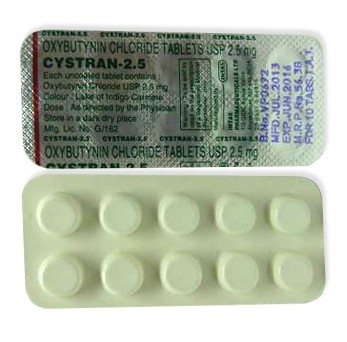
Oxybutynin
- In our pharmacy, you can buy oxybutynin without a prescription; some formulations (notably the Oxytrol transdermal patch for women in the US) are available OTC, while most oral and topical forms remain prescription-only in many countries.
- Oxybutynin is used to treat overactive bladder, urge incontinence and urinary frequency; it is an antimuscarinic (anticholinergic) that blocks muscarinic receptors in the bladder (reducing detrusor muscle spasms) and decreases involuntary bladder contractions.
- Usual adult doses: immediate‑release 5 mg orally 2–3 times daily (max ~20 mg/day); extended‑release 5–10 mg once daily (may titrate up to ~30 mg/day); transdermal patch delivering 3.9 mg/24 h applied twice weekly; topical gel 100 mg (10%) once daily.
- Forms of administration include oral tablets (immediate and extended release), oral syrup, transdermal patch, and topical gel.
- Onset: oral immediate‑release typically begins within 30–60 minutes; extended‑release often within 1–2 hours; transdermal and topical formulations may take one to several days to reach full effect.
- Duration of action: immediate‑release around 6–8 hours; extended‑release and topical gel generally provide effects for about 24 hours; each transdermal patch delivers medication continuously for ~3–4 days (patches are applied twice weekly).
- Avoid or limit alcohol while using oxybutynin, as alcohol can increase drowsiness, dizziness and other central nervous system or anticholinergic side effects.
- The most common side effect is dry mouth.
- Would you like to try oxybutynin without a prescription?
Basic Oxybutynin Information
- INN (International Nonproprietary Name): Oxybutynin.
- Brand Names Available In United States: Ditropan, Ditropan XL, Oxytrol, Gelnique, Urotrol.
- ATC Code: G04BD04.
- Forms & Dosages: Immediate-release tablets 2.5 mg and 5 mg; extended-release tablets 5 mg, 10 mg, 15 mg; syrup/oral solution 1 mg/mL and 5 mg/5 mL; transdermal patch delivering 3.9 mg/24h; topical gel 10% (100 mg/g).
- Manufacturers In United States: Janssen/Alza and Alza are listed as US/Canada suppliers, and multiple generics are available through national suppliers.
- Registration Status In United States: Approved by the US Food and Drug Administration (FDA).
- OTC / Rx Classification: Prescription only in most jurisdictions, with transdermal Oxytrol available OTC for women in the United States.
Key Findings From Recent Trials
Patients often ask whether the patch or gel will control urgency as well as pills.
Recent randomized trials and pooled analyses from 2022–2024 show consistent clinical trends favoring non-oral delivery for tolerability without loss of efficacy.
Transdermal patches delivering 3.9 mg/24h and topical Gelnique 10% provide reductions in urgency and incontinence comparable to oral immediate and extended-release tablets according to multiple RCTs.
The main outcomes repeatedly report similar reductions in urgency episodes across formulations while recording fewer systemic anticholinergic side effects with patch and gel therapy.
Safety observations across studies emphasize the expected anticholinergic adverse effects, including dry mouth, blurred vision, and constipation with oral agents.
Patches and gels carry an additional safety note for skin irritation or rash at the application site in some patients.
Real-world registry data for neurogenic bladder, including spinal cord injury and multiple sclerosis populations, indicate durable symptom control when dosing is individualized and periodically reassessed.
Regulatory decisions, such as FDA and EMA approvals and the OTC status of Oxytrol for women in the United States, reflect the comparative tolerability evidence for transdermal oxybutynin.
Clinicians reading trial evidence should map outcomes to the product profile, remembering the ATC code G04BD04 and brand options like Oxytrol, Kentera, Ditropan, and Gelnique when advising patients.
Common search terms that patients use include oxybutynin efficacy and transdermal oxybutynin trials when researching formulation choices.
Clinical Mechanism Of Action
Layman’s Explanation
Is oxybutynin just a relaxant for the bladder?
Oxybutynin works by blocking the nerve signals that cause the bladder muscle to spasm, which reduces sudden urges, frequency, and episodes of urge incontinence.
When those detrusor contractions are reduced, patients typically notice fewer bathroom trips and less leakage.
Scientific Breakdown
Oxybutynin is an antimuscarinic agent that antagonizes muscarinic receptors M1 through M3.
The therapeutic effect is largely due to M3 receptor blockade on detrusor smooth muscle, which decreases involuntary bladder contractions.
Central antimuscarinic activity contributes to cognitive and sedative side effects, an important consideration in older adults with high anticholinergic burden.
Pharmacokinetics differ by formulation; oral immediate-release tablets (2.5–5 mg) undergo first-pass metabolism producing the active metabolite N-desethyloxybutynin, which is implicated in systemic side effects.
Extended-release tablets (5–15 mg XL) smooth plasma peaks and may reduce peak-related adverse effects compared with IR dosing.
Transdermal patches delivering 3.9 mg/24h and topical Gelnique (10% / 100 mg) bypass first-pass metabolism and lower systemic exposure to the metabolite, which explains reduced dry mouth frequency.
Onset and titration: oral IR works within hours, XL provides once-daily steady state, transdermal patches are applied twice weekly, and Gelnique is applied once daily.
The ATC classification is G04BD04, placing oxybutynin among drugs for urinary frequency and incontinence.
Scope Of Approved & Off-Label Use
United States Approvals
Patients often ask which symptoms oxybutynin treats legally in the United States.
Oxybutynin is approved for overactive bladder, urge incontinence, and urinary frequency across multiple formulations.
Immediate-release tablets, extended-release (XL) tablets, the transdermal patch delivering 3.9 mg/24h, and Gelnique topical gel 10% are all part of the approved therapeutic armamentarium.
Oxytrol transdermal patch has an OTC designation for women in the United States while remaining prescription-only in most other countries.
Notable Off-Label Trends
Clinicians commonly use oxybutynin off-label for neurogenic bladder in spinal cord injury and multiple sclerosis patients.
Pediatric use from age five is supported with careful dosing, typically starting with 5 mg twice daily for IR and 5 mg once daily for XL under physician guidance.
Gelnique is sometimes used off-label for focal hyperhidrosis because topical anticholinergic effects reduce sweating in treated areas.
Transdermal and gel formulations are increasingly preferred for patients troubled by dry mouth or GI intolerance from oral tablets.
Contraindications such as narrow-angle glaucoma, urinary retention, and paralytic ileus apply equally to labeled and off-label uses and must be reviewed before prescribing.
Dosage Strategy
General Dosing
Which dose should a newly diagnosed adult expect to start with?
Immediate-release tablets are generally dosed at 5 mg two to three times daily with a maximum of 20 mg per day.
Extended-release Ditropan XL or Lyrinel XL typically start at 5–10 mg once daily and can be titrated up to 30 mg per day when clinically indicated.
The transdermal patch (Oxytrol/Kentera) delivers 3.9 mg/24h and is applied twice weekly.
Gelnique topical gel is administered as one 100 mg sachet or equivalent pump dose once daily.
Condition-Specific Dosing
Neurogenic bladder dosing is individualized and often favors extended-release or transdermal forms to limit systemic side effects.
Pediatric dosing for ages five and older commonly uses immediate-release oxybutynin 5 mg twice daily, increasing to three times daily if needed, while XL formulations start at 5 mg once daily with specialist oversight.
For elderly patients and those with hepatic or renal impairment, begin at the lowest effective dose and titrate slowly while monitoring for CNS anticholinergic effects.
Missed-dose instructions are to take the dose as soon as remembered unless near the next dose, and not to double doses.
Overdose can present with severe anticholinergic toxicity including tachycardia, hallucinations, respiratory compromise, and requires urgent medical attention.
Safety Protocols
Contraindications
Most people want to know who should never take oxybutynin.
Absolute contraindications include untreated narrow-angle glaucoma, urinary retention, paralytic ileus or gastric retention, and known hypersensitivity to oxybutynin or excipients.
Relative contraindications requiring monitoring include advanced age due to dementia risk, hepatic or renal impairment, myasthenia gravis, severe ulcerative colitis, and obstructive uropathy.
Adverse Effects
Dry mouth is the most frequently reported side effect, particularly with oral immediate-release and extended-release tablets.
Other common adverse events include constipation, blurred vision, drowsiness, dizziness, headache, urinary retention, and tachycardia.
Patches and gels can cause local skin irritation or rash, which may necessitate switching sites or discontinuation.
To limit systemic anticholinergic exposure, prefer transdermal or topical formulations when dry mouth or GI intolerance is problematic.
Reassess therapy every 3–6 months and implement fall-risk and cognitive monitoring in older adults taking oxybutynin chronically.
A documented medication allergy or contraindication should be recorded in the electronic health record before dispensing.
Interaction Mapping
Food Interactions
Patients often ask whether they must take oxybutynin with food.
No major food restrictions are listed in product information, but high-fat meals may alter absorption of oral formulations.
Extended-release tablets help minimize peak variability related to food.
Drug Combinations To Avoid
Concomitant strong CYP3A4 inhibitors or inducers can modify oxybutynin plasma levels and should be used cautiously.
Clinically important pharmacodynamic interactions include additive anticholinergic effects with other antimuscarinics, some antipsychotics, tricyclic antidepressants, and certain antiemetics.
Concurrent use of medications that impair bladder emptying or increase intraocular pressure should be avoided because of the risk for urinary retention and angle-closure glaucoma.
For elderly patients on multiple drugs, perform an anticholinergic burden assessment and consider alternatives such as mirabegron when cumulative risk is high.
Although oxybutynin has a low direct QT risk, monitor when combining with known QT-prolonging agents as a precaution.
Patient Experience Analysis
Survey Data
Which formulation do patients prefer in real life?
Patient-reported outcome data show high satisfaction with oxybutynin efficacy across formulations but lower tolerability scores for oral tablets due to dry mouth and constipation.
Switching from oral IR/XL to transdermal patches or Gelnique topical gel often improves quality-of-life scores primarily by reducing systemic adverse effects.
Forum Trends
Online forums and social media show common themes: initial symptom relief followed by discontinuation because of anticholinergic side effects.
Patients report practical issues such as patch adhesion problems and skin irritation, and many seek generic options like Ditropan for cost savings.
Women frequently try Oxytrol OTC in the United States before consulting clinicians, and caregivers of pediatric patients report watching closely for behavioral changes.
Overall, individualized formulation selection that balances efficacy, side effects, convenience, and cost yields the best adherence in real-world settings.
Distribution & Pricing Landscape
Access and cost are important when choosing between patch, gel, and oral forms.
Branded products include Ditropan, Ditropan XL, Oxytrol, Gelnique, Kentera, and Lyrinel XL, while generics for immediate-release and extended-release tablets are widely available.
Transdermal patches and topical gel typically carry higher prices and may require prior authorization under some payer formularies.
Generic IR and XL tablets are common lower-cost options stocked in retail and online pharmacies.
Hospital and specialty formularies managing neurogenic bladder often keep multiple forms to allow individualized therapy despite the budget impact of patches and gel.
Supply chains include multiple manufacturers (Janssen/Alza, Sanofi, Phoenix, Recipharm), which reduces single-source risk but local packaging and registration codes affect reimbursement and entry.
In our online pharmacy, oxybutynin is available without a prescription, with discreet delivery to United States in 5-14 days.
Alternative Options
Comparison Table
Patients who cannot tolerate oxybutynin have several alternatives.
Antimuscarinics like tolterodine, darifenacin, solifenacin, trospium, and fesoterodine offer different receptor selectivity and side-effect profiles.
Mirabegron, a beta-3 agonist, avoids anticholinergic activity and is a good choice for patients at risk of cognitive decline or with high anticholinergic burden.
Pros And Cons
Oxybutynin’s strengths include a broad portfolio of formulations—IR, XL, transdermal, and topical—allowing tailored therapy for adherence and tolerability.
Its main disadvantage is the well-established anticholinergic side-effect profile and associations with cognitive risk during chronic use in elderly patients.
Darifenacin and solifenacin target M3 more selectively and may reduce central anticholinergic effects compared with oxybutynin.
Trospium is a quaternary ammonium compound with lower CNS penetration, which can be advantageous for older adults.
Mirabegron carries cardiovascular considerations such as blood pressure increases and may be more costly than antimuscarinics.
When switching therapies, allow appropriate washout periods and monitor for both efficacy and adverse effects.
Regulatory Status
Regulatory status informs practical prescribing and patient counseling.
Oxybutynin is approved by the FDA in the United States and by EMA member agencies, MHRA in the UK, Health Canada, and the TGA in Australia.
Product labeling emphasizes contraindications including narrow-angle glaucoma and urinary or gastric retention.
Post-marketing surveillance highlights skin irritation for patches and cognitive risk signals in elderly patients with chronic anticholinergic exposure.
Transdermal Oxytrol is an important regional exception as an OTC option for women in the United States while being prescription-only in most other countries.
The ATC classification remains G04BD04, and brand registrations such as Ditropan and Gelnique are reflected in national registries including regional databases like ANMDMR in Romania.
Consolidated FAQ
Which oxybutynin formulation Is best for me?
Choose based on tolerability and adherence; transdermal patch and Gelnique gel tend to lower systemic anticholinergic side effects, XL supports once-daily dosing, and IR allows flexible titration.
Is oxybutynin safe for older adults?
Use caution due to anticholinergic burden linked to cognitive risks; start low, monitor cognition, and consider mirabegron if concerns exist.
Can children use oxybutynin?
Yes, children ages five and older can use oxybutynin with IR dosing of 5 mg twice daily and XL formulations starting at 5 mg once daily under physician guidance.
What are absolute contraindications?
Narrow-angle glaucoma, urinary retention, paralytic ileus, and allergy to oxybutynin or excipients are absolute contraindications.
How should missed doses and overdose be managed?
Take a missed dose when remembered unless it is near the next dose; do not double doses. Overdose requires immediate medical care for anticholinergic toxicity.
Is Oxytrol available OTC?
In the United States, Oxytrol is available OTC for women; in most other countries it remains prescription-only.
Visual Guide
Clinicians and patients benefit from a simple roadmap when choosing a formulation.
Formulation icons map to dosing schedules: IR tablet 2.5–5 mg multiple times daily, XL tablet 5–15 mg once daily, transdermal patch 3.9 mg/24h twice weekly, Gelnique 100 mg once daily.
An efficacy versus tolerability axis shows oral IR/XL offering high efficacy with higher systemic anticholinergic side effects, and patch/gel offering similar efficacy with lower systemic effects but risk of skin irritation.
Indication bubbles list OAB, urge incontinence, urinary frequency, neurogenic bladder, and Gelnique’s occasional use for hyperhidrosis.
Contraindication markers should highlight glaucoma, urinary/gastric retention, and allergy before initiating therapy.
Monitoring checkpoints include cognitive screening for elderly patients, rotation and inspection of skin sites for patches, bowel function checks, and urinary retention surveillance.
A quick dosing cheat sheet presents IR 5 mg 2–3×/day, XL 5–10 mg once daily, patch 3.9 mg/24h twice weekly, and gel 100 mg daily with brand mapping to Ditropan, Ditropan XL, Oxytrol, Gelnique, Kentera, and Lyrinel XL.
Storage & Transport
Proper storage preserves effectiveness and safety.
Tablets and syrups should be stored below 25°C (77°F) and protected from moisture, heat, and light.
Patches and gels must remain sealed until use and be kept away from excessive heat and direct sunlight to preserve adhesives and dose integrity.
During transport, avoid prolonged exposure to high temperatures that can degrade adhesives and gel stability.
Pharmacies should stock patches separately from topical gel to prevent cross-contamination and ensure correct patient counseling on application and adhesion.
Used patches should be folded adhesive-to-adhesive and disposed of safely to prevent accidental exposure to children and pets.
Record lot numbers and packaging identifiers for recalls or traceability using manufacturer records.
Guidelines For Proper Use
Start with a prescribing checklist before writing the Rx or recommending a product.
Confirm the indication such as OAB, urge incontinence, urinary frequency, or neurogenic bladder and screen for absolute contraindications.
Select formulation based on tolerability and adherence needs, prioritizing transdermal or gel when systemic anticholinergic effects are limiting.
Counsel patients to apply patches to dry, intact skin and to rotate sites to minimize irritation, and instruct Gelnique users on proper pump or sachet use for the daily 100 mg dose.
Advise patients on expected timelines and monitoring: reassess efficacy and tolerability at 4–12 weeks and then every 3–6 months, with cognitive screening in elderly patients.
Document brand, formulation, dose, and lot number in the medical record along with patient education provided.
When switching among antimuscarinics or to mirabegron, provide washout guidance and set expectations for when symptom improvement may occur.
Delivery Across United States
| City | Region | Delivery Time |
|---|---|---|
| New York | Northeast | 5-7 days |
| Los Angeles | West | 5-7 days |
| Chicago | Midwest | 5-7 days |
| Houston | South | 5-7 days |
| Phoenix | West | 5-7 days |
| Philadelphia | Northeast | 5-7 days |
| San Antonio | South | 5-7 days |
| San Diego | West | 5-9 days |
| Dallas | South | 5-9 days |
| San Jose | West | 5-9 days |
| Austin | South | 5-9 days |
| Jacksonville | Southeast | 5-9 days |
| Fort Worth | South | 5-9 days |
| Columbus | Midwest | 5-9 days |
| Charlotte | Southeast | 5-9 days |