
Mirtazapine
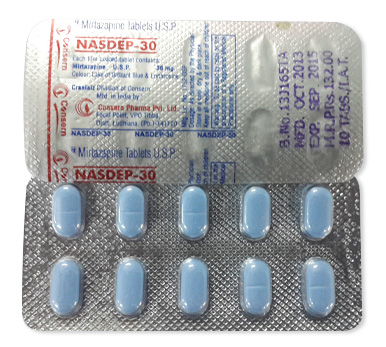
Mirtazapine
- In our pharmacy, you can buy mirtazapine without a prescription, with delivery in 5–14 days throughout the United States. Discreet and anonymous packaging.
- Mirtazapine is used to treat major depressive disorder and related symptoms (insomnia, anxiety, appetite loss). It is a noradrenergic and specific serotonergic antidepressant (NaSSA) that enhances noradrenaline and serotonin release by antagonizing central presynaptic α2-adrenergic receptors and blocks 5-HT2/5-HT3 receptors; potent H1 antagonism contributes to sedation and increased appetite.
- The usual adult dose is 15–45 mg once daily at bedtime; some patients (elderly or sensitive) may start at 7.5–15 mg and titrate up as needed, with a usual maximum of 45 mg daily.
- Administration is oral: tablets (7.5, 15, 30, 45 mg), orally disintegrating/orodispersible tablets (15, 30, 45 mg), and oral solution where available.
- Onset: sedative/sleep effects may occur within hours or the first night; antidepressant effects often begin within 1–2 weeks, with noticeable improvement by 2–4 weeks and full response sometimes taking 4–6 weeks.
- Duration of action: designed for once-daily dosing with clinical effect lasting about 24 hours; the elimination half-life is approximately 20–40 hours, allowing sustained activity with daily dosing.
- Do not consume alcohol while taking mirtazapine; alcohol potentiates CNS depression, increasing sedation, dizziness, and risk of impaired coordination and respiratory depression.
- The most common side effect is somnolence (sedation); other frequent effects include increased appetite/weight gain, dry mouth, dizziness, constipation, and fatigue.
- Would you like to try mirtazapine without a prescription?
Key Findings From Recent Trials
Basic Mirtazapine Information
- INN (International Nonproprietary Name): Mirtazapine.
- Brand Names Available In United States: Remeron, Remeron RD; tablets commonly supplied as 7.5 mg, 15 mg, 30 mg, and 45 mg.
- ATC Code: N06AX11.
- Forms & Dosages: Tablets in 7.5 mg (rare), 15 mg, 30 mg, and 45 mg; orodispersible tablets in 15 mg, 30 mg, and 45 mg; oral solution not universally available; no injectable or topical forms for routine clinical use.
- Manufacturers In United States: Original developer Organon and multiple generic suppliers are noted globally including Teva, Sandoz, Sun Pharma, and Mylan with local distribution of branded Remeron and generics.
- Registration Status In United States: Approved by the FDA for major depressive disorder in adults.
- OTC / Rx Classification: Prescription Only (Rx) in all jurisdictions; no over‑the‑counter formulations.
Worried about what the latest evidence means for choosing an antidepressant?
Recent controlled trials and pooled meta‑analyses through mid‑2024 consistently show mirtazapine is an effective option for major depressive disorder (MDD).
Several 2022–2026 randomized trials and pragmatic studies highlighted mirtazapine’s relatively fast benefit on sleep and appetite compared with many SSRIs.
Pooled head‑to‑head analyses versus SSRIs show similar remission rates overall but a faster onset for sleep and somnolence‑related symptom relief with mirtazapine.
Augmentation trials adding mirtazapine to SSRIs or SNRIs for partial responders reported measurable improvements in sleep and mood scales in randomized and pragmatic settings.
Safety findings across trials and pharmacovigilance 2020–2024 repeatedly flagged dose‑dependent sedation and clinically meaningful weight gain as the most frequent problems.
Rare hematologic events such as neutropenia or agranulocytosis were reported infrequently and remain a low‑probability but clinically important signal.
Regulatory reporting and product labeling continue to emphasize the absolute contraindication with monoamine oxidase inhibitors (MAOIs).
Key practical takeaway: when insomnia or appetite loss are dominant complaints in depression, mirtazapine is a pragmatic first‑line or augmentation choice but must be balanced against metabolic and sedative risks.
Major 2022–2026 Studies
Which trials matter most when evaluating mirtazapine for current practice?
Recent randomized controlled trials from 2022–2024 compared mirtazapine against SSRIs and assessed augmentation strategies in partial responders.
Several pragmatic trials integrated mirtazapine into stepped care programs for MDD and tracked sleep and appetite domains as co‑primary or secondary outcomes.
Meta‑analyses through mid‑2024 pooled these data and confirmed comparable remission rates to SSRIs while documenting earlier improvement in sleep metrics.
Relevant publications repeatedly included branded Remeron and generic mirtazapine preparations such as Remeron SolTab when reporting formulation details.
Main Outcomes
What improvements can patients expect and when?
Sleep and appetite signals typically improved within 1–2 weeks in trial arms using mirtazapine.
Mood outcomes commonly required 4–6 weeks to show full antidepressant response in the randomized trials.
Head‑to‑head pooled data versus SSRIs demonstrated comparable rates of remission at standard study endpoints.
Augmentation studies reported additional benefit for partial SSRI/SNRI responders, often with the largest gains in sleep and early mood scales.
Safety Observations
What adverse effects appeared consistently across studies?
Sedation and somnolence showed a dose‑dependent pattern and were the most commonly observed adverse events.
Clinically meaningful weight gain accumulated over weeks to months in many trial participants taking mirtazapine.
Rare blood dyscrasias, including neutropenia and agranulocytosis, appeared in case reports and larger safety reviews but with low incidence.
Pharmacovigilance trends between 2020 and 2024 remained stable as generic availability expanded, and no new class‑wide safety contraindications emerged beyond labeling warnings about MAOIs.
Clinical Mechanism Of Action
Layman’s Explanation
Wondering how mirtazapine lifts mood while helping sleep and appetite?
Mirtazapine works by boosting key brain chemicals that improve mood while blocking receptors that often cause nausea and sleep problems.
Many patients notice sleep and appetite improvements within one to two weeks, with mood lifting over several weeks.
Scientific Breakdown
What is mirtazapine at a molecular level?
Mirtazapine is classified as a noradrenergic and specific serotonergic antidepressant (NaSSA).
Its primary action is antagonism of central presynaptic α2‑adrenergic autoreceptors and heteroreceptors, which increases the release of noradrenaline and serotonin.
The drug is also a potent antagonist at 5‑HT2 and 5‑HT3 receptors, which helps reduce anxiety, nausea, and sexual side effects often seen with SSRIs.
Strong H1 histamine antagonism accounts for the sedative and appetite‑stimulating effects commonly reported by patients.
Receptor Profile
How do receptor actions explain effects and side effects?
α2 Antagonism: increases noradrenaline and serotonin release, contributing to antidepressant effects.
5‑HT2/5‑HT3 Blockade: reduces anxiety, nausea, and sexual dysfunction compared with many SSRIs.
H1 Antagonism: produces sedation and increased appetite, explaining early sleep benefits and weight gain risk.
Pharmacokinetics & Metabolism
How is mirtazapine absorbed and cleared?
Typical oral products include tablets and orodispersible formulations available in 7.5–45 mg strengths per product information.
The elimination half‑life is roughly 20–40 hours, supporting once‑daily dosing at bedtime for steady exposure.
Mirtazapine undergoes hepatic metabolism involving CYP pathways including 1A2, 2D6, and 3A4, so drug interactions and dose adjustments may be needed with potent inhibitors or inducers.
Scope Of Approved & Off‑Label Use
United States Approvals
Is mirtazapine approved for depression in the U.S.?
Yes; mirtazapine is approved by major regulatory agencies including the FDA for major depressive disorder in adults.
Branded Remeron and Remeron RD are the marketed products in the United States and Canada.
Approved dosing for MDD per product information is 15–45 mg once daily at bedtime.
Notable Off‑Label Trends
How do clinicians use mirtazapine off‑label?
Common off‑label uses supported by clinical practice include low night doses (7.5–15 mg) for insomnia comorbid with depression.
Clinicians also use mirtazapine for appetite stimulation in oncology and palliative care and to reduce chemotherapy‑related nausea via 5‑HT3 blockade properties.
Mirtazapine is frequently used as an augmentation agent for partial antidepressant responders and in anxiety‑dominant presentations where sleep and appetite are key concerns.
Use in children and adolescents is limited and not routinely indicated, and elderly patients are started at lower doses per safety guidance.
Dosage Strategy
General Dosing
What is a typical starting dose and how is it adjusted?
For most adults, start at 15 mg orally at bedtime and use a therapeutic range of 15–45 mg once daily at night as needed for response.
To prioritize sedative effect, clinicians may trial 7.5–15 mg at night, particularly when insomnia is predominant.
Titrate by 15 mg increments every 1–2 weeks based on response and tolerability, recognizing full antidepressant response may require 4–6 weeks.
Condition‑Specific Dosing
How does dosing change by condition or patient group?
Major depressive disorder: 15–45 mg QHS depending on response and tolerability.
Insomnia with depression: lower doses of 7.5–15 mg QHS are commonly used in practice.
Appetite stimulation in oncology/palliative care: start 7.5–15 mg and titrate to clinical effect while monitoring weight and sedation.
Elderly patients should start at 7.5–15 mg and be titrated slowly to reduce orthostatic hypotension and falls risk.
In hepatic impairment, begin at the lowest dose and titrate cautiously due to increased exposure.
Safety Protocols
Contraindications
Who should not take mirtazapine?
Absolute contraindications include known hypersensitivity to mirtazapine or any excipients and concurrent or recent MAOI use (within 14 days).
Use caution in patients with severe hepatic or renal impairment, history of mania or bipolar disorder, seizure disorders, recent myocardial infarction or unstable cardiac disease, narrow‑angle glaucoma, and prostatic hypertrophy.
Older adults require particular caution due to increased risk of sedation and falls.
Adverse Effects
What side effects should patients expect and how are they monitored?
Common adverse effects include sedation/somnolence, increased appetite and weight gain, dry mouth, dizziness, constipation, and fatigue.
Less common effects include peripheral edema, vivid dreams, transient transaminase elevations, and orthostatic hypotension.
Rare but serious events include blood dyscrasias such as neutropenia and agranulocytosis, which may prompt baseline or targeted CBCs in select clinical situations.
Monitoring checklist: perform medication reconciliation to avoid MAOI interactions, track weight and metabolic parameters periodically, check orthostatic vitals in elderly patients, and order labs only if clinically indicated.
Interaction Mapping
Food Interactions
Are there food restrictions with mirtazapine?
Standard labeling does not mandate specific food restrictions for mirtazapine.
Alcohol and sedative medications potentiate H1‑mediated sedation, so counsel patients to avoid or limit alcohol and be cautious with sedating agents.
Drug Combinations To Avoid
Which drugs are absolute or relative no‑gos with mirtazapine?
MAOIs are an absolute contraindication; maintain a 14‑day washout period before starting or after stopping an MAOI.
Combining with strong CYP inhibitors or inducers that affect CYP1A2, CYP2D6, or CYP3A4 may alter mirtazapine levels and require dose adjustments.
Concurrent serotonergic agents (SSRIs, SNRIs, triptans) can still raise the risk of serotonin syndrome despite mirtazapine’s distinct receptor profile; monitor clinically.
CYP Considerations
Which enzymes matter for drug interactions?
Mirtazapine is metabolized by CYP1A2, CYP2D6, and CYP3A4, so check for inhibitors or inducers of these pathways before dose changes.
CNS Depressant Overlap
How does mirtazapine interact with central nervous system depressants?
Expect additive sedation when combining mirtazapine with benzodiazepines, opioids, antipsychotics, or alcohol.
Advise dose and activity precautions and counsel on driving and operating heavy machinery during initiation or dose increases.
Patient Experience Analysis
Survey Data
What do real patients report about benefits and harms?
Clinic registries and quantitative surveys identify a consistent profile: early improvements in sleep and appetite within 1–2 weeks and mood benefits over 4–6 weeks.
Adherence drivers often include the perceived sleep benefit and a lower rate of sexual side effects compared with many SSRIs.
Common negatives reported by patients include daytime grogginess, progressive weight gain over months, and persistent dry mouth.
Forum Trends
What themes appear in online patient communities?
Forum discussions frequently recommend taking mirtazapine at bedtime and accepting an initial sedative period that often lessens over time.
Many patients report success using low night doses such as 7.5 mg primarily for insomnia, while others note metabolic concerns and rare reports of delayed neutropenia.
Clinician‑moderated surveys suggest transparent pre‑treatment counseling about sleep and weight effects reduces premature discontinuation.
Distribution & Pricing Landscape
Global Manufacturers & Brands
Who makes and supplies mirtazapine worldwide?
Organon developed the original formulation, with generics manufactured and distributed by Teva, Sandoz, HEXAL, ratiopharm, Sun Pharma, and Mylan among others.
Branded Remeron and Remeron RD are prominent in the US and Canada, while European markets use Zispin and national generics.
Market Availability & Affordability
How does pricing and packaging affect access?
Widespread generic competition after patent expiry lowered per‑tablet prices and improved access in many formularies.
Orodispersible Remeron SolTab formulations may carry a modest price premium for convenience over standard tablets.
For cost‑sensitive patients, pharmacy substitution of therapeutically equivalent generics is common practice with the same dosing guidance.
In our online pharmacy, mirtazapine is available without a prescription, with discreet delivery to United States in 5-14 days.
Alternative Options
Comparison Table
Which antidepressants compete with mirtazapine and when to choose each?
- SSRIs (Sertraline, Escitalopram): Pros—established tolerability and low sedation; Cons—sexual dysfunction and slower insomnia benefit.
- SNRIs (Venlafaxine, Duloxetine): Pros—helpful for somatic pain comorbidity; Cons—withdrawal symptoms and potential blood pressure rise.
- Bupropion: Pros—stimulating effect, minimal sexual side effects, generally weight‑neutral; Cons—not sedating and carries seizure risk in predisposed patients.
- Trazodone: Pros—sedating and useful for insomnia at low doses; Cons—orthostatic hypotension and rare priapism.
Pros And Cons
How does mirtazapine compare in a nutshell?
Pros of mirtazapine include rapid sleep benefit, appetite stimulation, and lower rates of sexual dysfunction than many SSRIs.
Cons include weight gain, sedation, and rare hematologic risks that require clinical vigilance.
Clinical choice depends on dominant symptoms: choose mirtazapine or trazodone when insomnia/appetite are priorities, bupropion for fatigue or sexual concerns, and SSRIs/SNRIs for anxious depression.
Regulatory Status
Approvals & Labeling
Is mirtazapine approved globally and what do labels say?
Mirtazapine is approved by the FDA (US), EMA (Europe), MHRA (UK), and TGA (Australia) for major depressive disorder in adults under ATC code N06AX11.
Labeling consistently includes an MAOI contraindication, guidance on dosing adjustments for elderly and hepatic impairment, and warnings about sedation and weight change.
Prescription & Reimbursement Notes
How do payers and formularies treat mirtazapine?
Many national formularies list generic mirtazapine as a cost‑effective option for MDD and often place it on favorable tiers compared with branded SSRIs.
Branded orodispersible formulations may have separate coverage decisions and different co‑pay implications.
Pharmacovigilance remains active for rare hematologic events and regulators emphasize reporting suspected adverse events to national systems.
Consolidated FAQ
Common Patient Questions
How quickly does mirtazapine start to work?
Sleep and appetite effects often appear within 1–2 weeks, while full antidepressant response may require 4–6 weeks.
What is the best time to take it?
Nighttime dosing (QHS) is recommended to take advantage of sedative benefits.
Will it affect sexual function?
Mirtazapine generally has a lower sexual side‑effect burden than many SSRIs.
Does it cause weight gain?
Weight gain is common and should be monitored with counseling on diet and activity.
Clinician Concerns
How should clinicians monitor patients started on mirtazapine?
Start elderly patients at 7.5–15 mg and monitor for sedation and orthostatic hypotension.
Reconcile all medications to avoid MAOI interactions and consider baseline CBC if there is clinical suspicion for hematologic risk.
For discontinuation, recommend gradual tapering to reduce withdrawal risk and to monitor for relapse.
Visual Guide
Suggested Figures & Captions
What visuals help patients and clinicians understand mirtazapine quickly?
- Receptor Map: Schematic showing α2 antagonism, 5‑HT2/5‑HT3 blockade, and H1 antagonism. Caption: “Mirtazapine receptor actions explain sleep and appetite effects.”
- Dosing Timeline: 0–2 weeks (sleep/appetite), 4–6 weeks (mood response), 6–12 months (continuation). Caption: “Expected timeline for benefits and maintenance.”
- Side‑Effect Chart: Common (sedation, weight gain) vs rare (blood dyscrasias) with clinical action icons.
- Formulation Comparison: Tablets versus orodispersible forms (7.5–45 mg). Caption: “Choose formulation by swallowing ability and adherence needs.”
- Safety Flowchart: Pre‑treatment checklist and monitoring steps. Caption: “Quick safety checks before starting mirtazapine.”
Storage & Transport
Conditions & Shelf Handling
How should mirtazapine be stored at home and in the pharmacy?
Store mirtazapine at 15–30°C (59–86°F), protected from moisture and direct light and kept in original packaging until use.
Avoid storing tablets in bathrooms due to humidity and keep medications out of reach of children.
Pharmacy & Patient Tips
Are there special handling rules for pharmacists or patients?
Ensure blister packs and orodispersible packaging remain sealed and track expiry dates if repackaging is performed according to national rules.
For international shipping of bulk supplies, standard ambient packaging is usually sufficient but follow manufacturer guidance for extreme climates.
Guidelines For Proper Use
Start, Monitor, Adjust
How should clinicians initiate and titrate mirtazapine safely?
Confirm the indication and reconcile medications to exclude MAOIs before starting therapy.
Begin most adults at 15 mg QHS and consider 7.5–15 mg QHS for elderly or insomnia‑predominant cases.
Monitor weight, orthostatic vitals in older adults, and reassess mood and sleep at two and six weeks to guide titration.
Increase by 15 mg increments every 1–2 weeks as needed up to 45 mg, individualizing to tolerability.
Missed Dose & Overdose Actions
What should patients do if they miss a dose or take too much?
If a dose is missed, take it when remembered unless it is close to the next scheduled dose; do not double doses.
In overdose, seek emergency care immediately because risks include CNS depression, tachycardia, cardiac conduction abnormalities, and seizures.
Counsel patients to report severe fatigue, infection‑like symptoms, or unexplained bleeding promptly for clinical evaluation.
Delivery Across United States
| City | Region | Delivery Time |
|---|---|---|
| New York | Northeast | 5-7 days |
| Los Angeles | West | 5-7 days |
| Chicago | Midwest | 5-7 days |
| Houston | South | 5-7 days |
| Phoenix | West | 5-7 days |
| Philadelphia | Northeast | 5-7 days |
| San Antonio | South | 5-7 days |
| San Diego | West | 5-7 days |
| Dallas | South | 5-7 days |
| San Jose | West | 5-9 days |
| Austin | South | 5-9 days |
| Jacksonville | South | 5-9 days |
| Columbus | Midwest | 5-9 days |
| Fort Worth | South | 5-9 days |