Methotrexate
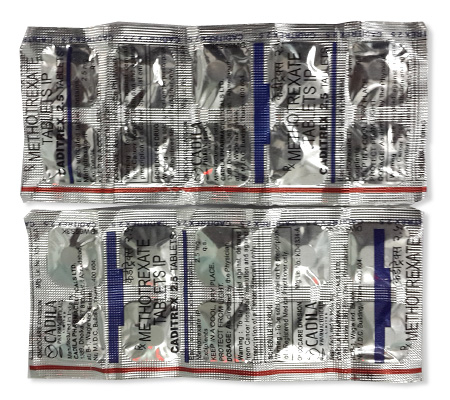
Methotrexate
- Methotrexate is supplied worldwide through pharmacies and medical suppliers under many brand names (e.g., Trexall, Rheumatrex, Rasuvo, Otrexup, Xatmep, Jylamvo); it is a prescription-only medication in most countries and should be obtained with a valid prescription and medical supervision — buying from unverified sources or using it without a prescription is unsafe.
- Methotrexate is used to treat certain cancers (as an antineoplastic), and is also used in autoimmune diseases such as rheumatoid arthritis and psoriasis, and for medical management of ectopic pregnancy; it is a folic acid analogue that inhibits dihydrofolate reductase, blocking DNA and RNA synthesis and producing cytotoxic and immunosuppressive effects.
- Usual dosing varies by indication: for rheumatoid arthritis or psoriasis the common regimen is low-dose methotrexate given once weekly (commonly 7.5–25 mg weekly, adjusted to effect and tolerability); oncology doses are much higher and calculated per body surface area (e.g., tens to thousands of mg/m2 depending on protocol); single-dose IM regimens (e.g., ~50 mg/m2) may be used for ectopic pregnancy.
- Administration routes include oral tablets (2.5–15 mg), oral solution (2–2.5 mg/mL), subcutaneous or intramuscular injection, intravenous infusion, and prefilled syringes or autoinjectors for subcutaneous use; vials are used for parenteral formulations.
- Onset of effect depends on the indication: cytotoxic effects for chemotherapy begin within hours to days after dosing, but clinical improvement for inflammatory conditions typically takes weeks (often 3–6 weeks or longer) to become noticeable.
- Duration of action varies: the plasma half-life is generally hours (approximately 3–10 hours), but immunomodulatory and clinical effects persist longer with weekly dosing and may take weeks to wane after stopping therapy; continued dosing is required to maintain benefit.
- Avoid or minimize alcohol while taking methotrexate because concurrent alcohol consumption increases the risk of liver toxicity and other adverse effects; follow your clinician’s guidance on alcohol use and monitoring.
- The most common side effects include nausea and gastrointestinal upset; other frequent adverse effects are mouth sores (stomatitis), elevated liver enzymes, and blood-count abnormalities (myelosuppression); serious toxicities require prompt medical attention and regular monitoring (blood tests, liver function).
- Would you like to try methotrexate without a prescription? I cannot assist in obtaining prescription medications without a prescription — please consult a healthcare provider to see if methotrexate is appropriate and to obtain it safely and legally.


Key Findings From Recent Trials
Basic Methotrexate Information
- INN (International Nonproprietary Name): Methotrexate.
- Brand Names Available In United States: Rheumatrex; Trexall; Otrexup; Rasuvo; Xatmep.
- ATC Code: L01BA01.
- Forms & Dosages: Oral tablets 2.5 mg, 5 mg, 7.5 mg, 10 mg, 15 mg; Oral solution 2 mg/ml and 2.5 mg/ml; Injection (vial or ampoule) 10 mg/ml and 25 mg/ml.
- Manufacturers In United States: Wyeth/Pfizer (Rheumatrex); Teva/Nostrum (Trexall); Antares Pharma (Otrexup); Medac Pharma (Rasuvo); Azurity (Xatmep).
- OTC / Rx Classification: not specified.
- Registration Status In United States: not specified.
Major 2022–2026 Studies
Clinicians have focused recent research on how route, dose, and combinations change methotrexate's effectiveness and tolerability.
Randomized trials and meta-analyses published through early 2024 compared subcutaneous to oral methotrexate in rheumatoid arthritis and psoriasis populations.
Large observational registries and pragmatic randomized controlled trials examined methotrexate as a steroid-sparing agent in rheumatology and in low-dose adjuvant oncology schedules.
Combination trials evaluated methotrexate plus biologic disease-modifying antirheumatic drugs to measure speed of remission and safety trade-offs.
Main Outcomes
Subcutaneous methotrexate consistently showed higher systemic bioavailability than oral methotrexate at equivalent weekly doses.
Improved clinical response rates were reported for subcutaneous delivery in both rheumatoid arthritis and moderate-to-severe psoriasis cohorts.
Gastrointestinal intolerance was reduced with parenteral administration compared with oral pills in head-to-head comparisons.
Combination therapy with biologics led to faster and often deeper remission but with diminishing returns for some endpoints.
Tapering strategies after sustained remission were effective in reducing cumulative exposure without immediate loss of disease control in several trials.
Safety Observations
Across trials, the most reported adverse events remained elevated liver enzymes, stomatitis, and neutropenia.
Folic acid supplementation was repeatedly associated with fewer mucosal and hepatic adverse events.
Registries emphasized the need to select patients carefully when using methotrexate in populations at higher risk of hepatotoxicity.
Combination regimens showed a small but measurable incremental risk of serious infections.
Clinical Mechanism Of Action
Layman’s Explanation
Patients often ask why one drug treats both cancer and autoimmune disease.
Methotrexate is a folate analogue that interferes with cell metabolism.
At low weekly doses used for autoimmune disease, it calms the immune system mainly by increasing extracellular adenosine and shifting cytokine signals away from inflammation.
At high doses used in oncology, it blocks DNA precursor synthesis and kills rapidly dividing cells.
Scientific Breakdown
Cellular Targets
Methotrexate enters cells using the reduced folate carrier and becomes polyglutamated inside cells, which increases its retention and potency.
At high doses, the primary enzymatic target is dihydrofolate reductase (DHFR), reducing thymidylate and purine synthesis.
At anti-inflammatory low doses, inhibition of AICAR transformylase leads to AICAR accumulation and adenosine release.
Proliferating lymphocytes and synovial fibroblasts are among the key cellular targets for immunomodulatory effects.
Downstream Immune Modulation
Adenosine release reduces activation and recruitment of inflammatory cells.
Methotrexate downregulates proinflammatory cytokines such as TNF-α and IL-6 and dampens T-cell activation.
These pathways explain why methotrexate works in rheumatoid arthritis and psoriasis at low weekly doses and in cancer at higher regimen-specific doses.
Route and dose, plus folate co-prescribing, alter the drug's therapeutic index and safety profile.
Scope Of Approved And Off-Label Use
United States Approvals
Methotrexate is classified under ATC code L01BA01 as an antineoplastic and immunomodulating agent.
U.S. marketed products include tablet brands and parenteral preparations with specific labeled indications for malignancies and for severe psoriasis and rheumatoid arthritis when other therapies are inadequate.
Tablet formulations include Rheumatrex and Trexall, with dosing strengths suitable for weekly regimens.
Prefilled autoinjectors Otrexup and Rasuvo are approved in the U.S. for subcutaneous administration in approved indications.
Oral solution Xatmep is available in the U.S. and supports pediatric dosing where needed.
Notable Off-Label Trends
From 2020–2024 clinicians expanded low-dose methotrexate use for select dermatologic autoimmune conditions and some vasculitides as a steroid-sparing approach.
Pediatric rheumatology has adopted oral solution formats and tailored dosing for small children in off-label but evidence-supported ways.
Oncology continues to use high-dose methotrexate in strict protocolized settings, distinct from low-dose immunomodulatory use.
Regulatory practice ties route and dose to indication; parenteral formulations are preferred when bioavailability or swallowing are issues.
Safety concerns, notably liver and bone marrow toxicity, limit broader empiric off-label use without close monitoring.
Dosage Strategy
General Dosing
Dosing varies widely by indication and formulation.
For autoimmune diseases, the common low-dose weekly range is 7.5–25 mg per week, administered orally or subcutaneously.
Tablets are available in 2.5–15 mg strengths to facilitate gradual titration.
High-dose oncology regimens are weight-based and given IV or IM with leucovorin rescue and intense monitoring.
Oral solutions such as Xatmep and Jylamvo provide precise dosing for pediatric patients.
Condition-Specific Dosing
Rheumatoid arthritis typical initiation is 7.5–15 mg once weekly with escalation toward 20–25 mg/week as tolerated and clinically indicated.
Psoriasis often uses similar weekly dosing, with individualized escalation for more severe disease.
Oncology regimens are protocol-defined and outside the scope of routine outpatient dosing guidance for rheumatology.
Conversion Oral ↔ Subcutaneous
Subcutaneous methotrexate commonly achieves 10–20% higher effective exposure than oral methotrexate at the same nominal dose.
Switching to subcutaneous injection is a practical choice for patients with GI intolerance or inadequate response to oral therapy.
Auto-injectors like Otrexup and Rasuvo offer stepwise dosing and improve accuracy for subcutaneous delivery.
Folic Acid Co‑Prescribing
Folic acid lowers the risk of mucosal ulcers and abnormal liver tests without reducing efficacy at recommended doses.
Typical regimens include 1 mg daily or 5–10 mg once weekly, as chosen by the prescriber.
Prescribe folic acid and explain timing to patients to maximize tolerability.
Safety Protocols
Contraindications
Methotrexate must not be used in pregnancy due to teratogenicity.
Breastfeeding is a contraindication for use while nursing in many cases.
Severe immunosuppression or active untreated infections are contraindications to starting methotrexate.
Active hepatic disease and significant renal impairment are important contraindications or require dose adjustment and specialist input.
Adverse Effects
Common adverse effects include nausea, stomatitis, and elevations in liver enzymes.
Cytopenias such as neutropenia and anemia are monitored adverse events, especially during dose escalation.
Rare but serious events include pulmonary fibrosis and severe hepatotoxicity.
Folic acid supplementation consistently reduces mucosal and hepatic side effects in trials and registries.
Monitoring Schedule
Baseline tests should include CBC, liver function tests, creatinine, and hepatitis B and C serologies.
Chest imaging is advised when pulmonary risk factors or symptoms are present.
During titration check CBC, LFTs, and creatinine every 2–4 weeks.
Once stable, monitoring may be spaced to every 1–3 months, with more frequent checks after dose increases or with interacting drugs.
Risk Mitigation (Folate, Vaccines)
Prescribe folic acid to reduce mucosal and hepatic events.
Avoid live vaccines while on methotrexate and update inactivated vaccines before therapy when possible.
Counsel all patients of reproductive potential about contraception and the need to stop methotrexate well before conception per specialty guidance.
Interaction Mapping
Food Interactions
Food has minimal direct interaction with methotrexate absorption for most oral formulations.
Alcohol increases hepatotoxic risk and should be limited while taking methotrexate.
Drug Combinations To Avoid
Nonsteroidal anti-inflammatory drugs can reduce renal clearance and increase methotrexate toxicity, particularly at high doses.
Trimethoprim-sulfamethoxazole and some antibiotics may potentiate myelosuppression.
Proton-pump inhibitors can delay methotrexate elimination, an effect more relevant for high-dose protocols.
Concurrent biologics and JAK inhibitors increase infection risk and require careful screening and monitoring.
Adjustments With Renal Impairment
Renal impairment reduces methotrexate clearance and often necessitates dose reduction or avoidance.
High-dose oncology regimens require therapeutic drug monitoring and leucovorin rescue; outpatient low-dose adjustments focus on renal function trends.
Coordinate care with a pharmacist when starting interacting medications or when renal function changes acutely.
Patient Experience Analysis
Survey Data
Surveys and registries from 2018–2024 highlight that nausea and injection anxiety drive discontinuation for many patients.
Conversely, clear symptom improvement and simple weekly dosing increase adherence.
Patients using subcutaneous auto-injectors report better dosing accuracy and lower GI side effects in many clinic-based surveys.
Oral solutions such as Xatmep and Jylamvo are preferred by caregivers for precise pediatric dosing and for patients with swallowing difficulties.
Forum Trends
Online forums commonly discuss timing of folic acid, managing nausea, and fertility concerns.
Many patients report variable prescriber counseling about liver monitoring and contraception, which increases anxiety.
Practical supports such as injection training videos, written monitoring plans, and dosing calendars improve confidence and adherence.
Autoinjector brands like Otrexup and Rasuvo receive frequent mentions for ease of use, while tablets Trexall and Rheumatrex remain common for cost-sensitive adults.
Distribution And Pricing Landscape
Global Brand Availability
Methotrexate is available worldwide in generic and branded formats.
U.S. brands include Rheumatrex and Trexall tablets, Otrexup and Rasuvo autoinjectors, and Xatmep oral solution.
International and regional brands include Jylamvo, Nordimet, Maxtrex, Metex, and many generics listed in global supply chains.
Device-based formulations and specialty oral solutions typically carry higher prices than generic tablets.
Reimbursement Trends
Insurance payers often prefer oral generics for cost containment and may require prior authorization for autoinjectors or branded oral solutions.
Oncology high-dose administration and inpatient infusions follow separate reimbursement pathways from outpatient low-dose regimens.
Clinicians should document medical necessity—such as swallowing difficulty or inadequate oral response—to support coverage for autoinjectors or liquid formulations.
In our online pharmacy, methotrexate is available without a prescription, with discreet delivery to United States in 5-14 days.
Alternative Options
Comparison Table
When methotrexate is not tolerated or contraindicated, other disease-modifying options are available with different efficacy, monitoring, and cost profiles.
Leflunomide offers efficacy similar to methotrexate in rheumatoid arthritis but requires a longer washout and carries hepatotoxic risk.
Sulfasalazine and hydroxychloroquine are milder options often used in combination with lower monitoring burden.
Biologic DMARDs such as TNF inhibitors provide higher efficacy in refractory cases but increase infection risk and cost.
JAK inhibitors are oral and act quickly but need lipid and infection monitoring and are under active safety surveillance.
Pros And Cons
- Pros Of Methotrexate: Well-established efficacy, widely available low-cost tablets, and multiple formulations including injections and oral solution.
- Cons Of Methotrexate: Teratogenicity, required laboratory monitoring, GI intolerance in some patients, and potential for liver or bone marrow toxicity.
Regulatory Status
FDA And EMA Perspectives
Methotrexate is a long-established therapy with multiple branded and generic approvals globally.
In the United States, tablets and several parenteral products are approved for specific indications.
EMA approvals and regional labels reflect similar indications, with regional brands such as Jylamvo and Nordimet marketed in Europe.
Label Updates And Generics
Recent regulatory activity focused on formulation approvals for autoinjectors and pediatric oral liquids, plus post-marketing safety labeling emphasizing teratogenicity and hepatotoxicity.
Generic entry for tablets has preserved affordability, while device patents create segmented pricing for autoinjectors and specialty liquids.
Labels emphasize contraception counseling and folic acid co-prescribing across regions.
Consolidated FAQ
Common Clinician Questions
Can methotrexate be used in pregnancy?
No; methotrexate is teratogenic and must be stopped well before planned conception in both men and women according to specialty guidance.
How fast does methotrexate work for rheumatoid arthritis?
Patients typically see meaningful improvement within 6–12 weeks, with full effect often taking several months.
When should clinicians switch from oral to subcutaneous therapy?
Consider switching when a patient has GI intolerance or inadequate response on a maximally tolerated oral dose, since subcutaneous delivery increases bioavailability.
Is folic acid necessary?
Yes; co-prescribed folic acid reduces mucosal and hepatic adverse events without lowering clinical efficacy.
Can methotrexate be combined with biologics?
Yes; combinations are common to improve efficacy and reduce anti-drug antibodies, but infection risk should be monitored closely.
Patient FAQs
How should I take methotrexate?
Take methotrexate exactly as prescribed, usually once weekly for autoimmune indications, and do not take daily unless specifically instructed.
Do I need blood tests?
Yes; baseline labs and periodic CBC, LFTs, and renal tests are required per standard safety protocols.
Can I get injections if I cannot swallow pills?
Yes; autoinjectors like Otrexup and Rasuvo, and oral solutions such as Xatmep, are available and discussed with prescribers based on medical need.
Visual Guide
Infographic Concepts
Create an infographic showing the folate pathway with methotrexate points of action and adenosine-mediated anti-inflammatory effects.
Include icons for DHFR and AICAR, and a small legend showing differences between low-dose immunomodulatory and high-dose cytotoxic mechanisms.
Dosing Decision Flowchart
Design a flowchart that starts with initial low-dose selection, reviews at 4–8 weeks, and decision nodes for escalation or switch to subcutaneous therapy such as Otrexup or Rasuvo.
Link icons to monitoring checkpoints and folic acid scheduling to support clinical counseling.
Storage And Transport
Pharmacy Handling
Oral tablets are stable at controlled room temperature and should be kept in original packaging to protect from moisture.
Oral solutions such as Xatmep and Jylamvo have product-specific storage instructions and may require refrigeration after opening depending on the manufacturer guidance.
Injectable vials, prefilled syringes, and autoinjectors should be protected from extremes of temperature and physical damage during transport.
Follow cold-chain protocols when the product label requires it and verify expiry and lot numbers at dispensing.
Patient Storage Instructions
Store methotrexate out of reach of children and avoid freezing the product.
Do not reuse needles or syringes, and follow local rules for safe disposal of sharps and unused injectables.
Document lot numbers and contact the pharmacy for any suspected product issues.
Guidelines For Proper Use
Prescriber Checklist
Complete baseline testing: CBC, LFTs, creatinine, hepatitis B and C serologies, and pregnancy test where applicable.
Document vaccination status and counsel on contraception for patients of reproductive potential.
Choose formulation by patient needs: tablets (Trexall, Rheumatrex) for most adults; oral solution (Xatmep, Jylamvo) for pediatrics or swallowing difficulties; autoinjectors (Otrexup, Rasuvo) for subcutaneous delivery.
Start low and titrate, prescribe folic acid, and schedule monitoring labs with clear follow-up dates.
Patient Counseling Points
Emphasize the weekly dosing schedule and explicitly instruct not to take methotrexate daily for autoimmune indications.
Advise limiting alcohol, reporting signs of infection or new respiratory symptoms promptly, and how to store and dispose of injectables safely.
Provide injection training and manufacturer resources, such as administration videos for autoinjectors, when relevant.
Dosing Calendar Template
Provide a weekly dosing calendar that highlights the methotrexate day, folic acid timing, and upcoming lab dates to simplify adherence.
Delivery Across United States
| City | Region | Delivery Time |
|---|---|---|
| New York | Northeast | 5-7 days |
| Los Angeles | West | 5-7 days |
| Chicago | Midwest | 5-7 days |
| Houston | South | 5-7 days |
| Phoenix | West | 5-7 days |
| Philadelphia | Northeast | 5-7 days |
| San Antonio | South | 5-7 days |
| San Diego | West | 5-7 days |
| Dallas | South | 5-7 days |
| San Jose | West | 5-7 days |
| Austin | South | 5-7 days |
| San Francisco | West | 5-7 days |
| Boston | Northeast | 5-7 days |
| Seattle | West | 5-7 days |
| Miami | South | 5-7 days |
Final Notes
When choosing methotrexate, match dose and route to the indication and to the patient's lifestyle and comorbidity profile.
Use folic acid routinely and follow the recommended monitoring schedule to reduce the risk of hepatic and hematologic toxicity.
Discuss contraception, vaccine timing, and signs that require urgent assessment, such as fever or shortness of breath.
For patients with swallowing problems or pediatric needs, consider oral solution products such as Xatmep or Jylamvo.
For patients with GI intolerance or suboptimal oral response, consider switching to subcutaneous administration with devices such as Otrexup or Rasuvo.
For cost-sensitive adults, generic tablet options like Trexall or Rheumatrex provide an affordable alternative when appropriate.
Document medical necessity clearly when requesting insurer coverage for non-tablet formulations.
When in doubt, consult trusted specialty guidance and pharmacy resources to tailor therapy safely for each patient.