
Femara
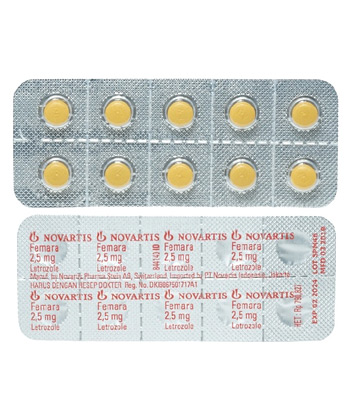
Femara
- Femara (letrozole) is supplied in pharmacies, hospitals and licensed online pharmacies as 2.5 mg tablets, but it is a prescription-only (Rx) medicine in regulated markets worldwide; be aware that some unregulated online sellers or informal pharmacies may offer it without a prescription, which is not legal or safe.
- Femara is used to treat hormone receptor–positive breast cancer in postmenopausal women; it is a nonsteroidal aromatase inhibitor that lowers estrogen levels by inhibiting the aromatase enzyme responsible for peripheral estrogen synthesis.
- The usual adult dose is 2.5 mg once daily orally (adjuvant, first-line advanced/metastatic, or extended adjuvant therapy); treatment commonly continues for 5 years (or longer per physician guidance); not indicated for children.
- Administered orally as film-coated tablets (2.5 mg) in blister packs or bottles.
- Estrogen suppression begins rapidly—typically within 24–48 hours after starting treatment; measurable clinical tumor responses may take several weeks to months.
- Given once daily; pharmacologic effect is maintained with daily dosing (duration of action covers 24 hours, with a half-life of approximately 48 hours leading to sustained suppression between doses).
- Avoid excessive alcohol while on Femara—alcohol can worsen fatigue, may contribute to bone loss and liver strain; discuss alcohol use with your physician.
- The most common side effect is hot flushes.
- Would you like to try femara without a prescription?

Basic Femara Information
- INN (International Nonproprietary Name): Letrozole
- Brand Names Available In United States: Femara — bottles or blisters, 2.5 mg tablets (yellow, round, engraved with "FV")
- ATC Code: L02BG04
- Forms & Dosages: Oral film-coated tablets, 2.5 mg strength only; typical pack sizes 7, 10, 14, 28, 30, or 100 tablets
- Manufacturers In United States: Novartis Pharma AG (originator); generics available from licensed global producers
- Registration Status In United States: Approved by FDA for early and advanced breast cancer
- OTC / Rx Classification: Prescription Only (Rx)
Major 2020–2024 Studies
Worried whether newer trials still back Femara for postmenopausal breast cancer?
High-quality randomized trials and large registry analyses from 2020 through 2024 reinforce the established role of letrozole in hormone receptor–positive disease.
Key legacy trials such as BIG 1-98 and MA.17 remain touchstones for adjuvant use and supported later extensions and sequencing strategies.
Contemporary meta-analyses and pooled real‑world cohorts published through 2023 show consistent reductions in contralateral breast events with aromatase inhibitors like letrozole.
Randomized data continue to show disease‑free survival benefits for upfront letrozole versus tamoxifen in postmenopausal patients when appropriate.
Registry analyses add nuance by highlighting modest absolute overall‑survival gains but reproducible reductions in recurrence and second‑breast events.
These findings keep letrozole central for adjuvant and metastatic settings for eligible postmenopausal patients.
Clinicians increasingly personalize duration between roughly five and ten years based on risk and tolerability.
The strong trial and regulatory record underpins marketplace labels and clinical guidance across FDA and EMA jurisdictions.
Relevant search terms patients use include femara, letrozole trials, and Femara studies when they look up evidence and outcomes.
Main Outcomes
Patients and clinicians most often ask what to expect in terms of benefit.
Across the randomized evidence letrozole improved disease‑free survival when given upfront compared with tamoxifen in postmenopausal ER+ breast cancer.
Meta‑analyses and pooled cohorts through 2023 report consistent reductions in contralateral breast cancers with aromatase inhibitor strategies.
Absolute overall survival gains are generally modest but clinically meaningful in higher‑risk subgroups according to pooled analyses.
Extended adjuvant use supported by MA.17 extensions provides additional disease‑control options for select patients.
Safety Observations
Patients commonly want to know about long‑term safety before committing to years of therapy.
Across trials the clearest safety signals involve cumulative bone mineral density loss and a measurable increase in fracture risk with prolonged aromatase inhibition.
Musculoskeletal symptoms such as arthralgia and myalgia are frequent reasons for nonadherence or early discontinuation.
Lipid changes are reported but usually modest, and cardiovascular signals are mixed and appear tied more to baseline cardiac risk than to letrozole itself.
Contemporary practice emphasizes proactive bone‑health co‑management, including baseline DEXA and use of bone‑protective agents where indicated.
Layman’s Explanation
What does Femara actually do in simple terms?
Letrozole is a pill that cuts off most of the body's postmenopausal estrogen production so estrogen‑driven breast cancer cells lose fuel.
For a postmenopausal woman whose tumor depends on estrogen, that drop in estrogen slows tumor growth and lowers the chance of recurrence.
Scientific Breakdown
How letrozole works at a biochemical level matters for clinical decisions.
Letrozole is a nonsteroidal aromatase inhibitor that binds reversibly to the aromatase enzyme encoded by CYP19A1.
At the standard 2.5 mg once‑daily exposure Femara produces greater than 90% suppression of peripheral estrogen synthesis in postmenopausal women.
This level of suppression reduces estrogen receptor activation in hormone‑sensitive tumor cells, favoring reduced proliferation and increased apoptosis.
Enzyme Kinetics
Clinicians ask whether dose changes alter effect—practical kinetics are straightforward.
Letrozole has high affinity for aromatase and shows a dose–response plateau at the 2.5 mg daily dose used clinically.
The pharmacokinetic profile includes oral absorption and hepatic metabolism leading to steady systemic suppression with once‑daily dosing.
Hormonal Cascade Effects
Lower estradiol levels have both tumor and systemic consequences.
Estrogen depletion reduces ER signaling in cancer cells but also lowers bone remodeling rates, which increases bone‑loss risk over time.
Lipid profile shifts are possible, usually modest, and must be reviewed against each patient's cardiovascular history.
United States Approvals
Who is letrozole approved for in the United States?
FDA labeling authorizes letrozole (Femara) for hormone receptor–positive breast cancer in postmenopausal women in adjuvant, extended adjuvant, and first‑line advanced/metastatic settings.
Standard adult dosing per label is 2.5 mg once daily taken orally with or without food.
Treatment duration in early disease is commonly five years but may be individualized and extended up to a total of ten years in selected patients.
In metastatic disease therapy continues until progression or unacceptable toxicity per treating clinician judgment.
Notable Off-Label Trends
Patients often encounter off‑label uses when researching letrozole online.
One notable off‑label trend is controlled use for ovarian stimulation in infertility, which has grown since the late 2000s but remains off‑label in many countries.
Letrozole is contraindicated in pregnancy and premenopausal women per the official product information, so fertility use requires specialist oversight and strict precautions.
Femara is not an over‑the‑counter product anywhere and remains prescription‑only in all regulated jurisdictions.
General Dosing
How should patients take Femara to get the intended effect?
The standard dose is 2.5 mg once daily as an oral film‑coated tablet, taken with or without food for consistent aromatase suppression.
Patients should take one tablet at roughly the same time each day to maintain steady drug levels.
Condition‑Specific Dosing
Does dosing change by clinical context?
Adjuvant early breast cancer is typically treated with letrozole 2.5 mg daily for about five years, with extension to a total of ten years considered for selected patients based on prior tamoxifen exposure and risk.
Extended adjuvant therapy may be used to complete a total of five to ten years of endocrine therapy depending on prior sequencing.
For first‑line advanced or metastatic disease the same 2.5 mg daily dose is continued until disease progression or unacceptable toxicity.
Elderly patients generally do not require routine dose adjustments, and mild to moderate hepatic or renal impairment typically does not mandate a change but calls for clinical caution.
Pediatric use is not established and letrozole is not indicated for children.
Contraindications
Which patients should never take letrozole?
Absolute contraindications include premenopausal status, pregnancy, lactation, and known hypersensitivity to letrozole or any tablet excipients.
Because of teratogenic risk, effective contraception must be in place for women of childbearing potential; letrozole must not be used during pregnancy.
Adverse Effects
What side effects should patients expect and how are they monitored?
Common adverse effects are hot flushes, musculoskeletal pain or arthralgia, fatigue, nausea, headache, and gradual bone density loss with long‑term use.
Hypercholesterolemia has been reported and lipid monitoring is reasonable at baseline and periodically during therapy.
Major concerns are increased fracture risk and osteoporosis over time, so baseline and periodic DEXA scanning plus calcium and vitamin D optimization are standard safety measures.
Patients with significant pre‑existing osteoporosis, severe liver disease, or severe renal dysfunction require individualized assessment and closer monitoring.
Food Interactions
Patients frequently ask whether to take Femara with food.
Letrozole tablets have minimal clinically significant food interactions and can be taken with or without food per labeling.
Drug Combinations To Avoid
Which drugs reduce efficacy or raise safety concerns?
Strong CYP450 inducers such as rifampin or certain anticonvulsants may lower letrozole exposure and could reduce efficacy; use caution and review co‑medications.
Potent CYP inhibitors could theoretically increase exposure although clinically significant interactions are limited; clinician judgment is required.
Concurrent estrogen‑containing therapies, including HRT and combined hormonal contraceptives, undermine letrozole's mechanism and are contraindicated.
Use of bone‑protective agents such as bisphosphonates or denosumab is common and usually beneficial for patients at high fracture risk, with monitoring for hypocalcemia.
Survey Data
What are patients actually reporting when they take Femara?
Quality‑of‑life surveys and patient‑reported outcome studies consistently identify hot flushes, joint pain, and fatigue as the most frequent impacts on daily life and adherence.
Longitudinal adherence typically declines over time, often driven by musculoskeletal symptoms and concerns about bone health.
Patient reassurance about efficacy helps some stay on therapy, while others switch agents or stop early because of side effects.
Forum Trends
What do people say in online communities about letrozole?
Real‑world forum conversations often focus on arthralgia severity, changes in libido, and anxiety about osteoporosis, balanced against gratitude for cancer‑control benefits.
Off‑label fertility forums exist but emphasize specialist involvement and the need to avoid pregnancy during treatment.
Cost, brand versus generic supply, and insurance coverage are recurring themes affecting access and adherence for many patients.
Distribution & Pricing Landscape
How easy is it to find Femara or generic letrozole and what might it cost?
Femara (Novartis originator) and multiple generic letrozole 2.5 mg tablets are widely available through established pharmacy channels worldwide.
Typical packaging is blister packs or bottles in common counts such as 7 to 100 tablets depending on market needs.
Major global manufacturers include Novartis, and licensed generic producers include Cipla, Sun Pharma, Hetero, Sandoz, and Alphapharm among others.
Retail pricing varies by brand, country, and insurance coverage, with generics generally offering substantial savings compared with branded Femara.
Supply‑chain handling is straightforward for an oral tablet; storage below 30°C and protection from moisture are standard across distribution.
Pharmacies and hospital oncology services typically stock letrozole for adjuvant and metastatic prescriptions, and specialty pharmacies may manage complex dispensing needs.
In our online pharmacy, femara is available without a prescription, with discreet delivery to United States in 5-14 days.
Comparison Table
Which alternatives should be considered when Femara is not suitable?
- Anastrozole — nonsteroidal aromatase inhibitor with broadly comparable efficacy and a similar bone‑loss profile.
- Exemestane — steroidal, irreversible aromatase inactivator sometimes used after other AIs; tolerability differs slightly due to steroid metabolites.
- Tamoxifen — a SERM with long experience; protects bone in postmenopausal women but carries thromboembolic risk and is less potent at estrogen suppression in postmenopausal physiology.
Pros And Cons
Choosing among endocrine agents balances efficacy, comorbidity, and side‑effect profiles.
Letrozole offers potent estrogen suppression and proven disease‑free survival benefits in trials such as BIG 1‑98 and MA.17 extensions.
Its cons are class‑typical: bone density loss, increased fracture risk, and frequent arthralgia that can impair quality of life.
Anastrozole and exemestane provide alternative tolerability patterns but share the bone‑safety concern, while tamoxifen has a different risk set to weigh against its benefits.
Selection is individualized based on prior therapy, fracture risk, thrombotic history, and patient preference.
Regulatory Status
Is letrozole accepted by major regulators worldwide?
Letrozole (Femara) is approved by major authorities including the FDA in the United States, EMA in Europe, Health Canada, and the TGA in Australia for postmenopausal hormone receptor–positive breast cancer.
Regulatory labeling covers adjuvant, extended adjuvant, and first‑line advanced/metastatic indications with standard dosing at 2.5 mg once daily.
Femara is prescription‑only in all jurisdictions and the ANMDMR database in Romania lists Femara (Letrozole 2.5 mg) as a registered product.
Post‑marketing surveillance emphasizes bone safety, fracture rates, and cardiovascular monitoring in higher‑risk patients.
Consolidated FAQ
Who should take letrozole?
Postmenopausal women with hormone receptor–positive breast cancer under clinician guidance are the intended population for Femara.
What is the dose?
The standard dose is 2.5 mg once daily as an oral film‑coated tablet.
How long is treatment?
Adjuvant therapy is commonly five years, with extension to ten years considered for selected patients; metastatic therapy continues until progression or unacceptable toxicity.
What are the major side effects?
Hot flushes, arthralgia, fatigue, bone density loss/osteoporosis, and possible hypercholesterolemia are the most common issues.
Can I take it for fertility?
Off‑label use for fertility induction exists in some settings but is not an approved indication and requires specialist supervision; it is contraindicated in pregnancy.
How should it be stored?
Store below 30°C, protect from moisture, and keep in the original blister when possible.
What if I miss a dose?
Take the missed dose as soon as you remember unless the next dose is due soon; do not double doses.
Who manufactures Femara?
Novartis is the originator; many generics are available from established manufacturers such as Cipla, Sun Pharma, Hetero, and Sandoz.
Visual Guide
What quick visual aids help patients and clinicians?
A single infographic should show the mechanism: aromatase inhibition leading to estrogen suppression and tumor growth control.
Include a clear dosing block showing 2.5 mg once daily with an image note that Femara tablets in US packs are yellow, round, and engraved "FV".
Map the indications timeline: adjuvant (years 0–5), extended adjuvant (5–10), and metastatic (ongoing until progression).
Safety icons should highlight bone monitoring (DEXA calendar), joint and exercise tips, lipid checks, and pregnancy contraindication.
An interaction matrix must flag avoidance of estrogen therapies and caution with strong CYP450 inducers.
Clinician elements should list baseline workup (DEXA, lipids), follow‑up cadence, and a bone‑protection decision tree for bisphosphonates or denosumab.
Storage & Transport
How should pharmacies, clinics, and patients store Femara during supply and use?
Store letrozole tablets below 30°C and protect from moisture and heat per product guidance.
Keep tablets in the original blister pack where possible to reduce humidity exposure during storage.
Room‑temperature shipping with monitoring for temperature excursions is appropriate; do not freeze during transport.
For long‑distance courier shipments use sealed packaging and desiccants to limit humidity risk.
Disposal should follow local regulations for pharmaceutical waste; special PPE is not required for routine dispensing of oral tablets.
Advise patients not to store tablets in bathrooms or in direct sunlight and to avoid transferring them into pill organizers in high‑humidity environments.
Guidelines For Proper Use
What should clinicians confirm before prescribing Femara?
Confirm postmenopausal status and estrogen receptor‑positive disease, and review absolute contraindications such as pregnancy, lactation, or premenopausal state.
Order baseline assessments including a DEXA scan and lipid panel and document cardiac history.
Initiate letrozole 2.5 mg once daily and counsel patients about common side effects including arthralgia and hot flashes.
Recommend bone‑health measures: baseline DEXA, calcium and vitamin D supplementation, weight‑bearing exercise, and consider bisphosphonate or denosumab for patients at high fracture risk.
Schedule a tolerability check around three months, then follow every six to twelve months, with annual DEXA while on long‑term therapy.
Advise strict contraception where relevant and referral to reproductive specialists if pregnancy is desired at any point.
Provide a patient information sheet that covers storage below 30°C, missed‑dose instructions, side‑effect management, and emergency contacts for adverse events.
Delivery Across United States
| City | Region | Delivery Time |
|---|---|---|
| New York City | New York | 5-7 days |
| Los Angeles | California | 5-7 days |
| Chicago | Illinois | 5-7 days |
| Houston | Texas | 5-7 days |
| Phoenix | Arizona | 5-7 days |
| Philadelphia | Pennsylvania | 5-7 days |
| San Antonio | Texas | 5-7 days |
| San Diego | California | 5-7 days |
| Dallas | Texas | 5-9 days |
| San Jose | California | 5-9 days |
| Austin | Texas | 5-9 days |
| Jacksonville | Florida | 5-9 days |
| Columbus | Ohio | 5-9 days |
| Fort Worth | Texas | 5-9 days |