
Arimidex
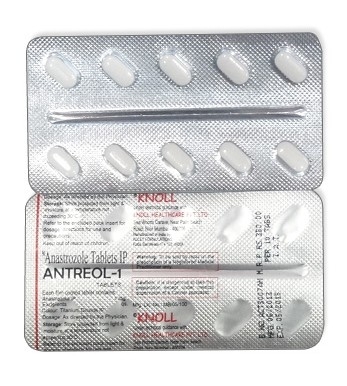
Arimidex
- Arimidex (anastrozole) is a prescription medicine in many countries and is sold through pharmacies and oncology channels; however, availability without a prescription can vary by market and online seller policies. It is used as a prescription-only cancer medicine in regulated settings.
- Arimidex is used mainly for hormone receptor-positive breast cancer in postmenopausal women. It works as an aromatase inhibitor, blocking the aromatase enzyme and lowering estrogen levels, which helps slow the growth of estrogen-sensitive breast cancer cells.
- The usual dose of Arimidex is 1 mg once daily.
- The form of administration is an oral tablet, taken by mouth with or without food.
- It starts working quickly: blood levels peak in about 2 hours, and estrogen suppression begins within 24 to 48 hours, with near-maximal effect in about 2 to 3 days.
- The duration of action supports once-daily use, with a terminal half-life of about 40 to 50 hours.
- Alcohol should be used with caution. There is no major direct interaction known, but heavy drinking may increase liver strain and overall side effects, so moderation is advised.
- The most common side effects include hot flashes, joint pain, muscle aches, fatigue, headache, nausea, rash, and bone loss over time.
- Would you like to try Arimidex without a prescription?






Basic Arimidex Information
- INN (International Nonproprietary Name): Anastrozole
- Brand name(s) available in United States: Arimidex; generic anastrozole is also widely available
- ATC Code: L02BG03
- Forms & dosages: Oral tablet, usually 1 mg once daily
- Manufacturers in United States: AstraZeneca is the originator brand holder; generic anastrozole is manufactured by multiple companies
- Registration status in United States: Prescription medicine authorized in major regulated markets, including the FDA label in the United States
- OTC / Rx classification: Prescription only (Rx)
Thinking about Arimidex and wondering what actually matters beyond the name on the box?
This medicine is best understood as an oral prescription aromatase inhibitor used to lower estrogen in postmenopausal women with hormone receptor-positive breast cancer.
For patients and caregivers, the practical questions are usually simple: what it does, who it is for, how to take it, and what side effects to watch for.
What Recent Trials And 2022–2025 Trends Mean For Arimidex
Are we seeing a brand-new role for Arimidex, or just better long-term evidence?
The short answer is that the biggest modern shift is refinement, not replacement.
The 2024 final overall survival report from FALCON continued to support anastrozole as a durable first-line endocrine option in advanced breast cancer.
That matters because Arimidex has not been pushed aside by a newer standard; it remains a core aromatase inhibitor in postmenopausal hormone receptor-positive breast cancer.
Recent 2025 observational safety data were also reassuring, linking longer aromatase inhibitor exposure in selected postmenopausal patients with lower stroke risk and lower all-cause and cardiovascular mortality.
Those findings do not mean every patient should stay on therapy longer without review, but they do help balance older fears about cardiovascular harm.
Prevention literature is still part of the conversation too, especially for high-risk postmenopausal women considering estrogen-lowering risk reduction.
The main clinical trend from 2022 to 2025 is longer follow-up, more attention to adherence, and better survivorship monitoring.
Bone loss and fracture risk are still central concerns, so long-term use still calls for bone density checks and practical fracture-risk reduction.
In real-world practice, the most important question is often not whether Arimidex works, but how to keep patients on it comfortably and safely long enough to get the benefit.
How Arimidex Works In The Body
Ever wondered why lowering estrogen helps with breast cancer?
Many hormone-sensitive breast cancers use estrogen as a growth signal.
Arimidex is anastrozole, an oral prescription medicine in the aromatase inhibitor class, and it lowers estrogen production in postmenopausal women.
By blocking aromatase, it reduces the estrogen available to cancer cells, which helps slow growth and lower the risk of recurrence.
In clinical terms, anastrozole is a competitive, reversible, non-steroidal aromatase inhibitor that blocks CYP19A1.
At the standard 1 mg once-daily dose, plasma estradiol drops by about 80% to 90% in postmenopausal women.
That is a major hormonal shift, but it has minimal effect on adrenal corticosteroids or aldosterone, which is one reason routine steroid replacement is not needed.
For patients, the easiest way to think about it is this: less estrogen means fewer growth signals for estrogen-driven breast cancer cells.
What That Means Clinically
Why do oncologists like Arimidex in the right patient?
Because estrogen suppression can support adjuvant control after surgery, stabilization in metastatic disease, and first-line endocrine treatment in appropriate postmenopausal patients.
That is also why the drug is used for disease control rather than as a short-term symptom reliever; the benefit is preventive and long-term.
How Arimidex Behaves In The Body
Would a patient taking Arimidex notice it working right away?
Usually not in a dramatic, immediate way.
After an oral 1 mg dose, peak levels are reached in about 2 hours when taken fasting.
Steady state is usually reached in about 7 days of once-daily dosing.
Estradiol suppression starts quickly, often within 24 to 48 hours, with near-maximal suppression by about 2 to 3 days.
The terminal half-life is about 40 to 50 hours, which is why once-daily dosing works well.
Arimidex is well absorbed from the gastrointestinal tract, and food may slow absorption slightly without changing overall exposure in a meaningful way.
About 40% is protein bound, mainly to albumin.
The liver handles the drug through N-dealkylation, hydroxylation, and glucuronidation, and the main metabolite is inactive anastrozole-triazole.
That pharmacokinetic profile explains the standard 1 mg oral tablet once daily regimen.
Who Arimidex Is Approved For
Is Arimidex for everyone with breast cancer?
No, and that distinction matters.
The approved population is postmenopausal women.
It is used as adjuvant treatment for hormone receptor-positive early breast cancer and as first-line therapy for locally advanced or metastatic hormone receptor-positive or unknown disease in postmenopausal women.
It is also used after progression on tamoxifen in advanced breast cancer.
It is not approved for premenopausal women in the labeled indication, and it is not approved for men in the labeled indication.
The treatment goal is to reduce recurrence risk, delay progression, and lower the risk of new contralateral breast cancers.
Who Should Not Use It
What are the clear “do not use” situations?
Hypersensitivity to anastrozole or excipients is an absolute contraindication.
Pregnancy and breastfeeding are also contraindications.
Use in premenopausal women is not recommended in the regulatory labeling because safety and efficacy are not established.
How To Take Arimidex
What do most patients actually need to remember?
The standard adult dose is 1 mg by mouth once daily.
It can be taken with or without food.
Swallow the tablet whole with water and do not crush, chew, or split it.
Taking it at the same time every day helps build a routine.
For early breast cancer, treatment is commonly given for up to 5 years as part of adjuvant endocrine therapy.
For metastatic or advanced disease, treatment is continued until disease progression or unacceptable toxicity.
If a dose is missed, take it when remembered unless it is close to the next dose; do not double up.
That simple routine matters because adherence often determines how much real-world benefit the patient gets.
Missed Dose Example
A patient forgets a morning tablet, remembers it after dinner, and the next dose is still far away.
In that case, taking the missed tablet when remembered is generally the practical approach.
If it is almost time for the next dose, skip the missed one and go back to the regular schedule.
Safety, Contraindications, And Monitoring
What side effects make people stop and call the clinic?
Hot flashes, joint pain, fatigue, headache, nausea, rash, and cholesterol changes are all commonly reported.
Bone loss is one of the biggest long-term concerns because lowering estrogen can reduce bone mineral density and raise fracture risk.
That is why bone monitoring is so important during longer treatment courses.
Arthralgia and stiffness are especially common, and they are often the reason patients talk to their oncologist about switching, pausing, or adding supportive care.
Cardiovascular monitoring is also reasonable in patients with coronary disease or dyslipidemia, although recent real-world data are more reassuring than older fears suggested.
Use caution in severe hepatic impairment and severe renal impairment, since those groups have not been as well studied.
Children and adolescents should not be treated with this product, because safety and efficacy have not been established.
Bone Health Comes Up Early For A Reason
Why do pharmacists keep bringing up bones?
Because the estrogen-lowering effect that helps the cancer can also thin bone over time.
Patients with osteoporosis or a strong fracture risk history deserve special attention, baseline bone density assessment, and follow-up monitoring when clinically appropriate.
Food, Supplements, And Drug Interactions
Do you need a special diet with Arimidex?
No major food restrictions are required.
It can be taken with or without meals, and food does not significantly change total exposure.
The bigger issue is supplements and hormone-related products.
DHEA may raise estrogen and could reduce effectiveness, so it should be reviewed carefully with the oncology team.
Menopause supplements containing phytoestrogens should also be discussed before use.
Any hormone therapy, CYP-modulating drug, or bone-related medication should be checked for compatibility.
Alcohol has no well-documented direct interaction, but moderation is a sensible approach, especially if liver issues are present.
Our online pharmacy can help patients compare Arimidex with generic anastrozole options, and in our online pharmacy arimidex is available without a prescription, with discreet delivery to United States in 5-14 days.
What Patients Say In Real Life
Does Arimidex feel like a useful medicine, or just a difficult one?
Real-world reviews are mixed, which is common for preventive cancer therapy.
Patients often describe high confidence in the drug’s cancer-control value, even when the day-to-day tolerability is not great.
The overall rating on Drugs.com has been reported at 5.7 out of 10, with 37% positive and 30% negative experiences.
That split tells a familiar story: many patients feel protected by the medicine, while a meaningful minority struggle with quality-of-life tradeoffs.
Common Benefits People Mention
What keeps people going when the side effects are annoying?
For many, the big emotional benefit is peace of mind.
Some patients say they keep taking Arimidex mainly because they believe it lowers recurrence risk after surgery, chemotherapy, or radiation.
Others report minimal or no side effects and say they were able to work, exercise, and live normally.
Some patients who switched from tamoxifen describe fewer hot flashes or less bloating on Arimidex.
Those are the kinds of real-world details that matter when a patient is deciding whether to continue.
Common Concerns People Mention
What do patients complain about most?
Joint pain, stiffness, fatigue, mood changes, and sleep disruption come up again and again.
Some people feel fine at first and then notice symptoms after one to three months.
Others say symptoms peak during the first 3 to 6 months and then become more manageable.
Some improve within weeks of stopping, which is often a clue that the drug is contributing.
That is why early counseling and symptom management are so important for adherence.
Arimidex Versus Femara Versus Aromasin
Which aromatase inhibitor is “best”?
There is no one-size-fits-all answer.
Arimidex, Femara, and Aromasin are all used in postmenopausal HR-positive breast cancer.
Arimidex is anastrozole, Femara is letrozole, and Aromasin is exemestane.
Arimidex and Femara are non-steroidal aromatase inhibitors, while Aromasin is steroidal.
In practice, doctors often choose based on prior tamoxifen use, side effects, bone risk, and how the patient has tolerated one agent versus another.
| Feature | Arimidex | Femara | Aromasin |
|---|---|---|---|
| Drug | Anastrozole | Letrozole | Exemestane |
| Class | Non-steroidal aromatase inhibitor | Non-steroidal aromatase inhibitor | Steroidal aromatase inhibitor |
| Typical use | Postmenopausal HR-positive breast cancer | Postmenopausal HR-positive breast cancer | Postmenopausal HR-positive breast cancer |
| Common tolerability issue | Joint pain and bone loss | Joint pain and bone loss | Joint pain and bone loss |
| Selection logic | Standard option, often after tamoxifen | Often chosen when a strong non-steroidal AI is preferred | Often used after tamoxifen or after intolerance to another AI |
For many patients, the decision is less about tiny differences in efficacy and more about which drug they can actually stay on.
Price, Access, And Generic Availability
Do patients usually buy the brand or the generic?
In the United States, generic anastrozole drives most access and pricing because the original patent era has passed.
That usually means lower cost, wider availability, and more pharmacy options than during the branded-only period.
Patients often compare brand versus generic mainly on price, pack size, and what is in stock.
Because it is prescription-only in normal pharmacy practice, access depends on Rx status and local inventory.
For patients comparing options, generic availability is usually the practical advantage.
Packaging And Market Context
What does Arimidex usually look like in the pharmacy?
The product is supplied as 1 mg oral tablets, and no supported data here indicate an injection, cream, or vial form.
Typical label wording includes Arimidex 1 mg tablets or ARIMIDEX 1 mg film-coated tablets.
Packaging is commonly blister-based, and a standard retail pack is often 30 tablets.
The originator brand is tied to AstraZeneca, while generic anastrozole is widely marketed in many countries.
How New Research Shapes Long-Term Use
Does newer evidence change how clinicians think about long-term Arimidex use?
Mostly it sharpens decisions around duration, survivorship, and safety monitoring.
The newer literature is not about a dramatic new indication.
Instead, it focuses on extended therapy, prevention, adherence, bone outcomes, and cardiovascular outcomes.
That is useful in real life because many breast cancer survivors spend years on endocrine therapy and need steady follow-up rather than flashy changes.
Frequently Asked Questions
Still have the basic questions? These are the ones patients ask most often.
What Is Arimidex Usually Prescribed For?
Arimidex, which is anastrozole, is mainly used to treat hormone receptor-positive breast cancer in postmenopausal women.
It works by lowering estrogen levels and helping slow or stop estrogen-dependent tumor growth.
How Do I Take It?
The usual dose is 1 mg once daily.
It can be taken with or without food, at any time of day, but it should be taken at the same time each day.
What If I Miss A Dose?
Take it as soon as you remember unless it is almost time for the next dose.
Do not take two tablets at once.
Is It Chemotherapy?
No.
Arimidex is endocrine therapy, not chemotherapy.
Can It Cause Weight Gain?
Some patients report weight changes, but it is not universal.
Menopause, reduced activity from joint pain, and other medicines can also play a role.
Can It Affect Sex Drive Or Vaginal Dryness?
Yes, lowering estrogen can worsen menopausal symptoms such as vaginal dryness and reduced libido.
Those concerns should be discussed openly with the care team.
Can Men Take It?
The labeled indication is for postmenopausal women, so men are outside the standard approved indication.
Delivery Across United States
| City | Region | Delivery Time |
|---|---|---|
| New York | Northeast | 5-7 days |
| Los Angeles | West | 5-7 days |
| Chicago | Midwest | 5-7 days |
| Houston | South | 5-7 days |
| Phoenix | West | 5-7 days |
| Philadelphia | Northeast | 5-7 days |
| San Antonio | South | 5-9 days |
| San Diego | West | 5-7 days |
| Dallas | South | 5-7 days |
| San Jose | West | 5-9 days |
| Austin | South | 5-7 days |
| Jacksonville | South | 5-9 days |
| Fort Worth | South | 5-9 days |
| Columbus | Midwest | 5-9 days |
| Charlotte | South | 5-9 days |
Bottom Line On Arimidex
Arimidex remains a standard aromatase inhibitor for the right patient: postmenopausal women with hormone receptor-positive breast cancer.
Its core value is estrogen suppression, which helps lower recurrence risk and support disease control over time.
The biggest modern focus is not whether it works, but how to use it well for long enough while protecting bone health, supporting adherence, and keeping side effects manageable.
For patients comparing Arimidex with generic anastrozole or other aromatase inhibitors, the real-world decision usually comes down to cost, tolerability, and oncology guidance.