
Anastrozole
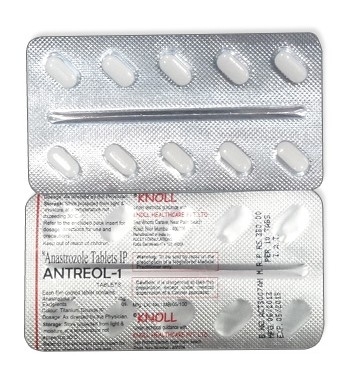
Anastrozole
- In pharmacies where it is legally available, anastrozole is a prescription-only medicine in the United States, EU, UK, Canada, and most other markets. It is sold under brand names such as Arimidex and as generic anastrozole. Some online pharmacies may offer it, but a valid prescription is normally required.
- Anastrozole is used to treat hormone receptor-positive breast cancer in postmenopausal women, including adjuvant and metastatic settings. It is an aromatase inhibitor that lowers estrogen production.
- The usual dose of anastrozole is 1 mg orally once daily.
- The form of administration is a tablet taken by mouth.
- Anastrozole begins working soon after a dose by lowering estrogen levels, but its full clinical effect is usually assessed over days to weeks.
- The duration of action is about 24 hours, so it is taken once daily. In breast cancer treatment, therapy may continue for months to years depending on the indication and response.
- Alcohol should be avoided or limited, especially if you have liver disease, bone loss risk, or are taking other medicines that may increase side effects.
- The most common side effects are hot flashes, joint pain, fatigue, nausea, headache, bone pain, insomnia, and increased cholesterol.
- Would you like to try anastrozole without a prescription?







Basic Anastrozole Information
- INN (International Nonproprietary Name): Anastrozole
- Brand names available in United States: Arimidex
- ATC Code: L02BG03
- Forms & dosages: Solid tablets, 1 mg; no higher strengths are available; no creams, vials, or liquid forms reported
- Manufacturers in United States: Original AstraZeneca; generics include Teva, Sandoz/Novartis, Cipla, Dr. Reddy’s, Mylan, Accord, Sun Pharma, and Hetero
- Registration status in United States: FDA approved since 1995 as Arimidex
- OTC / Rx classification: Prescription only (Rx)
Key Findings From Recent Trials
Major 2022–2026 Studies
What keeps anastrozole in the conversation after so many years?
Recent clinical trials and long-term follow-up data continue to support anastrozole 1 mg once daily as a core option for postmenopausal, hormone receptor-positive breast cancer.
In early breast cancer, the main message has stayed consistent: anastrozole lowers recurrence risk and helps maintain disease-free survival when used as adjuvant endocrine therapy.
Comparative studies keep showing that aromatase inhibitor efficacy is a class strength, with ongoing interest in anastrozole vs letrozole and in sequential treatment after tamoxifen.
That matters in real practice, because many patients stay on endocrine therapy for years, especially when benefit continues and recurrence prevention remains the goal.
Safety findings have also stayed familiar in clinical trials and clinic visits alike.
Bone density loss, arthralgia, and vasomotor symptoms remain the side effects most likely to affect comfort and adherence over long treatment horizons.
Clinical Mechanism Of Action
Layman’s Explanation
Why does this medicine help with breast cancer in postmenopausal women?
Anastrozole lowers estrogen production, and that can slow the growth of estrogen-sensitive breast cancer cells.
For many patients, that estrogen suppression is the whole point of treatment, whether the cancer is early or advanced.
Scientific Breakdown
Pharmacologically, anastrozole is a non-steroidal aromatase inhibitor with ATC code L02BG03.
Arimidex tablet therapy fits within endocrine therapy by blocking aromatase, the enzyme that converts androgens into estrogens.
It does not work like tamoxifen, which acts through a different mechanism on estrogen receptors.
There is no direct effect on adrenal corticosteroids or aldosterone, which is one reason its endocrine action is considered targeted rather than broadly steroid-like.
Scope Of Approved & Off-Label Use
United States Approvals
Is anastrozole actually approved for what people are taking it for?
Yes.
Arimidex has been FDA approved since 1995 and is prescription only in the United States.
The approved use is postmenopausal women with hormone receptor-positive breast cancer.
That includes use in both adjuvant and metastatic settings when prescribed by an oncology clinician.
Notable Off-Label Trends
Some use outside the approved indication can happen in specialist care, but it should stay evidence-based and oncology-directed.
It is not a broad hormone-therapy product for general use, and it is not recommended for children.
For breast cancer, it is not indicated in premenopausal women.
Dosage Strategy
General Dosing
What does a standard prescription look like?
The usual dose is anastrozole 1 mg oral tablet once daily.
Only solid tablets are reported, and there are no higher strengths, creams, vials, or liquid forms listed in the product data.
That simple once-daily schedule is one reason many patients prefer it when they are trying to keep a multi-year routine manageable.
Condition-Specific Dosing
For adjuvant therapy in early breast cancer, treatment often continues up to 5 years.
In metastatic or advanced disease, treatment usually continues as long as clinical benefit persists.
No routine dose adjustment is required for elderly patients.
Mild to moderate liver or renal impairment generally does not require a significant adjustment, while severe impairment calls for caution.
A patient asking about Arimidex 1 mg at a Friday evening refill call is usually worried about one thing: whether the schedule matters more than the hour.
In practice, consistency matters more than perfection, and once-daily dosing is the goal.
Safety Protocols
Contraindications
Who should not take it?
Anastrozole should not be used in people with known hypersensitivity to anastrozole or any tablet component.
Pregnancy and lactation are contraindications, and it is not indicated for premenopausal women for breast cancer.
Adverse Effects
The side effect profile is well known, and patients usually hear about it early.
Common Anastrozole side effects include hot flashes, arthralgia and joint pain, weakness or fatigue, nausea or vomiting, bone pain, headache, mild rash, insomnia, and increased cholesterol.
Those symptoms can be mild for some patients and disruptive for others, especially over long treatment periods.
Monitoring Priorities
Bone health deserves special attention because chronic estrogen suppression can reduce bone mineral density and increase fracture risk.
That makes osteoporosis risk a real monitoring issue, not just a theoretical one.
Cardiovascular history also matters, especially preexisting ischemic heart disease.
In clinic, the best outcomes usually come from pairing treatment with symptom review, bone monitoring, and a low threshold to ask about new pain or fatigue.
Interaction Mapping
Food Interactions
No major food interaction is highlighted in the provided product data.
For most patients, practical administration consistency is the bigger issue than meal timing.
Taking the Arimidex tablet at the same time each day helps build routine and supports adherence.
Drug Combinations To Avoid
One combination should stand out right away: tamoxifen co-administration should be avoided because it reduces anastrozole levels.
That is why oncology teams usually map endocrine therapy carefully before changing regimens or layering medications.
Medication review should also include bone-health medicines and any overlapping endocrine therapy.
Patient Experience Analysis
Survey Data
What do patients worry about most after the prescription is filled?
Real-world concerns usually center on joint pain, hot flashes, fatigue, sleep disruption, and bone health anxiety.
Those concerns are especially common when therapy is planned for years, not weeks.
Adherence can slip when side effects build slowly, so symptom management is not optional.
Forum Trends
Many patients compare anastrozole vs letrozole dosages and try to understand whether one drug will feel easier to tolerate.
Generic availability and refill continuity also come up often, especially when the medication is part of a long endocrine therapy plan.
The trade-off patients describe most often is quality of life versus recurrence protection, and that is a very real conversation in breast cancer care.
For some patients, a better routine, a little joint-pain management, and bone monitoring make the difference between stopping early and staying on treatment.
Distribution & Pricing Landscape
Brand And Generic Availability
Where can patients actually find it?
Arimidex is available in the US, UK, EU, and Canada, usually as 1 mg tablets in blister or bottle packs of 28 or 30.
Other brand names include Anatrole in Australia, Aristozole in India and Asia, Anastrozole Teva and Anastrozole Sandoz in the EU, and Odesra in Canada.
The original brand is AstraZeneca, while generic competition includes Teva, Sandoz/Novartis, Cipla, Dr. Reddy’s, Mylan, Accord, Sun Pharma, and Hetero.
Generic anastrozole usually improves access, and pricing can vary by country, formulary, and supplier.
For US patients comparing options, that broader generic market is one reason anastrozole tablets for breast cancer remain widely used.
In our online pharmacy, anastrozole is available without a prescription, with discreet delivery to United States in 5-14 days.
Alternative Options
Comparison Table
| Drug | Mechanism | Main Notes |
|---|---|---|
| Letrozole (Femara) | Non-steroidal aromatase inhibitor | Same main indications |
| Exemestane (Aromasin) | Steroidal aromatase inhibitor | Different resistance profile |
| Tamoxifen | SERM, not an aromatase inhibitor | Different mechanism and risk profile |
Pros And Cons
Anastrozole is well established, once daily, and widely genericized.
Letrozole offers comparable efficacy in many settings, so compare anastrozole vs letrozole dosages usually becomes a practical rather than theoretical question.
Exemestane may fit better after certain resistance patterns.
Tamoxifen is still important, but it is not the same class and has a different safety profile.
The main decision factors are menopausal status, bone health, and prior endocrine therapy.
For postmenopausal breast cancer, that three-part review often guides the final choice more than brand name alone.
Regulatory Status
Global Approvals
Anastrozole is FDA approved in the United States and is also approved in the EMA system.
It appears in national formularies across the UK, Canada, Australia, India, and most EU states.
Global generic markets have made access broader over time, but the medication still remains a prescription-only oncology drug in every market listed in the source data.
Local Regulatory References
In Romanian regulatory settings, ANMDMR is the reference for local approvals and packaging records.
In French, the term used is Anastrozole.
That may sound like a small detail, but labeling terminology matters when patients compare packs across borders or search for anastrozole generic brands.
Consolidated FAQ
Common Questions
What is anastrozole used for?
It is used for postmenopausal women with hormone receptor-positive breast cancer, in both adjuvant and metastatic settings.
How is Anastrozole 1 mg taken?
It is taken as one oral tablet once daily.
Can it be used long term?
Yes, adjuvant therapy may last up to 5 years, and advanced disease may continue while benefit remains.
What side effects should be watched most closely?
Bone density loss, joint pain, hot flashes, and fatigue deserve the most attention.
Is generic anastrozole equivalent to Arimidex?
Generic products are widely used as anastrozole generic brands, and the key point is that they contain the same active ingredient.
Safety Basics
If a dose is missed, it should be taken the same day when remembered, unless the next dose is close; then the missed dose should be skipped.
Do not double the dose.
Overdose has no specific antidote, so supportive care and monitoring are the usual approach.
Pregnancy remains a contraindication, and bone-health follow-up should stay on the schedule.
Visual Guide
Mechanism Infographic
A useful anastrozole infographic would show the estrogen-production pathway and the aromatase blockade point.
That visual helps patients understand why estrogen suppression matters in hormone-sensitive breast cancer.
Treatment Timeline
For early breast cancer, the timeline commonly extends up to 5 years.
For advanced disease, treatment continues while benefit remains.
Helpful companion visuals include a brand map by country, a side-effect monitoring checklist, and a bone-health tracking graphic.
Storage & Transport
Storage Conditions
Store the Arimidex tablet at room temperature, ideally 20–25°C, or 68–77°F.
Permissible excursions are 15–30°C, or 59–86°F.
Keep the tablets in original packaging and protect them from moisture and heat.
Transport Notes
During shipping, dry and stable conditions matter more than anything else.
Bathroom storage and temperature extremes can shorten stability and create avoidable problems.
Guidelines For Proper Use
Daily Administration
Take anastrozole 1 mg once daily at the same time each day.
If a dose is missed, take it as soon as remembered on the same day, but do not double up later.
That simple rule is one of the easiest ways to avoid unnecessary dosing errors.
Clinical Follow-Through
Adherence, side effects, lipids, and bone density should be tracked when indicated.
Patients should seek oncology guidance before changing therapy, stopping treatment, or adding another endocrine drug.
Expected hot flashes and joint symptoms should be discussed up front so they do not become a surprise later.
This medicine is Rx-only and should never be self-started or shared with anyone else.
Delivery Across United States
| City | Region | Delivery time |
|---|---|---|
| New York | Northeast | 5-7 days |
| Los Angeles | West | 5-7 days |
| Chicago | Midwest | 5-7 days |
| Houston | South | 5-7 days |
| Phoenix | West | 5-7 days |
| Philadelphia | Northeast | 5-7 days |
| San Antonio | South | 5-7 days |
| San Diego | West | 5-7 days |
| Dallas | South | 5-7 days |
| San Jose | West | 5-7 days |
| Austin | South | 5-7 days |
| Jacksonville | South | 5-9 days |
| Fort Worth | South | 5-9 days |
| Columbus | Midwest | 5-9 days |