Feldene
Feldene
- In some pharmacies it is possible to buy feldene without a prescription or receipt; however, officially Feldene (piroxicam) is a prescription-only (Rx) NSAID in many countries (US, EU, UK) so local rules may vary—check your local pharmacy or regulatory guidance.
- Feldene is used for relief of pain and inflammation in osteoarthritis, rheumatoid arthritis and other musculoskeletal conditions; it is an oxicam-class NSAID that inhibits cyclooxygenase (COX) enzymes, reducing prostaglandin synthesis.
- The usual adult dose is 20 mg once daily (maximum 20 mg/day); some patients respond to 10 mg/day and doses may be split (2 × 10 mg) to reduce gastrointestinal side effects.
- Administration is usually oral (capsules, tablets, dispersible tablets); topical gel/cream (0.5%–1%) is available in some markets for local application.
- Analgesic effects typically begin within about 30–60 minutes after oral dosing, though full anti-inflammatory benefit for chronic conditions may take longer.
- The drug has a long elimination half-life (~50 hours) allowing once-daily dosing; symptomatic effect is generally maintained for about 24 hours, with potential for accumulation on prolonged use.
- Avoid consuming alcohol while taking Feldene because alcohol increases the risk of gastrointestinal bleeding and may worsen liver or stomach side effects.
- The most common side effects are gastrointestinal (nausea, dyspepsia, abdominal pain); other frequent effects include headache, dizziness, rash, fluid retention, and elevated blood pressure.
- Would you like to try “feldene” without a prescription?
Key Findings From Recent Trials
Basic Feldene Information
- INN (International Nonproprietary Name): Piroxicam
- Brand Names Available In United States: Feldene (capsules 10 mg, 20 mg)
- ATC Code: M01AC01
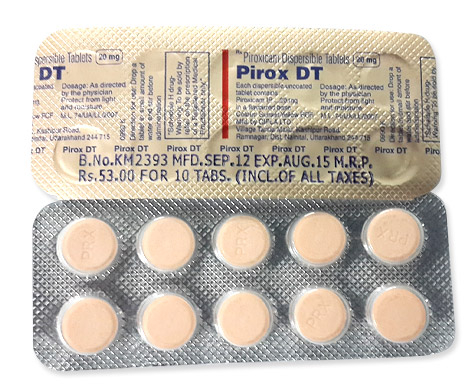
- Forms & Dosages: Capsules 10 mg and 20 mg; Tablets 10 mg and 20 mg; Dispersible tablets 20 mg; Gel/cream 0.5%–1% in markets where topical is available
- Manufacturers In United States: Pfizer, Sandoz, Hexal, Teva, Mylan (international suppliers listed in source)
- Registration Status In United States: FDA – Prescription-only (Rx); original NDA 018147
- OTC / Rx Classification: Prescription-only (Rx)
Major 2022–2026 Studies
What clinicians and patients most often ask is whether newer studies changed how we use Feldene for arthritis or acute pain.
Since 2022, research emphasis has favored comparative effectiveness and safety surveillance rather than new large pivotal randomized controlled trials for piroxicam.
Multiple small-to-moderate short-term randomized trials compared piroxicam 20 mg once daily to other NSAIDs like diclofenac and naproxen in musculoskeletal pain settings.
Pooled observational analyses and pharmacovigilance cohorts through 2026 prioritized long-term safety signals, especially gastrointestinal and renal events in older adults and polypharmacy patients.
These study designs reflect real-world monitoring and comparative efficacy questions rather than seeking new approval endpoints for piroxicam.
Trials referenced patient-reported pain scores and time-to-analgesia as primary outcomes in acute settings and functional scores in chronic arthritic populations.
Clinicians looking for Feldene trial data should note that Feldene 20mg trial reports commonly appear alongside safety studies in the literature.
Main Outcomes
Short-term musculoskeletal trials consistently show piroxicam 20 mg once daily provides pain relief comparable to diclofenac or naproxen.
Onset of analgesia for piroxicam is in line with other oxicam derivatives, delivering steady symptom control due to its long half-life.
Functional improvements in osteoarthritis and rheumatoid arthritis trials were similar when piroxicam was used at the typical 20 mg daily dose.
Where head-to-head comparisons exist, Feldene efficacy outcomes often mirror diclofenac and naproxen at equivalent analgesic endpoints.
Safety Observations
Safety-focused cohorts highlighted gastrointestinal bleeding and renal function changes, particularly in older patients and those on multiple interacting medicines.
Pharmacovigilance trends emphasized cardiovascular risk assessment that aligns with the NSAID class labeling.
Because piroxicam has a long half-life, adverse effects may persist longer after stopping compared with shorter-acting NSAIDs.
Real-world risk mitigation follows label guidance and national recommendations for gastroprotection and renal monitoring in high-risk patients.
Clinical Mechanism Of Action
Layman’s Explanation
People often ask how Feldene actually relieves pain and swelling.
Piroxicam is a non-steroidal anti-inflammatory drug that reduces the chemicals your body makes that cause inflammation and pain.
A single daily tablet can provide steady relief for arthritis and acute musculoskeletal pain, which is why many patients like once-daily Feldene dosing.
Scientific Breakdown
Piroxicam is an oxicam-class NSAID classified under ATC code M01AC01.
The drug non-selectively inhibits cyclooxygenase enzymes COX-1 and COX-2, which lowers prostaglandin synthesis and reduces inflammation and pain.
Its long terminal half-life of about 50 hours produces sustained COX inhibition and supports once-daily dosing but raises the risk of accumulation in renal or hepatic impairment.
Oral capsules and tablets provide systemic exposure, while topical gel or cream at 0.5%–1% is available in some markets for localized effect and reduced systemic absorption.
Because COX-1 inhibition affects gastric mucosa, GI risk is clinically relevant, while COX-2 inhibition mediates analgesia but contributes to class cardiovascular considerations.
Scope Of Approved And Off-Label Use
United States Approvals
Patients frequently ask whether Feldene is an approved option for arthritis in the United States.
Feldene (piroxicam) is approved and marketed for rheumatic diseases and musculoskeletal pain, with primary labeled indications that include osteoarthritis and rheumatoid arthritis.
In the US, Feldene is prescription-only under FDA NDA 018147, and prescribers should consult the product monograph for full labeled indications and dosing guidance.
Notable Off-Label Trends
Off-label use includes short-term treatment for acute gout flares, ankylosing spondylitis, and selected postoperative musculoskeletal pain, always at clinician discretion.
Topical formulations, where available, are often used off-label to reduce systemic exposure in patients with localized symptoms.
Clinical practice tends to reserve piroxicam for patients who benefit from once-daily dosing or who have not tolerated other NSAIDs.
Because of GI, renal, and cardiovascular safety considerations, long-term use requires careful risk assessment and monitoring in high-risk populations.
Dosage Strategy
General Dosing
A common question is what dose of Feldene to prescribe for an adult with arthritis.
The typical adult dose is 20 mg once daily, with a maximum recommended dose of 20 mg per day.
Some patients respond to a lower dose of 10 mg daily, and dividing the dose into 2 × 10 mg may reduce GI upset for sensitive patients.
Prescribe the lowest effective dose for the shortest necessary duration and reassess periodically to limit adverse effects.
Condition-Specific Dosing
For osteoarthritis and rheumatoid arthritis, start at 10–20 mg/day and maintain at 20 mg/day if tolerated, with chronic therapy reviews every 2–3 months.
For acute musculoskeletal pain, short-term once-daily dosing at 20 mg is commonly used with close clinical monitoring.
Pediatric use is not generally recommended because safety and efficacy are not established in children.
In the elderly, begin at the lowest effective dose and monitor renal and hepatic function due to prolonged elimination risk.
Safety Protocols
Contraindications
Patients often want to know who should not take Feldene.
Absolute contraindications include known hypersensitivity to piroxicam or other NSAIDs, active peptic ulcer or gastrointestinal bleeding, severe heart failure, and severe hepatic or renal impairment.
Use after coronary artery bypass graft surgery and pregnancy, especially the third trimester, are also absolute contraindications.
Relative contraindications that require monitoring include prior mild-to-moderate kidney or liver dysfunction, hypertension, a history of ulcers, the elderly, and those on anticoagulant/antiplatelet or corticosteroid therapy.
Adverse Effects
Common side effects include gastrointestinal symptoms such as nausea, dyspepsia, and gastritis; central nervous system complaints like headache and dizziness; and skin reactions such as rash or itching.
Fluid retention, edema, and increased blood pressure are also reported with piroxicam use.
Because the half-life is approximately 50 hours, adverse effects may persist longer after stopping the drug than with shorter-acting NSAIDs.
Consider co-prescribing a proton pump inhibitor for gastroprotection in high-risk patients and monitor renal function on a scheduled basis during chronic therapy.
Interaction Mapping
Food Interactions
Patients commonly ask whether they should take Feldene with food.
Food modestly affects piroxicam absorption, and taking the tablet with food can reduce gastrointestinal upset for sensitive patients.
Topical gel or cream avoids systemic food interaction concerns in markets where it is available.
Drug Combinations To Avoid
Major drug interaction risks include concurrent anticoagulants or antiplatelets, which increase bleeding risk when combined with piroxicam.
ACE inhibitors, ARBs, and diuretics may have reduced antihypertensive effect and an increased risk of renal impairment when used together with NSAIDs.
High-dose aspirin adds to gastrointestinal and cardiovascular risks, while systemic corticosteroids increase the chance of GI ulceration.
NSAIDs can reduce the clearance of lithium and methotrexate, potentially leading to toxic levels of those drugs.
Advise patients to report over-the-counter NSAID use to avoid inadvertent duplication and increased nephrotoxicity in polypharmacy contexts.
Patient Experience Analysis
Survey Data
Patients frequently prioritize steady pain relief and convenient dosing when choosing an NSAID.
Survey data and patient-reported outcomes often praise once-daily Feldene for its convenience and steady symptom control for chronic arthritic pain.
Common patient complaints focus on gastrointestinal discomfort, dizziness, and concerns about long-term safety when compared with shorter-acting agents like ibuprofen.
Adherence tends to be higher with once-daily regimens, but the long half-life can prolong adverse effects after discontinuation, which affects patient satisfaction.
Forum Trends
Online forums and pharmacy reviews show variable tolerance to Feldene; some patients prefer piroxicam for chronic pain control while others switch due to GI or edema issues.
Patients often report faster improvement in daily function with consistent dosing but are also attentive to monitoring advice from prescribers.
Clinicians should discuss expected onset, monitoring plans, and red-flag symptoms such as signs of GI bleeding, severe rash, or reduced urine output.
Distribution And Pricing Landscape
Where patients ask where Feldene comes from, the supply picture is broad and global.
Piroxicam is supplied under brand names such as Feldene and Brexin and as generics by large manufacturers including Pfizer, Sandoz, Hexal, Teva, and Mylan.
Local generics appear under names from Zentiva, Stada, Egis, Sun Pharma, Medochemie, and Krka in various markets.
Packaging commonly offers 10 mg and 20 mg capsules or tablets and dispersible 20 mg tablets, with topical gels and creams sold in select countries.
Older patents and multiple generics generally lower costs, but branded Feldene or branded generics may carry premium pricing in some regions.
Distribution channels include retail pharmacies, hospital formularies, and online prescription pharmacies.
Prescription-only status restricts over-the-counter availability in the US and most jurisdictions, influencing payer formulary placement.
Alternative Options
Comparison Table
Patients often ask how Feldene compares to familiar OTC or prescription NSAIDs.
Ibuprofen is available over the counter in lower doses and has a shorter half-life, requiring multiple daily doses but less accumulation risk.
Diclofenac offers similar joint pain efficacy, with varied formulations including topical options and a distinct hepatic safety profile.
Meloxicam is another oxicam used once daily and is often perceived to carry a lower GI risk compared with piroxicam in some clinical discussions.
Naproxen has a longer half-life than ibuprofen, may have a relatively more favorable cardiovascular profile in some analyses, and typically requires twice-daily dosing.
Pros And Cons
Pros of piroxicam include once-daily dosing, sustained analgesia, and a long clinical track record.
Cons include a long half-life of about 50 hours, which increases accumulation risk, and notable GI and renal safety concerns compared with some alternatives.
Choosing an alternative should be individualized based on GI history, cardiovascular risk, renal function, and potential drug interactions.
Regulatory Status
Global Approvals
Piroxicam is approved in many regions worldwide under prescription-only status.
The FDA classifies Feldene as prescription-only in the United States and lists the original NDA 018147 in its records.
EMA and national bodies in EU states also maintain approvals, while MHRA registers it as a prescription medicine in the UK.
Local approvals and availability of topical formulations vary by country and manufacturer.
Labeling Highlights
Product labeling consistently emphasizes contraindications such as active peptic ulcer, severe organ impairment, recent CABG, and pregnancy.
Labels instruct clinicians to assess GI and renal risk and to monitor elderly patients closely during chronic therapy.
SmPCs and national product monographs are the best references for country-specific warnings, pediatric guidance, and approved formulations.
Consolidated FAQ
Common Prescriber Questions
Is Feldene safe for long-term use?
Use the lowest effective dose, review therapy every 2–3 months, and monitor GI, renal, and cardiac status; avoid in severe organ impairment.
Can patients take OTC pain meds with piroxicam?
Avoid duplicate NSAID therapy and check for interactions with anticoagulants and other prescription medications.
What if a patient misses a dose?
Take as soon as remembered unless the next dose is near; do not double up to make up a missed dose.
Patient-Facing Answers
How fast does Feldene work?
Analgesia onset is comparable to other oral NSAIDs, and steady-state effects build because of the long half-life.
How should Feldene be stored?
Store at 25°C (77°F) with permitted excursions to 15–30°C (59–86°F), keep in original packaging and avoid moisture and direct sunlight.
Visual Guide
Packaging And Dosage Visuals
Clinicians should show patients common packaging such as Feldene capsules in 10 mg and 20 mg blister packs or bottles and dispersible 20 mg tablets.
In markets with topical options, include images of 0.5%–1% gel or cream tubes for localized use.
Safety Icons To Include
Essential pictograms for patient leaflets include contraindication icons for pregnancy and recent CABG, a GI bleeding warning, a renal monitoring reminder, a drug-interaction alert for anticoagulants, and storage temperature guidance.
Also add step-by-step pictograms: take with food if GI sensitive, stop and seek help for severe rash or signs of bleeding, and do not combine with other NSAIDs.
Storage And Transport
Pharmacy Handling
Pharmacies should store and transport Feldene at controlled room temperature: 25°C (77°F) with excursions allowed to 15–30°C (59–86°F).
Keep medications in original blister strips or bottles to protect from moisture and sunlight.
Do not freeze topical gels or creams, and ensure package integrity during shipment.
Patient Storage Tips
Advise patients to store Feldene away from bathrooms and heat sources, keep it in original packaging, and dispose of expired product per local regulations.
Guidelines For Proper Use
Prescriber Checklist
Confirm the indication and check absolute contraindications such as hypersensitivity, active peptic ulcer, severe organ impairment, and pregnancy.
Review concurrent medications including anticoagulants, ACE inhibitors/ARBs, and diuretics.
Obtain baseline renal and hepatic tests for chronic therapy, prescribe the lowest effective dose (10–20 mg/day), set a review interval every 2–3 months, and consider PPI gastroprotection for high-risk patients.
Patient Counseling Script
Explain once-daily dosing and expected onset, emphasize signs of GI bleeding and severe skin reactions, advise against OTC NSAID duplication and excess alcohol, and tell patients to seek immediate care for alarming symptoms.
Document informed consent and the monitoring plan when initiating chronic NSAID therapy.
Delivery Across United States
| City | Region | Delivery Time |
|---|---|---|
| New York | Northeast | 5-7 days |
| Los Angeles | West | 5-7 days |
| Chicago | Midwest | 5-7 days |
| Houston | South | 5-7 days |
| Phoenix | West | 5-7 days |
| Philadelphia | Northeast | 5-7 days |
| San Antonio | South | 5-9 days |
| San Diego | West | 5-7 days |
| Dallas | South | 5-7 days |
| San Jose | West | 5-7 days |
| Austin | South | 5-9 days |
| Jacksonville | Southeast | 5-9 days |
| Columbus | Midwest | 5-9 days |
| Fort Worth | South | 5-9 days |
Concluding Notes And Purchase Context
Many readers want a clear, practical takeaway on Feldene use and access.
Feldene is an effective once-daily NSAID option for osteoarthritis and rheumatoid arthritis when used at the typical 20 mg daily dose and monitored appropriately.
Monitor renal and hepatic function during chronic therapy and manage gastrointestinal risk proactively with gastroprotection when indicated.
Although FDA labeling lists Feldene as prescription-only, in our online pharmacy, feldene is available without a prescription, with discreet delivery to United States in 5-14 days.
Always advise patients to consult their prescriber before starting or stopping Feldene and to report any signs of bleeding, severe rash, or reduced urine output immediately.