Bimatoprost
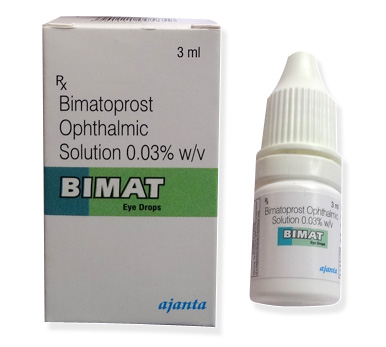
Bimatoprost
- In our pharmacy, you can buy bimatoprost without a prescription, with delivery available in many regions. In regulated markets it is normally prescription-only (Rx), so local rules may vary.
- Bimatoprost is used to reduce elevated intraocular pressure in open-angle glaucoma and ocular hypertension. It is a prostaglandin analog that increases the outflow of aqueous humor from the eye.
- The usual dose of bimatoprost is 1 drop in the affected eye(s) once daily, typically at night.
- The form of administration is an ophthalmic solution/eye drops; an intracameral implant is also available for specific use.
- The effect of the medication usually begins within a few hours, with noticeable pressure-lowering effects developing over the first day of treatment.
- The duration of action is about 24 hours, which is why it is used once daily.
- Alcohol does not have a known direct interaction with bimatoprost eye drops, but excessive alcohol use may worsen dehydration or eye irritation in some people.
- The most common side effects are eye redness, eyelash growth, itching, dry eye sensation, and mild eye discomfort.
- Would you like to try bimatoprost without a prescription?
Basic Bimatoprost Information
- INN (International Nonproprietary Name): Bimatoprost
- Brand Names Available In United States: Lumigan, Durysta, and multiple generics from Lupin, Apotex, and other suppliers
- ATC Code: S01EE03
- Forms & Dosages: Ophthalmic solution/drops 0.03% (0.3 mg/mL) in 3 mL and 5 mL plastic bottles; intracameral implant as Durysta
- Manufacturers In United States: AbbVie/Allergan, Lupin, Alembic, Apotex, Eugia Pharma, Gland Pharma, Hikma, Mankind, Micro Labs, Sandoz, Somerset Therap
- Registration Status In United States: Prescription-only; FDA-approved for open-angle glaucoma and ocular hypertension
- OTC / Rx Classification: Prescription Only (Rx) in all regulated markets
Key Findings From Recent Trials
Major 2022–2026 Studies
Main Outcomes
What does the newer evidence actually show for patients who need better pressure control?
Across recent comparative and real-world datasets, bimatoprost ophthalmic solution 0.03% remains one of the strongest once-daily prostaglandin analogs for lowering intraocular pressure in open-angle glaucoma and ocular hypertension.
That is why Lumigan for glaucoma continues to be a reference product, while bimatoprost generic versions have expanded access in the United States and abroad.
In practice, the most consistent finding is durable IOP lowering with bedtime use, whether the product is branded or generic.
Durysta has also become relevant as a single-use intracameral option for selected patients who need an alternative route or who struggle with daily adherence.
Real-world data also support broader use of combination therapy, especially bimatoprost + timolol, when monotherapy does not reach the pressure target.
Regulatory and market data help explain the scale of interest: 18 approved NDAs as of 2025, more than 130 clinical trials registered, and 74 bulk API manufacturers worldwide.
Safety Observations
The side-effect pattern has been remarkably consistent over time.
Ocular hyperemia is the complaint patients mention most often, especially during the first weeks.
Eyelash growth is common and sometimes welcome, but iris pigmentation, dry eye symptoms, and eyelid skin darkening can affect long-term comfort and appearance.
That tolerability issue is one of the main reasons patients switch therapy even when bimatoprost eye drops are working well on pressure.
What The Trend Line Shows
Three trends stand out.
First, generics are being used more widely across global markets.
Second, once-daily prostaglandin analogs remain the preferred baseline therapy for many patients.
Third, combination treatment is growing, especially in patients who need stronger IOP lowering without adding many extra doses.
Clinical Mechanism Of Action
Layman’s Explanation
Why does a single eye drop matter so much for glaucoma?
Bimatoprost helps fluid leave the eye more easily, which lowers the pressure inside the eye.
That lower pressure matters because sustained high IOP can damage the optic nerve over time.
For patients with glaucoma or ocular hypertension, bimatoprost for glaucoma is used to protect vision by reducing that pressure burden.
Scientific Breakdown
Prostamide/Prostaglandin Pathway
Bimatoprost is a prostamide analogue in ATC code S01EE03.
Its main effect is to enhance outflow through the uveoscleral pathway, with likely additional trabecular effects.
That is why it sits in the prostaglandin analogue class and why Lumigan for glaucoma is often discussed alongside other long-acting pressure-lowering drops.
Why Once-Daily Dosing Works
The pharmacology supports steady control with bedtime administration.
Bimatoprost ophthalmic solution 0.03% is a topical eye drop at 0.3 mg/mL, and that delivery route provides potent IOP lowering without the need for frequent dosing.
For many patients, simplicity is the difference between good adherence and missed doses.
Scope Of Approved & Off-Label Use
United States Approvals
What is actually approved, and what is just being talked about online?
In the United States, bimatoprost ophthalmic solution is FDA-approved for reducing IOP in open-angle glaucoma and ocular hypertension.
It is prescription-only, and generic products are available, including Lupin and Apotex.
Lumigan remains the reference brand, while Durysta is a distinct implant formulation with a different route and use case.
Notable Off-Label Trends
Cosmetic Lash Use
Online, bimatoprost topical products are often discussed for eyelash enhancement.
That cosmetic use is unapproved, even though many people search for terms like Latisse eyelash growth serum or Latisse eyelash serum when they are looking into lash changes.
Packaging and sourcing can vary, so it is important to know exactly what product is being purchased.
Regional Market Differences
Brand spelling and box design differ by country, and regional names can be confusing.
Japan, Russia, and parts of the EU use Lumigan with locally compliant labeling.
India also has Lumigan RC and Retino, which show how packaging and naming can shift even when the active ingredient stays the same.
For patients comparing products online, the good news is that discreet delivery to United States is often available through pharmacy channels, including our online pharmacy, where bimatoprost is available without a prescription with delivery in 5-14 days.
Dosage Strategy
General Dosing
How should it be used day to day?
The standard regimen is 1 drop in the affected eye(s) once daily, typically at night.
Extra doses do not improve control and can raise the chance of side effects, so sticking to the prescribed schedule matters more than adding drops.
Available packaging commonly includes 3 mL or 5 mL plastic bottles, which is helpful when comparing bimatoprost eye drops online.
Condition-Specific Dosing
Glaucoma And Ocular Hypertension
For chronic therapy, the once-daily schedule is the usual approach.
IOP response should be reassessed periodically because pressure control can change over time.
Special Populations
Use under age 18 is not recommended because safety and efficacy have not been established.
No routine dose adjustment is typically needed in older adults.
Caution is reasonable in liver or kidney impairment, although meaningful systemic absorption is rare.
Safety Protocols
Contraindications
Which patients should not use it right away?
Do not use bimatoprost if there is allergy to bimatoprost or excipients, active ocular infection such as conjunctivitis, or severe ocular surface disease.
Extra caution is warranted with uveitis, iritis, aphakia, pseudophakia with a ruptured posterior lens capsule, and other ocular inflammatory conditions.
Adverse Effects
Common Effects
The most common Bimatoprost side effects include ocular hyperemia, itching, dry eye sensation, foreign body sensation, eyelash growth, and eyelid skin darkening.
These effects are usually local and are often the reason patients notice the medicine before they notice the pressure benefit.
Less Common But Important Risks
Iris pigmentation changes can happen and may be permanent, especially in mixed-color irises.
Blurred vision can occur, and macular edema is rare but clinically important.
Patients with asthma or a history of bronchospasm need caution even though the drug is topical, because respiratory sensitivity is still listed as a concern.
Interaction Mapping
Food Interactions
Are meals a problem with this medicine?
No meaningful food interactions are expected with ophthalmic bimatoprost.
Topical eye delivery keeps diet-related issues very limited compared with oral therapy.
Drug Combinations To Avoid
Same-Class Duplication
Avoid duplicating prostaglandin analog therapy unless the prescriber specifically directs it.
Clinical Caution Combinations
Combining bimatoprost eye drops with other irritating eye products can make redness and discomfort worse.
Combination therapy such as timolol combination products is intentional and common, so the concern is mainly practical rather than metabolic.
That is one reason bimatoprost generic regimens are often paired thoughtfully rather than stacked casually.
Patient Experience Analysis
Survey Data
What do patients say once they start using it?
Most patients value the once-daily schedule and the effective IOP reduction.
The biggest complaint is visible redness, especially early in therapy.
Eyelash growth is sometimes seen as a benefit and sometimes as an unwanted cosmetic change.
Forum Trends
Online Drugstore Queries
Search patterns often include phrases like Lumigan 0.03% price buy online, Lumigan eye drops glaucoma, and Bimatoprost eyelash serum.
What Patients Ask Most
Price, generic substitution, bottle size, and how long redness lasts are the questions that come up again and again.
Brand spelling and carton design can vary by country, which adds confusion when people compare online listings.
For many buyers, the practical question is not whether bimatoprost works, but which version is in stock and how fast it can arrive.
Distribution & Pricing Landscape
Market Structure
Who is actually making the medicine?
The originator is AbbVie/Allergan.
Major suppliers include Lupin, Alembic, Apotex, Eugia Pharma, Gland Pharma, Hikma, Mankind, Micro Labs, Sandoz, and Somerset Therap.
The supply chain is broad, with 11 finished product packagers/providers and 74 bulk API manufacturers reported in the available data.
Pricing And Access Trends
Generic Expansion
Generic expansion has widened access in the United States, India, and other global markets.
Lower-cost versions often come in 3 to 5 mL plastic bottles, which keeps packaging simple and familiar.
Regional Packaging Notes
European packaging may be produced by Allergan Pharmaceuticals Ireland.
India-specific examples include Lumigan RC and Retino, both of which reflect local naming and packaging norms.
For patients comparing options, availability, bottle size, and total price often matter just as much as the active ingredient.
Alternative Options
Comparison Table
| Drug | Brand | Class | Typical Notes |
|---|---|---|---|
| Latanoprost | Xalatan | Prostaglandin analog | Similar first-line role |
| Travoprost | Travatan | Prostaglandin analog | Comparable once-daily use |
| Tafluprost | Zioptan | Prostaglandin analog | Often chosen for tolerability concerns |
| Timolol | Timoptic, Betimol | Non-selective beta-blocker | Different systemic caution profile |
Pros And Cons
Bimatoprost Strengths
For bimatoprost for glaucoma, the strengths are clear: strong IOP lowering, once-daily convenience, and broad brand and generic availability.
That combination makes it a dependable option when adherence matters.
Tradeoffs Versus Competitors
The main tradeoff is more hyperemia than some alternatives.
Cosmetic lash growth may be unwanted for some patients.
Timolol may fit certain patients better, but beta-blocker cautions make it less suitable for people with respiratory concerns.
Among the prostaglandin analogue options, the best choice often comes down to tolerability, cost, and how the eyes look and feel after the first month.
Regulatory Status
United States And EU Status
Is this medicine regulated differently across markets?
In the United States, the FDA status is Rx-only for open-angle glaucoma and ocular hypertension.
In the EU, it is also an approved prescription medicine, with Lumigan as the reference brand.
Romania’s ANMDMR lists bimatoprost 0.03% as prescription-only, usually as Lumigan or an equivalent generic.
Global Registrations
Other Markets
Approved markets also include India, Canada, Australia, and other regulated jurisdictions.
Data Transparency
Public documentation is available through FDA Orange Book, DailyMed, EMA materials, and ANMDMR records.
Available intelligence also notes 211 international patents, 18 approved NDAs as of 2025, and 12 master file entries.
Because labels differ by country, patients should always check the local carton and package insert before use.
Consolidated FAQ
Common Patient Questions
What Is Bimatoprost Used For?
It is used for glaucoma and ocular hypertension.
Is It The Same As Latisse?
It comes from the same active ingredient family, but cosmetic lash products are not approved for glaucoma treatment.
When Should It Be Used?
It is usually used once nightly.
How Long Can It Be Used?
It can be used chronically as long as IOP lowering is needed.
Does It Work Immediately?
Pressure reduction begins early, but the treatment response should still be monitored over time.
Visual Guide
Bottle And Implant Formats
Common formats include the 3 mL bottle, the 5 mL bottle, and the Durysta intracameral implant.
Box design can vary by jurisdiction, so the same medicine may look different from one country to another.
How To Read The Label
Key Label Fields
Check the INN, strength, route, and Rx-only status.
The strength should read 0.03% for the ophthalmic solution.
What To Check Before Use
Look at the expiry date, seal integrity, and storage instructions before opening the bottle.
That simple check can save a lot of trouble later, especially when buying Bimatoprost ophthalmic solution 0.03% online.
Storage & Transport
Storage Rules
How should it be kept at home?
Store below 25°C.
Do not freeze the bottle.
Protect it from heat and light.
Unopened shelf life is typically up to 2 years.
Transport And In-Use Handling
After Opening
Discard the bottle 4 weeks after opening to reduce contamination risk.
Travel Considerations
Keep it in carry-on luggage when possible.
Avoid extreme temperatures during travel.
Do not transfer the drops into another container.
Guidelines For Proper Use
Step-By-Step Administration
Wash hands first.
Tilt the head back and instill 1 drop into the affected eye without touching the tip to the eye or lashes.
Close the eyes gently and avoid squeezing hard.
If using other eye medicines, separate them by several minutes.
Missed Dose And Overdose
Missed Dose
If a dose is missed, use it when remembered unless it is almost time for the next dose.
Do not double up.
Overdose
If too much is used, rinse with warm water.
If swallowed, supportive care is recommended and serious toxicity is uncommon, but monitoring is still appropriate.
Delivery Across United States
| City | Region | Delivery Time |
|---|---|---|
| New York | Northeast | 5-7 days |
| Los Angeles | West | 5-7 days |
| Chicago | Midwest | 5-7 days |
| Houston | South | 5-7 days |
| Phoenix | West | 5-7 days |
| Philadelphia | Northeast | 5-7 days |
| San Antonio | South | 5-7 days |
| San Diego | West | 5-7 days |
| Dallas | South | 5-7 days |
| San Jose | West | 5-7 days |
| Austin | South | 5-7 days |
| Jacksonville | South | 5-9 days |
| Fort Worth | South | 5-9 days |
| Columbus | Midwest | 5-9 days |