
Rogaine
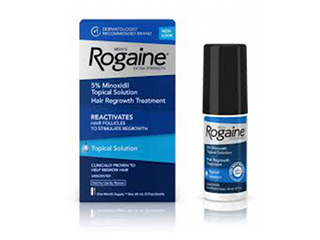
Rogaine
- Rogaine (minoxidil) can be purchased over the counter in the United States and many other countries without a prescription for topical use. Oral minoxidil is prescription only.
- Rogaine is used for the treatment of androgenetic alopecia (pattern hair loss). Its active ingredient, minoxidil, helps stimulate hair follicles and prolong the growth phase of hair; it was originally developed as a blood pressure medicine.
- The usual dose is 1 mL of 2% or 5% topical solution applied twice daily, or 5% foam applied as about half a capful twice daily. Do not use in children under 18 unless specifically directed by a clinician.
- The form of administration is topical solution or topical foam applied to the scalp.
- Hair regrowth is not immediate; visible improvement usually begins after about 4 to 6 months of regular use.
- The effect lasts only while you keep using it. If treatment is stopped, any regrown hair is often lost within 3 to 4 months.
- Do not drink alcohol with the oral form unless your doctor says it is safe. Alcohol can worsen dizziness and low blood pressure, especially with systemic minoxidil.
- The most common side effects are scalp irritation, dryness, flaking, itching, and an initial temporary shedding phase. Unwanted facial hair growth can also occur.
- Would you like to try Rogaine without a prescription?
Basic Rogaine Information
- INN (International Nonproprietary Name): Minoxidil
- Brand names available in United States: Rogaine, Kirkland Signature, Equate Hair Regrowth Treatment, Minoxidil extra strength
- ATC Code: D11AX01 for hair loss treatment; C02DC01 when used systemically for hypertension
- Forms & dosages: Topical solution 2% and 5%; topical foam 5%; oral tablet 2.5 mg and 10 mg
- Manufacturers in United States: Kenvue Brands, Perrigo, Aurobindo Pharma, Taro, Apotex, Teva, Sun Pharma, Watson Labs, Pfizer, Bausch & Lomb, Hikma
- Registration status in United States: OTC for topical use; Rx for oral use
- OTC / Rx classification: Topical minoxidil is OTC; oral minoxidil is prescription only
Wondering whether Rogaine is worth the money, or whether the first weeks of shedding mean it is making things worse?
That is the kind of question patients ask every day at the pharmacy counter.
For androgenetic alopecia, topical minoxidil remains the main over-the-counter hair regrowth treatment in the United States.
In practice, Rogaine is available as 2% and 5% topical solution or foam, and the active ingredient is minoxidil.
Across recent clinical use and trial data through 2026, the pattern is consistent: hair density can improve, shedding can decrease, and progression can slow when the product is used correctly and long enough.
Visible change usually takes 4 to 6 months, and stopping treatment can let gains fade within 3 to 4 months.
Key Findings From Recent Trials
Major 2022–2026 Studies
Patients usually want the short version first: does topical minoxidil actually help?
The strongest answer is yes, especially for pattern hair loss.
Topical minoxidil stays the core OTC medication for androgenetic alopecia, with Rogaine and other generic minoxidil options used by both men and women.
Across studies and real-world use, the main benefits are improved hair density, less shedding, and better stabilization of thinning over time.
The 5% strength often works faster and can produce a stronger visible response than 2%, but it also brings a higher risk of scalp irritation.
That tradeoff matters when a patient is choosing between minoxidil 2% and minoxidil 5% for everyday use.
Main Outcomes
Hair regrowth treatment with topical minoxidil works best when the follicle is still alive but miniaturized.
That is why the crown and patterned thinning areas often respond better than long-standing bald areas.
Patients commonly notice less shedding first, then thicker-looking strands later, and only after that do they see more coverage.
In men and women with androgenetic alopecia, the practical goal is often stabilization before dramatic regrowth.
Safety Observations
The most common problems are scalp irritation, dryness, itching, flaking, and the confusing early shedding phase.
Rare systemic effects can happen if someone uses too much topical product or applies it in a way that increases absorption.
For that reason, more is not better with topical minoxidil, even when hair loss feels urgent.
That simple rule prevents a lot of avoidable side effects.
Clinical Mechanism Of Action
Layman’s Explanation
People often ask how a simple liquid or foam can help thinning hair.
The easiest way to explain it is that Rogaine helps wake up miniaturized follicles so hairs can grow thicker and stay in the growth phase longer.
It does not create new follicles.
It works with the follicles that are still there.
Scientific Breakdown
Minoxidil is classified as D11AX01 for hair loss treatment and C02DC01 when used orally for hypertension.
Its hair-loss effect is thought to involve prolonging anagen, increasing follicular blood flow, and supporting recovery in follicle size.
That is why the minoxidil mechanism fits androgenetic alopecia better than scarring alopecias or hair loss caused by infection.
It is a hair loss medication for pattern thinning, not a cure-all for every kind of shedding.
Why It Helps Androgenetic Alopecia
Pattern hair loss follows the hair growth cycle, and the cycle changes slowly.
When a follicle is shrinking over time, minoxidil can help it spend more time growing and less time resting.
That makes it a good fit for early thinning at the part line, temples, or crown.
Why Onset Is Delayed
Patients sometimes expect a quick cosmetic change in a few weeks, but follicles do not work that fast.
Because the hair growth cycle moves slowly, visible improvement may take several months.
That delay is normal, not a sign that the product failed.
Scope Of Approved And Off-Label Use
United States Approvals
In the United States, topical minoxidil is FDA-approved OTC in 2% and 5% strengths.
Oral minoxidil is prescription only and approved for severe hypertension as Loniten.
That distinction matters because the tablet is not the same thing as the foam or topical solution sold for hair regrowth treatment.
Notable Off-Label Trends
Off-label oral minoxidil for hair loss is being discussed more often, but it remains prescription use and needs careful monitoring.
Topical Rogaine is used by both men and women, and women’s packaging is widely marketed in pharmacies and online.
In our online pharmacy, Rogaine is available without a prescription, with discreet delivery to the United States in 5-14 days.
That option is appealing to shoppers who want privacy and predictable access without a clinic visit.
Brand And Packaging Examples
Rogaine is sold in the US, Canada, the UK, and the EU.
Kirkland Signature and Equate Hair Regrowth Treatment are common US retail alternatives.
Generic packaging varies by supplier, while the active ingredient remains the same.
For many shoppers, the decision comes down to brand familiarity, bottle size, and whether they prefer a dropper or minoxidil foam.
Dosage Strategy
General Dosing
The standard alopecia regimen is 1 mL of topical solution twice daily for 2% or 5% products.
Foam is typically used as half a capful twice daily.
Topical use is not recommended under 18 years of age.
For hair loss, the key is consistency, not occasional high-volume use.
Condition-Specific Dosing
For androgenetic alopecia, minoxidil should be used continuously, with response assessed after 4 to 6 months.
For hypertension, oral minoxidil is usually 5 mg once daily and titrated by response.
Those are very different use cases, even though they share the same active ingredient.
Adjustment Notes
Older adults do not have a standard topical dose change, but thinner skin can increase absorption, so monitoring still matters.
With liver or kidney impairment, caution is appropriate, especially if systemic exposure is possible.
That is another reason oral minoxidil should be handled as a prescription therapy, not a self-treatment product.
Missed Dose Basics
If a topical dose is forgotten, apply it when remembered unless it is close to the next dose.
Do not double up.
Skipping one dose is better than overapplying and irritating the scalp.
Safety Protocols
Contraindications
Minoxidil should not be used by people with a known allergy to minoxidil or the formulation ingredients.
Topical forms should be avoided on open wounds, sunburn, scalp infection, or active dermatoses.
Oral minoxidil should not be used in untreated pheochromocytoma, severe heart failure, recent MI, or pericardial effusion.
Adverse Effects
The most common side effects are redness, dryness, flaking, itching, and irritation.
Some patients also notice temporary shedding when treatment starts, which can be upsetting if they do not expect it.
That early shed is often part of the hair growth cycle adjustment, not a permanent setback.
Higher-Risk Groups
Patients with cardiovascular disease, scalp psoriasis, or fragile skin may absorb more and need closer monitoring.
Pregnancy and breastfeeding are different categories: safety is not established, so avoidance is the practical choice.
People with sensitive scalps often do better with the foam or with a gentler application routine.
Red Flags
Rapid heartbeat, dizziness, swelling, or chest symptoms should prompt medical review.
Those warning signs are uncommon with normal topical use, but they should never be ignored.
Interaction Mapping
Food Interactions
Topical Rogaine has no meaningful food interactions.
Oral minoxidil is managed as part of cardiovascular care, but not because of specific food restrictions in the usual OTC sense.
Drug Combinations To Avoid
If oral minoxidil is prescribed, caution is needed with other blood-pressure-lowering drugs.
For topical treatment, avoid stacking several scalp irritants at the same time because dermatitis can worsen quickly.
A pharmacy review is smart when a patient uses dandruff shampoos, harsh styling products, or other scalp treatments.
Practical Pharmacy Note
Patients should disclose all antihypertensives, diuretics, and scalp products before starting treatment.
That simple medication history helps prevent unnecessary side effects and confusing reactions.
Patient Experience Analysis
Survey Data
Patients usually like easy OTC access, predictable dosing, and the choice between foam and solution.
Brand familiarity is strongest with Rogaine, but Kirkland Signature minoxidil and Equate also shape shopping behavior in the United States.
For many customers, the biggest selling point is being able to start treatment right away.
Forum Trends
Online discussion often centers on early shedding anxiety, dryness, itching, and frustration with slow results.
Positive reports usually mention reduced shedding first, followed later by a thicker appearance.
That sequence matches how hair regrowth treatment tends to work in real life.
Women’s Use Patterns
Women often look for less messy formulations and may prefer minoxidil foam or female-labeled packaging.
The purple bottle is a familiar cue for shoppers who want a product marketed for women.
In practice, many patients choose based on texture, smell, and how easily the product fits into morning routines.
Adherence Barriers
Twice-daily routines and a greasy feel can reduce long-term adherence.
That is one reason some patients stop too soon, right before the treatment has a fair chance to work.
A simple, repeatable routine matters more than intense but short-lived effort.
Distribution And Pricing Landscape
Market Availability
Rogaine and generic minoxidil are widely sold in pharmacies, big-box stores, and online marketplaces.
Common pack sizes include 1-, 3-, and 6-month supplies, which helps patients budget and stay consistent.
Shoppers often compare minoxidil solution, minoxidil 5% foam, and store brands before deciding what to buy.
Supplier Landscape
Major international suppliers include Kenvue Brands, Perrigo, Aurobindo Pharma, Taro, Apotex, Teva, Sun Pharma, Watson Labs, Pfizer, Bausch & Lomb, and Hikma.
There are also many packagers worldwide, which is why the same active ingredient appears in different cartons and bottle styles.
That is normal for a generic product with an expired patent.
Retail Examples
In the US, Kirkland Signature, Equate, and Rogaine are common names shoppers recognize.
International examples include Alocutan, Minoxidil Biorga, and Minoxidil Cooper.
Packaging changes, but the basic treatment principle stays the same.
Alternative Options
Comparison Table
| Option | Route | Typical Use | Main Point |
|---|---|---|---|
| Minoxidil | Topical | Androgenetic alopecia | OTC access, broad availability, slow onset |
| Finasteride | Oral | Pattern hair loss in men | Prescription therapy, generally for men only |
| Plant-based serums | Topical | Cosmetic hair care | Often gentler, less established evidence |
| Stemoxydine | Topical | Cosmetic support | Alternative option when standard therapy is not tolerated |
Pros And Cons
The biggest pros of minoxidil are OTC access, broad availability, and long-standing use.
The main downsides are slow onset, maintenance that continues indefinitely, and irritation risk.
Finasteride may be a better fit for some men, while plant-based serums may appeal to patients who want a cosmetic-style routine.
Best-Fit Scenarios
Minoxidil is a strong fit for early androgenetic alopecia and for patients who want an OTC option first.
Alternatives deserve consideration if scalp intolerance develops or if the patient cannot stick with twice-daily application.
When adherence is poor, even a good product can underperform.
Regulatory Status
U.S. And Global Status
In the United States, topical minoxidil is OTC and oral minoxidil is Rx.
In the EU, Canada, the UK, and Australia, topical minoxidil is generally non-prescription, while oral use remains prescription only.
That global split is why shoppers see similar products sold over the counter in some countries and behind the pharmacy counter in others.
Classification Details
Topical minoxidil is usually treated as a dermato-cosmetic OTC product in many markets.
Oral minoxidil stays prescription only because it is used for hypertension and requires clinical monitoring.
The active ingredient does not change when the package design changes from one country to another.
Labeling Note
Brand names and pack designs vary by country, but the ingredient is the same.
That is why patients traveling internationally can see familiar products under unfamiliar labels.
Consolidated FAQ
Common Questions
How long does Rogaine take to work? Visible change usually takes 4 to 6 months.
What happens if I stop? Regrowth may be lost within 3 to 4 months.
Is it for men or women? Both, depending on strength and labeling.
Practical Answers
Is 5% better than 2%? Often yes, but irritation can be more common.
Can I use it on a beard or eyebrows? That is off-label and should be guided by a clinician.
Should I expect more shedding at the start? That can happen and does not automatically mean the treatment is failing.
Do I need to keep using it? Yes, because maintenance is ongoing if you want to preserve the result.
Visual Guide
What Patients Should See
Before treatment, patients may notice a widened part, thinning crown, or increased shedding.
Early treatment can bring temporary shedding, which often worries people more than the underlying hair loss itself.
Later, the scalp may look less visible and strands may appear thicker.
How To Present It In A Blog
A simple timeline graphic works well: week 1, month 2, month 4, and month 6.
That format helps patients understand why patience matters with minoxidil results.
Visual Safety Cues
Use warning icons for irritation, dizziness, and facial hair growth.
A good graphic should balance hope with realistic expectations.
Storage And Transport
Storage Basics
Store minoxidil at room temperature, away from heat and moisture.
Keep the bottle tightly closed.
A damp bathroom cabinet or hot windowsill is not a good place for it.
Travel Handling
Keep the product in the original packaging to prevent leaks and discoloration.
That is especially helpful for foam containers and travel bags.
Patient Reminder
Do not leave foam or solution in a hot car.
Do not store it where repeated humidity exposure can affect the packaging.
Guidelines For Proper Use
Application Steps
Apply minoxidil only to a dry scalp.
Use the measured dose: 1 mL of solution or half a capful of foam, twice daily as directed.
Wash hands after use.
Best-Use Habits
Let the product dry fully before bed or styling.
Avoid overapplication because more product does not mean better results and may increase side effects.
Consistency matters more than short bursts of heavy use.
When To Stop And Seek Care
Severe irritation, chest symptoms, rapid heartbeat, swelling, or accidental ingestion need prompt medical attention.
If a patient develops a rash that keeps worsening, the application routine should be reviewed.
Adherence Tip
Putting the dose into an existing morning and evening routine helps more than trying to remember it later.
That is one reason foam can work better for some people than a messy solution bottle.
Delivery Across United States
| City | Region | Delivery Time |
|---|---|---|
| New York | Northeast | 5-7 days |
| Los Angeles | West | 5-7 days |
| Chicago | Midwest | 5-7 days |
| Houston | South | 5-7 days |
| Phoenix | West | 5-7 days |
| Philadelphia | Northeast | 5-7 days |
| San Antonio | South | 5-9 days |
| San Diego | West | 5-7 days |
| Dallas | South | 5-7 days |
| San Jose | West | 5-9 days |
| Austin | South | 5-7 days |
| Jacksonville | South | 5-9 days |
| Fort Worth | South | 5-9 days |
| Columbus | Midwest | 5-9 days |
For many patients, the decision to start Rogaine comes down to one simple question: am I ready to use it consistently long enough to judge the result?
If the answer is yes, topical minoxidil remains one of the most practical hair loss medication options available in the United States.
It is familiar, accessible, and backed by long-standing use for androgenetic alopecia.
Used correctly, it can help slow thinning, reduce shedding, and support the hair growth cycle without a prescription.