
Finasteride
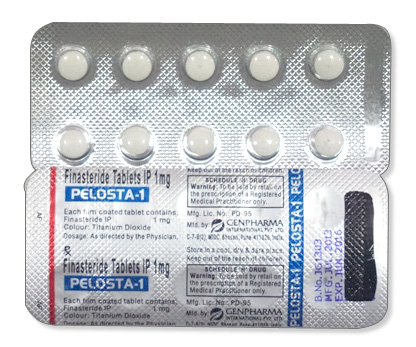
Finasteride
- Finasteride is typically available by prescription at licensed pharmacies and online pharmacies in many countries, but it is also sometimes marketed by some sellers without a prescription. Medical supervision is recommended because it is prescription-only in most jurisdictions.
- Finasteride is used to treat benign prostatic hyperplasia and male pattern hair loss. It works by inhibiting type II 5-alpha-reductase, which lowers dihydrotestosterone (DHT) levels.
- The usual dose is 1 mg once daily for hair loss and 5 mg once daily for benign prostatic hyperplasia.
- The form of administration is an oral tablet.
- Finasteride usually starts working gradually; for hair loss, visible improvement may take about 3 to 6 months, while prostate symptoms may improve over several months.
- The duration of action is about 24 hours per dose, so it is taken once daily; benefits continue only with ongoing use.
- Alcohol does not have a known major direct interaction with finasteride, but heavy drinking may worsen overall health and should be limited.
- The most common side effects are decreased libido, erectile dysfunction, and reduced ejaculate volume.
- Would you like to try finasteride without a prescription?
Key Findings From Recent Trials
- INN (International Nonproprietary Name): Finasteride.
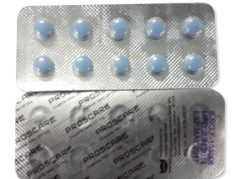
- Brand names available in United States: Propecia, Proscar.
- ATC Code: G04CB01.
- Forms & dosages: Oral tablet, 1 mg; oral tablet, 5 mg.
- Manufacturers in United States: Merck & Co.; generics from Actavis Pharma, Cipla, Sun Pharma, DSM Sinochem, Hetero Drugs, Sandoz, and Torrent.
- Registration status in United States: FDA-approved under NDA 020180 and NDA 020788.
- OTC / Rx classification: Prescription only in virtually all jurisdictions.
What has the newer evidence shown patients who are trying to decide between finasteride for hair loss and finasteride for prostate symptoms?
Across studies published from 2022 through 2026, the same pattern keeps showing up: finasteride remains effective when it is taken consistently, and its benefits are tied to continued use.
For male pattern hair loss, recent comparative and long-term data still support Propecia 1mg as a standard option for stabilization of shedding, higher hair counts, and better crown and vertex density over time.
Patients often notice the first meaningful change after 3 to 6 months, and results tend to hold as long as therapy continues.
For benign prostatic hyperplasia, Proscar 5mg continues to show reduced prostate volume, improved urinary flow, and a lower risk of progression in appropriate patients who stay on treatment long term.
That chronic-use model matters, because stopping finasteride usually allows the therapeutic gains to fade over 6 to 12 months.
Safety data in recent trials still point to the same key counseling points: sexual adverse effects, mood symptoms such as depression or anxiety, and PSA suppression that can affect prostate evaluation.
In practical terms, finasteride is a prescription medicine in nearly every country, is approved in over 100 countries, and remains one of the most established oral options for androgenetic alopecia and BPH.
Clinical Mechanism Of Action
Ever wonder why one tablet can help both hair loss and an enlarged prostate?
The short answer is that finasteride lowers a hormone signal that drives both problems.
In plain language, it slows the miniaturization of hair follicles and helps shrink prostate tissue over time.
Finasteride is a 5-alpha-reductase inhibitor with ATC code G04CB01.
It blocks the conversion of testosterone to dihydrotestosterone, better known as DHT, which is the main hormone linked to androgenetic alopecia and BPH.
That DHT suppression is why the finasteride mechanism is so useful in two very different conditions.
The usual oral dosing context is 1 mg daily for alopecia and 5 mg daily for BPH.
Because metabolism occurs in the liver, extra caution is sensible in hepatic dysfunction even though specific dose changes are not usually defined.
Scope Of Approved And Off-Label Use
Is this drug actually approved in the United States, or is it something people mainly find online?
In the U.S., finasteride is FDA-approved under NDA 020180 and NDA 020788.
Propecia 1mg is the approved oral tablet for male-pattern hair loss, and Proscar 5mg is the approved oral tablet for benign prostatic hyperplasia.
That is the core scope of use in routine practice: finasteride tablets for hair loss in men and finasteride tablets for prostate enlargement.
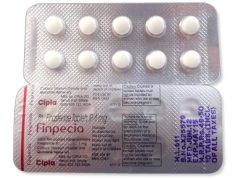
Online searches often bring up brand terms like Propecia and Finpecia, especially from people comparing price, packaging, and access.
Finasteride has also been studied in women, including for hirsutism and PCOS, but those uses are not regulatory approved.
It is not approved for females, and it is contraindicated in pregnancy because of fetal risk.
There is also no approved injectable, topical, or other human formulation available, so the standard approved products remain the oral tablets only.
In our online pharmacy, finasteride is available without a prescription, with discreet delivery to United States in 5-14 days.
Dosage Strategy
What dose should a patient actually start with, and how long before expectations should be adjusted?
The standard adult regimen is finasteride 1mg once daily for androgenetic alopecia and finasteride 5mg once daily for benign prostatic hyperplasia.
For hair loss, the response window is usually 3 to 6 months, so patience is part of the plan.
For BPH, treatment is generally long term and often measured in years rather than months.
People using finasteride 1mg for alopecia should continue treatment to maintain benefit, because stopping can reverse results within 6 to 12 months.
For prostate symptoms, periodic reassessment makes sense during chronic therapy so the need for ongoing treatment stays clear.
Children should not use finasteride, since safety and efficacy are not established.
Older adults do not need a routine dose adjustment, but organ function should still be monitored when clinically appropriate.
If a dose is missed, take it when remembered unless it is close to the next dose, and do not double up.
Safety Protocols
What is the main thing patients and caregivers need to avoid with finasteride?
Pregnancy exposure is the big one.
Pregnancy, women of childbearing potential, and hypersensitivity to finasteride or excipients are absolute contraindications.
Crushed or broken tablets deserve special caution if pregnancy is possible, because the fetal risk is tied to male genital abnormalities.
The common finasteride side effects most patients ask about are decreased libido, erectile dysfunction, decreased ejaculate volume, breast tenderness or enlargement, and rash.
Depression and anxiety are less common but still important to mention during counseling.
Another key safety point is PSA reduction.
Because finasteride can lower PSA values, it may mask prostate pathology in men being evaluated for prostate disease.
That matters in BPH follow-up and in any prostate cancer workup, so the prescribing clinician should always know the patient is taking finasteride.
Use caution in hepatic dysfunction as well, since the drug is metabolized in the liver.
Interaction Mapping
Do food choices matter when someone starts finasteride?
Not much.
Finasteride can be taken with or without food, and there is no major food restriction for most patients.
That flexibility helps adherence, especially for people already juggling morning coffee, work, and a long medication list.
While there is no long list of major avoidance pairs to memorize here, PSA interpretation still needs attention during prostate evaluation.
Combination care is sometimes discussed in BPH management, including finasteride + tadalafil when urinary symptoms and erectile dysfunction are both part of the picture, but that decision should be clinician-directed.
For many men, the important interaction issue is really co-management rather than a hard stop on other medicines.
When patients use finasteride tablets consistently, the routine matters more than the meal.
Keeping the schedule simple often improves adherence and, over time, improves the chances of staying on therapy long enough to see benefit.
Patient Experience Analysis
What do patients usually care about most when they order a finasteride hair loss pill or ask about Proscar for prostate symptoms?
For hair loss, the priorities are visible preservation, slower shedding, and a daily oral option that is easy to live with.
For BPH, the goal is usually urinary symptom relief and, when possible, avoiding surgery.
That is why the patient experience tends to center on results that are practical, not dramatic headlines.
In forums and review discussions, the same concerns come up again and again: early sexual side effects, uncertainty during the first 3 months, and whether benefits reverse after stopping.
Propecia and Finpecia are especially common brand searches because many people first encounter the medicine online rather than in a clinic.
Real-world counseling can make a big difference here.
When patients understand the timeline, the need for maintenance therapy, and the monitoring points, satisfaction is usually better and surprise drop-off is less likely.
Distribution And Pricing Landscape
How widely is finasteride actually available, and why do prices vary so much from one website or country to another?
The original manufacturer is Merck & Co., but the global market now includes generics from Actavis Pharma, Cipla, Sun Pharma, DSM Sinochem, Hetero Drugs, Sandoz, and Torrent.
There are more than 50 global API and finished-dosage manufacturers across India, the EU, Korea, the U.S., and China.
That broad supply base is one reason finasteride generic options are usually less expensive than originator brands.
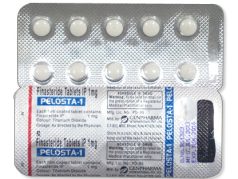
Packaging also varies, but blister strips are the most common format, often with 28 to 30 tablets per box.
Brands such as Propecia, Proscar, Finastid, Finpecia, Penester, and Chibro-Proscar may appear depending on the market and local labeling rules.
Availability varies by country, language, and regulatory requirements, so the same medicine can look different on different shelves.
Patients shopping online for alopecia often notice that brand recognition can influence both pricing and search behavior.
Alternative Options
Is finasteride the only option for hair loss or prostate symptoms?
No, but it sits in a very useful middle ground because it is approved for both male-pattern baldness and BPH.
| Medication | Main Use | Key Point |
|---|---|---|
| Finasteride | Hair loss and BPH | Once-daily oral treatment that suppresses DHT |
| Dutasteride | Hair loss and BPH in some settings | Dual type 1 and 2 5-alpha-reductase inhibition, often a stronger DHT suppressor |
| Tamsulosin | BPH | Alpha-blocker with faster urinary symptom relief, but no DHT targeting |
| Alfuzosin | BPH | Alpha-blocker option for urinary symptoms |
| Topical minoxidil | Hair loss | Non-DHT option often paired with finasteride in hair-loss plans |
For hair loss, finasteride vs dutasteride often comes down to potency, tolerance, and prescriber preference.
For prostate symptoms, alpha-blockers may help faster, while finasteride helps address the enlarged gland itself over time.
That is why treatment selection usually depends on the main complaint rather than on one universal best drug.
Regulatory Status
Is finasteride recognized outside the United States?
Yes.
It is approved in over 100 countries for BPH and male-pattern baldness.
The medicine is EMA-approved in the EU and FDA-approved in the U.S.
It is also registered with ANMDMR in Romania, where brand names can be searched in national listings.
Depending on the country, e-shops and formularies may use local spellings such as finasterida, Finasterid, or Финастерид.
Across virtually all jurisdictions, finasteride is prescription only, and OTC access is not authorized for any indication.
That classification reflects both the need for proper counseling and the importance of pregnancy precautions and PSA monitoring.
Consolidated FAQ
How long does finasteride take to work?
For hair loss, the first meaningful assessment is usually after 3 to 6 months.
For prostate treatment, finasteride is generally used long term, often for years.
Is finasteride for hair loss the same as finasteride for prostate?
Yes, it is the same active ingredient, but the standard dose differs: 1 mg for alopecia and 5 mg for BPH.
Can women take finasteride?
No approved use exists for females, and pregnancy exposure is a major risk.
What happens if I stop?
The therapeutic benefit usually reverses within 6 to 12 months.
One more point that comes up often: blood donation should be deferred for at least one month after the last dose.
Visual Guide
Think of the pathway like this: oral tablet in, DHT suppression down the middle, hair and prostate outcomes on the other side.
For approved human use, the visual map stays simple: Propecia 1mg for hair loss and Proscar 5mg for BPH.
That is the cleanest way to remember the finasteride mechanism and the two standard dosing contexts.
Boxed brand labels may include Propecia, Proscar, Finpecia, and Finastid, but the approved U.S. oral products remain the 1 mg and 5 mg tablets.
No approved topical or injectable human product exists, so the approved path is oral only.
Storage And Transport
How should finasteride tablets be kept once they arrive?
Store them below 25°C, which is 77°F, and protect them from moisture and light.
Keeping the tablets in original packaging until use is the safest approach.
Blister packaging is common, and some hospital supply channels may use bulk bottles.
Finasteride is not classified as hazardous for transportation.
If a tablet is crushed or broken, keep it away from pregnant individuals.
Guidelines For Proper Use
What is the safest way to use finasteride day to day?
Take it exactly as prescribed, once daily, and keep the routine consistent.
Do not share the medication with anyone else, especially women or children.
Adherence matters because the benefit depends on continued use.
If new sexual side effects, mood changes, breast changes, or worsening urinary symptoms appear, the clinician should review the plan.
Tell the prescriber about finasteride use before any prostate disease evaluation, since PSA may be lowered.
Pregnant patients, or anyone who could become pregnant, should avoid exposure to damaged tablets.
Long-term BPH therapy should be re-evaluated periodically so the need for ongoing treatment stays clear.
Delivery Across United States
| City | Region | Delivery time |
|---|---|---|
| New York | Northeast | 5-7 days |
| Los Angeles | West | 5-7 days |
| Chicago | Midwest | 5-7 days |
| Houston | South | 5-7 days |
| Phoenix | West | 5-7 days |
| Philadelphia | Northeast | 5-7 days |
| San Antonio | South | 5-7 days |
| San Diego | West | 5-7 days |
| Dallas | South | 5-7 days |
| San Jose | West | 5-7 days |
| Austin | South | 5-7 days |
| Jacksonville | South | 5-9 days |
| Columbus | Midwest | 5-9 days |
| Charlotte | South | 5-9 days |