Glucovance
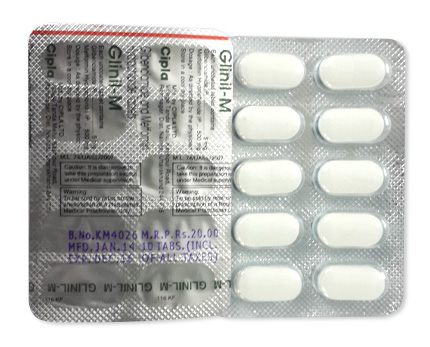
Glucovance
- Available at pharmacies and licensed online pharmacies in the United States, Canada and many other countries under brand names like Glucovance (and regional generics); legally it is prescription-only and should be obtained with a valid prescription—some vendors may claim to sell without a prescription, but that is not recommended or safe.
- Glucovance is used to treat type 2 diabetes as an adjunct to diet and exercise; it combines glyburide (a sulfonylurea that increases pancreatic insulin secretion) with metformin (which lowers hepatic glucose production and improves peripheral insulin sensitivity).
- Typical adult dosing starts with one tablet of 2.5 mg/500 mg or 5 mg/500 mg once or twice daily with meals, titrating no more than an additional 2.5 mg/500 mg per day every ≥2 weeks; usual maximum total daily dose is 20 mg glyburide / 2000 mg metformin in divided doses.
- Oral administration as a film‑coated tablet (biconvex, capsule‑shaped); take with food to reduce gastrointestinal side effects and risk of hypoglycemia.
- The glyburide component typically begins to lower blood glucose within about 1–2 hours after a dose (peaking a few hours later); metformin’s glucose‑lowering effects may begin within hours but often take several days to weeks for full clinical effect.
- Duration of effect is generally maintained over the dosing interval—glyburide’s glucose‑lowering action can last roughly 12–24 hours depending on dose and patient factors, while metformin contributes to ongoing glycemic control with regular dosing.
- Avoid excessive alcohol while taking Glucovance—alcohol increases the risk of lactic acidosis with metformin and can also worsen hypoglycemia risk from glyburide.
- The most common side effects are gastrointestinal (nausea, diarrhea, abdominal discomfort) from metformin and hypoglycemia from the glyburide component; other effects can include headache, dizziness and metallic taste.
- Would you like to try glucovance without a prescription? Please note Glucovance is prescription‑only and you should consult a healthcare professional before starting or changing any diabetes medication.
Basic Glucovance Information
- INN (International Nonproprietary Name): Glyburide and Metformin Hydrochloride (combinational drug)
- Brand Names Available In United States: Glucovance — Tablets 2.5 mg/500 mg and 5 mg/500 mg; bottles of 100; film-coated, debossed
- ATC Code: A10BD02
- Forms & Dosages: Tablets 2.5 mg/500 mg (pale orange, biconvex, capsule-shaped) and 5 mg/500 mg (yellow, biconvex, capsule-shaped); supplied as bottles of 100; other international variants may include 1.25 mg/250 mg strengths in generics
- Manufacturers In United States: Bristol-Myers Squibb (original US developer); Physicians Total Care, Inc. (repackager); generics may be supplied by multiple manufacturers
- Registration Status In United States: FDA approved; prescription-only
- OTC / Rx Classification: Prescription-only (Rx)
Key Findings From Recent Trials
Major 2022–2026 Studies
Clinicians asked whether glyburide/metformin combinations still belong in modern practice will find mixed but clear trial signals.
Pooled analyses and observational cohorts through 2025 consistently show that combining a sulfonylurea with metformin provides modest additional HbA1c lowering versus monotherapy.
Meta-analyses report incremental HbA1c reductions commonly between 0.5% and 1.0% when glyburide/metformin is compared to single-agent therapy.
Large real-world datasets from North America and Asia through 2024 show fasting glucose improvements and greater treatment persistence for some patients who cannot tolerate dose escalation on a single agent.
Main Outcomes
Improvements in glycemic endpoints are reliable and reproducible in trial and registry settings.
Patients switching from metformin alone often attain faster A1c reductions when a glyburide/metformin combination is used.
Effect sizes are generally modest, but clinically meaningful for patients needing affordable combination therapy.
Safety Observations
Safety data remain a decisive factor when choosing Glucovance.
Pooled safety signals emphasize an increased hypoglycemia incidence with glyburide-containing combinations compared with DPP‑4, SGLT2, or GLP‑1 based regimens, notably in older adults and those with impaired renal function.
Metformin-associated lactic acidosis is rare and usually linked to predisposing renal dysfunction or contrast procedures.
Clinical Mechanism Of Action
Layman’s Explanation
Patients often ask, "How does this pill do two jobs?".
Glucovance pairs two complementary actions to lower blood sugar.
Glyburide causes the pancreas to release more insulin when it can, and metformin helps the liver make less glucose while improving muscle uptake.
Combined, that dual approach usually controls blood sugar better than either drug alone.
Scientific Breakdown
Glyburide Pharmacology
Glyburide is a sulfonylurea that closes ATP-sensitive potassium channels on pancreatic beta cells.
Channel closure triggers calcium influx and insulin exocytosis.
The insulinotropic effect is partly glucose-independent, which explains why hypoglycemia is a known risk.
Metformin Pharmacology
Metformin is a biguanide that acts primarily by activating AMP-activated protein kinase (AMPK) pathways.
The drug reduces hepatic gluconeogenesis, improves peripheral insulin sensitivity, and lowers intestinal glucose absorption.
Fixed-dose tablets (2.5/500 mg and 5/500 mg per labeling) simplify adherence while providing synergistic glycemic effects.
Because metformin is renally cleared, monitoring estimated glomerular filtration rate (eGFR) is essential to prevent accumulation.
Scope Of Approved & Off-Label Use
United States Approvals
Regulatory labeling in the United States designates Glucovance as prescription-only for adults with type 2 diabetes inadequately controlled on diet and exercise and monotherapy.
Available strengths per product information are 2.5 mg/500 mg and 5 mg/500 mg in bottles of 100, film-coated and debossed.
Pediatric use is not recommended under the standard prescribing information.
Notable Off-Label Trends
In many regions where access or cost limits newer agents, glyburide/metformin combinations remain widely used.
Examples include Canada, India, and parts of Asia where branded generics such as Glycomet‑GP or Glucored Plus are common.
Clinicians tend to reserve glyburide-containing combinations for patients without significant renal or hepatic dysfunction due to labeled contraindications at low eGFR and in hepatic impairment.
Local regulatory heterogeneity in the EU means compositionally equivalent generics are used under national approvals rather than a single Glucovance brand.
Dosage Strategy
General Dosing
Start treatment with one tablet of Glucovance 2.5 mg/500 mg or 5 mg/500 mg once or twice daily, taken with meals.
Titrate cautiously by increasing no more than 2.5 mg glyburide/500 mg metformin per day every two or more weeks.
The usual maximum daily total is 20 mg glyburide with 2000 mg metformin in divided doses.
Taking Glucovance with food reduces metformin-related gastrointestinal effects and blunts glyburide-induced hypoglycemia.
Condition-Specific Dosing
Start elderly patients at the lowest available strength and titrate slowly because of higher hypoglycemia and lactic acidosis risk.
Do not use Glucovance if eGFR is below 30 mL/min/1.73 m², and reassess therapy as eGFR approaches that threshold.
Hepatic impairment is a contraindication; stop the drug if significant liver dysfunction develops.
Follow local protocols for withholding metformin around contrast imaging or acute illnesses to reduce lactic acidosis risk.
Safety Protocols
Contraindications
Absolute contraindications include renal dysfunction with eGFR below 30 mL/min/1.73 m², metabolic acidosis (including diabetic ketoacidosis and lactic acidosis), known hypersensitivity to glyburide, metformin, or other sulfonylureas, and acute conditions that may alter renal function such as severe infection, dehydration, or shock.
Hepatic impairment is listed as a contraindication in product information.
Glucovance is prescription-only and requires clinical monitoring per label recommendations.
Adverse Effects
Common adverse effects reflect the two components: gastrointestinal symptoms such as nausea, diarrhea, and abdominal discomfort occur with metformin.
Hypoglycemia is the dominant risk associated with the glyburide component.
Other reported effects include headache, dizziness, and a metallic taste.
Metformin-associated lactic acidosis is rare and typically linked to contraindications or renal decline.
Monitoring essentials are baseline and periodic renal function tests, and patient education on hypoglycemia recognition and treatment.
Interaction Mapping
Food Interactions
Taking Glucovance with meals synchronizes glyburide-driven insulin release with food intake and limits metformin-related gastrointestinal upset.
Heavy alcohol consumption raises the risk of lactic acidosis from metformin and may worsen hypoglycemia from glyburide.
Drug Combinations To Avoid
Drugs that impair renal function, such as some NSAIDs, certain ACE inhibitors, and diuretics, can increase metformin accumulation and should prompt closer eGFR monitoring and dose review.
Combining glyburide with other insulin secretagogues or insulin increases hypoglycemia risk and should generally be avoided unless closely supervised.
CYP2C9 inhibitors or inducers may alter glyburide exposure; use caution with certain antifungals, macrolides, and anticonvulsants.
Follow institutional guidance to temporarily withhold metformin around intravascular contrast administration for patients at risk for contrast-induced renal dysfunction.
Patient Experience Analysis
Survey Data
Real-world surveys show two clear themes: measurable A1c improvement and convenience from a single fixed-dose tablet.
Patients switching from monotherapy commonly report satisfaction with glycemic control and simpler dosing when given Glucovance tablets.
Once- or twice-daily dosing appears to help adherence versus multiple separate pills for some users.
Forum Trends
Online discussions frequently mention early GI side effects such as nausea and diarrhea attributable to metformin and hypoglycemia episodes attributable to glyburide.
Older adults commonly report hypoglycemia after missed meals, highlighting the need for meal timing counseling and a hypoglycemia rescue plan.
Cost and access threads show that branded generics like Glycomet‑GP and Glucored Plus are often discussed in India and parts of Asia, while in higher-income markets newer classes compete on cardiometabolic benefits.
Clinicians should proactively educate patients about when to withhold metformin for procedures and the importance of renal monitoring.
Distribution & Pricing Landscape
Market Availability
Glucovance is marketed in the United States and Canada under that brand name.
In India and parts of Asia, glyburide/metformin combinations are sold under local brands such as Glucored Plus and Glycomet‑GP.
The EU uses variable availability, often relying on compositionally equivalent generics rather than a single branded product.
Price Drivers And Access
Price differences are driven primarily by brand versus generic status and by insurance formulary decisions.
Where generics are available, out-of-pocket cost is substantially lower.
Payers in many markets prioritize agents with cardioprotective or renal benefits, which affects formulary placement of older combinations.
Search phrases like "Buy Glucovance online" and "Glucovance 5/500 mg tablets" reflect demand for online price comparison and convenience.
In our online pharmacy, glucovance is available without a prescription, with discreet delivery to United States in 5-14 days.
Alternative Options
Comparison Table
When considering alternatives to Glucovance, key comparators include Janumet, Avandamet, SGLT2 inhibitors, GLP‑1 receptor agonists, and DPP‑4 inhibitors.
Janumet (sitagliptin/metformin) provides incretin-based therapy plus metformin and is associated with lower hypoglycemia risk and weight neutrality, at higher cost.
Avandamet (rosiglitazone/metformin) exists but is used less due to historical cardiovascular safety concerns.
Pros And Cons
Pros of Glucovance include affordable generics, a dual mechanism that simplifies regimens, and effective HbA1c reduction.
Cons are an elevated hypoglycemia risk versus non-sulfonylurea combos and contraindications with renal and hepatic impairment.
For patients with cardiovascular or renal disease, SGLT2 inhibitors or GLP‑1 receptor agonists are often preferred for their additional cardiometabolic benefits.
Regulatory Status
Global Approvals
Glucovance is FDA-approved and prescription-only in the United States and listed as prescription-only in Canada.
In other regions, branded generics or compositionally equivalent combinations are approved under national processes.
The ATC classification for glyburide and metformin combinations is A10BD02.
Labeling Highlights
Labeling specifies available strengths of 2.5 mg/500 mg and 5 mg/500 mg film-coated tablets, typically supplied in bottles of 100.
Tablet color cues per product information are pale orange for 2.5/500 mg and yellow for 5/500 mg, biconvex and capsule-shaped with manufacturer debossing.
Label emphasis is placed on prescription status, contraindications for renal and hepatic impairment, dose titration guidance, and storage conditions at controlled room temperature up to 25°C.
Pharmacovigilance continues to monitor hypoglycemia reports and rare metformin-associated lactic acidosis.
Consolidated FAQ
Quick Answers Clinicians/Patients Ask
Who should not take Glucovance? — Patients with eGFR below 30 mL/min/1.73 m², hepatic impairment, metabolic acidosis, or known allergy to glyburide or metformin.
How should it be taken? — With meals; start at 2.5/500 mg or 5/500 mg once or twice daily and titrate no more than 2.5/500 mg every two or more weeks.
What are the major side effects? — Hypoglycemia from glyburide and GI upset from metformin; rare lactic acidosis when contraindications are present.
Safety Clarifications
Obtain baseline and periodic renal function tests and use the lowest effective dose in elderly patients.
Follow local radiologic contrast protocols to withhold metformin when indicated.
If a dose is missed, take when remembered unless it is close to the next dose; do not double doses.
In overdose, seek immediate medical attention for possible severe hypoglycemia or lactic acidosis and arrange hospital monitoring.
Visual Guide
Tablet Identification
Glucovance tablets are visually distinct by strength: 2.5 mg/500 mg tablets are pale orange and 5 mg/500 mg tablets are yellow, both biconvex and capsule-shaped.
Manufacturer debossing is present on branded tablets; generics may have different imprinting, so use color and shape plus imprint to reduce dispensing errors.
Patient-Facing Graphics (Concepts)
Useful counseling visuals include a "Take With Meals" icon, a kidney-check calendar for periodic eGFR testing, and a hypoglycemia action card showing symptoms and how to use quick-acting glucose.
Other helpful icons are "When To Stop" for contrast imaging or acute illness, and a storage icon indicating room temperature and light-resistant containers.
A laminated handout combining tablet color photos, dosing timing, and emergency steps supports comprehension for older adults.
Storage & Transport
Label-Recommended Conditions
Store Glucovance at controlled room temperature up to 25°C (77°F).
Protect tablets from moisture and light and dispense in light-resistant containers per labeling.
Manufacturer packaging is typically bottles of 100 with color-coded tablets to help inventory and patient identification.
Pharmacy Logistics
During transport and supply-chain handling, maintain ambient temperature and humidity protection.
Pharmacies should verify lot numbers and expiry dates at intake and apply SOPs to avoid look-alike dispensing errors across strengths and brands.
Advise patients to carry medication in the original labeled container when traveling and to avoid leaving bottles in hot vehicles.
Dispose of expired or unwanted tablets via community drug-take-back programs rather than flushing.
Guidelines For Proper Use
Clinician Checklist
Confirm the indication for adult type 2 diabetes inadequately controlled on monotherapy and verify baseline eGFR and hepatic status before starting Glucovance.
Begin at the lowest effective strength and document a titration plan with increases of no more than 2.5 mg glyburide/500 mg metformin every two or more weeks.
Review the full medication list for hypoglycemia potentiators and drugs that impact renal function.
Schedule renal monitoring and provide written hypoglycemia rescue instructions for patients.
Patient Counseling Points
Advise patients to always take Glucovance with food to reduce stomach upset and lower hypoglycemia risk.
Teach recognition of hypoglycemia and the use of quick-acting carbohydrate and a follow-up snack when indicated.
Counsel on avoiding excessive alcohol use and on temporarily withholding metformin around contrast imaging or during acute illness.
Inform elderly patients and caregivers about slower titration and more frequent lab checks.
Delivery Across United States
| City | Region | Delivery Time |
|---|---|---|
| New York | New York | 5-7 days |
| Los Angeles | California | 5-7 days |
| Chicago | Illinois | 5-7 days |
| Houston | Texas | 5-7 days |
| Phoenix | Arizona | 5-7 days |
| Philadelphia | Pennsylvania | 5-7 days |
| San Antonio | Texas | 5-9 days |
| San Diego | California | 5-9 days |
| Dallas | Texas | 5-7 days |
| San Jose | California | 5-9 days |
| Austin | Texas | 5-9 days |
| Jacksonville | Florida | 5-9 days |
| Fort Worth | Texas | 5-9 days |
| Columbus | Ohio | 5-9 days |
| Charlotte | North Carolina | 5-9 days |