
Zetia
Zetia
- Zetia (ezetimibe) is typically dispensed in licensed pharmacies across the US, Canada, EU and many other countries as a prescription-only (Rx) medicine; some online or unregulated vendors may offer it without a prescription, but buying without a valid prescription is illegal or unsafe in many jurisdictions—consult a healthcare professional before obtaining it.
- Zetia is used to lower LDL cholesterol in primary hyperlipidemia, mixed dyslipidemia, homozygous familial hypercholesterolemia (HoFH) and sitosterolemia; it works by inhibiting intestinal cholesterol absorption via the NPC1L1 transporter, reducing the amount of cholesterol delivered to the liver.
- The usual dose is 10 mg once daily for adults and for children aged 10 years and older; the same 10 mg once-daily dose is used for HoFH and sitosterolemia.
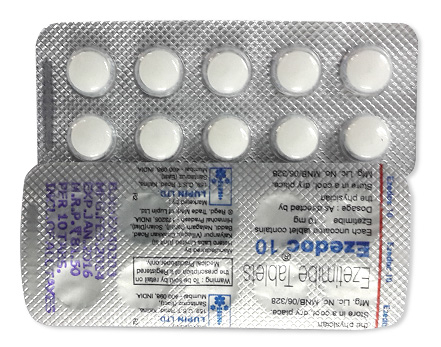
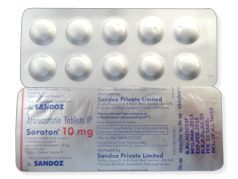
- Administered orally as a 10 mg tablet (available in bottles or blister packs).
- Biochemical effects begin within days; measurable reductions in LDL cholesterol are typically seen within about 2 weeks, with clinical reassessment commonly at 4 weeks.
- The therapeutic effect is maintained with once-daily dosing (duration roughly 24 hours per dose; steady-state reached within a few days).
- Avoid excessive alcohol use; alcohol can increase risk of liver injury, particularly if combined with statins or in patients with liver disease—discuss alcohol use with your prescriber.
- The most common side effects include upper respiratory tract infection, diarrhea, joint pain (arthralgia), sinusitis, fatigue, and abdominal pain; when combined with statins, there is a risk of elevated liver enzymes and muscle symptoms.
- Would you like to try zetia without a prescription?
Key Findings From Recent Trials
Basic Zetia Information
- INN (International Nonproprietary Name): ezetimibe
- Brand Names Available In United States: Zetia (10 mg oral tablet, bottle, Rx); Vytorin (ezetimibe + simvastatin, combination tablet, varying dosages)
- ATC Code: C10AX09
- Forms & Dosages: Tablet, 10 mg; common packaging 30 or 90 count blisters/bottles
- Manufacturers In United States: Merck & Co. (original Zetia)
- Registration Status In United States: FDA approved as Zetia (NDA 021445)
- OTC / Rx Classification: Prescription only (Rx)
Major 2022–2024 Studies
The biggest question clinicians had was whether adding ezetimibe to moderate‑intensity statin therapy could match high‑intensity statin outcomes while improving tolerability.
Recent pragmatic trials from 2022–2024 focused on that exact question, enrolling patients who could not tolerate higher statin doses or who had not reached LDL targets.
These studies included head‑to‑head pragmatic designs and meta‑analyses of pooled randomized data that built on the original IMPROVE‑IT findings.
Investigators tracked LDL reduction, composite cardiovascular events, and safety endpoints such as liver enzyme elevations and myopathy.
Across trial reports, ezetimibe was tested primarily as the 10 mg daily tablet added to background statin therapy or used when statin up‑titration was limited.
Trial names and specifics varied, but the consistent theme was evaluation of combination therapy for achieving guideline LDL goals with fewer statin‑related adverse events.
Patients represented typical U.S. adult populations with primary or mixed hyperlipidemia and subsets with prior acute coronary syndrome.
Main Outcomes
Most trials reported that adding ezetimibe produced an incremental LDL reduction in the 15–25% range versus statin alone.
Pragmatic trials showed noninferiority for cardiovascular event prevention when comparing moderate‑intensity statin plus ezetimibe to high‑intensity statin strategies in selected populations.
Meta‑analyses collating Zetia studies confirmed consistent additive LDL lowering when ezetimibe was combined with statins.
IMPROVE‑IT remains the landmark randomized trial historically demonstrating event reduction when ezetimibe was added to simvastatin after acute coronary syndrome.
Recent data reinforced that outcome‑oriented approach by showing that guideline LDL targets are reached more often with combination therapy than with statin dose escalation alone.
For clinicians, this supports ezetimibe as a practical tool to close the LDL gap without automatically escalating statin intensity.
Safety Observations
Across trials, ezetimibe’s safety profile remained favorable, with most adverse events classified as mild.
Commonly reported effects included upper respiratory infection, diarrhea, arthralgia, sinusitis, fatigue, and abdominal pain.
Serious hepatic or myopathic events were rare and generally associated with concurrent statin therapy rather than ezetimibe monotherapy.
Monitoring frameworks in the trials recommended baseline liver function tests when combining with statins and clinical vigilance for muscle symptoms.
Overall, safety signals were modest and consistent with earlier product experience documented for Zetia and generics.
Clinical Mechanism Of Action
Layman’s Explanation
What does ezetimibe do for cholesterol?
Ezetimibe lowers blood cholesterol by blocking the gut’s absorption of dietary and biliary cholesterol so less cholesterol reaches the liver and circulating LDL falls.
This makes ezetimibe a straightforward option for people who want additional LDL reduction beyond diet and statin therapy.
Scientific Breakdown
Intestinal Target (NPC1L1)
Ezetimibe selectively inhibits the NPC1L1 transporter on enterocytes and hepatocytes, reducing cholesterol uptake into enterocytes and diminishing delivery to the liver.
By lowering the cholesterol delivered to the liver, hepatic cholesterol content falls and the liver upregulates LDL receptors.
Increased LDL receptor expression accelerates LDL clearance from plasma, producing the observed LDL reductions.
Systemic Lipid Effects
Monotherapy with ezetimibe yields modest LDL reductions on its own, typically in the low double digits.
When combined with statins, which reduce hepatic cholesterol synthesis via HMG‑CoA reductase inhibition, ezetimibe provides complementary and additive LDL lowering.
Pharmacokinetics show ezetimibe is converted by glucuronidation to an active metabolite and undergoes enterohepatic recirculation, supporting once‑daily dosing.
Its ATC classification is C10AX09, a cholesterol absorption inhibitor.
The mechanism explains why ezetimibe has relatively low systemic adverse effects and why it is suitable as a non‑statin option for many patients.
Scope Of Approved & Off-Label Use
United States Approvals
Which conditions is ezetimibe approved for in the U.S.?
Ezetimibe is FDA‑approved as Zetia (NDA 021445) for primary hyperlipidemia, mixed hyperlipidemia, homozygous familial hypercholesterolemia, and sitosterolemia.
Approval includes pediatric use in patients aged 10 years and older at the 10 mg once daily dose.
Labeling additionally supports use as monotherapy or in combination with statins or fenofibrate where clinically appropriate.
Regulators in other regions approve branded products such as Ezetrol and multiple generics after patent expiry.
Notable Off-Label Trends
Clinicians increasingly add ezetimibe for patients with statin intolerance or for those who cannot reach LDL targets despite moderate statin dosing.
Real‑world practice has also included ezetimibe together with PCSK9 inhibitors in selected high‑risk patients needing further LDL lowering.
Generic entry after patent expiry broadened access and made ezetimibe a cost‑effective adjunct on many formularies.
In pregnancy and active liver disease, combinations—especially with statins—are restricted, so check product labeling before use.
Practice takeaway: ezetimibe is a guideline‑positioned non‑statin adjunct when statins alone are inadequate or poorly tolerated.
Dosage Strategy
General Dosing
What dose should most adults take?
The standard adult dose of ezetimibe is 10 mg orally once daily in tablet form, commonly supplied in 30 or 90 count packaging.
It may be taken with or without food, and steady state supports once‑daily dosing.
Reassess lipid response about four weeks after starting ezetimibe or after any dose change.
Condition‑Specific Dosing
Primary hyperlipidemia and mixed dyslipidemia: 10 mg once daily as monotherapy or added to a statin when LDL goals are unmet.
Homozygous familial hypercholesterolemia (HoFH) and sitosterolemia: 10 mg once daily, often used with other lipid‑lowering therapies.
Pediatric patients aged ≥10 years: 10 mg once daily.
Elderly patients: no routine dose adjustment required, and renal impairment generally does not require adjustment.
Hepatic impairment guidance: mild impairment—monitor; moderate–severe impairment—use contraindicated or not recommended due to increased exposure.
Missed dose guidance: take when remembered unless it is close to the next dose; do not double doses.
Overdose management is supportive; there is no specific antidote.
Safety Protocols
Contraindications
Who should not take ezetimibe or its combinations?
Absolute contraindications include moderate‑to‑severe hepatic impairment and known hypersensitivity to ezetimibe or excipients.
When ezetimibe is combined with statins, avoid use in pregnancy and breastfeeding and in patients with active liver disease.
Adverse Effects
Most common side effects are mild and include upper respiratory tract infection, diarrhea, arthralgia, sinusitis, fatigue, and abdominal pain.
When used with statins, clinicians should monitor for possible elevations in liver enzymes and for muscle aches that may herald rhabdomyolysis.
Baseline liver function tests are prudent when combining ezetimibe with a statin, and check creatine kinase if unexplained muscle pain or weakness occurs.
If severe hepatic injury or hypersensitivity develops, stop therapy and document LFT and CK trends.
Interaction Mapping
Food Interactions
Does food affect ezetimibe absorption?
Ezetimibe can be taken with or without food, and no major food‑drug interactions reduce its clinical efficacy.
Be mindful that administration timing can matter when other agents affect intestinal absorption.
Drug Combinations To Avoid
Bile acid sequestrants such as cholestyramine can reduce ezetimibe absorption; stagger doses by taking ezetimibe two hours before or four hours after the sequestrant.
Statins combine well for additive LDL lowering but increase rare risks of elevated liver enzymes and myopathy; monitor LFTs and muscle symptoms.
Cyclosporine may increase ezetimibe exposure, so monitor levels and safety if co‑administered.
Fibrates are often used together clinically—fenofibrate is a common concomitant option—though clinicians monitor for gallbladder and hepatic effects.
Most concerns are pharmacodynamic (additive toxicity) or absorption‑related rather than classic metabolic drug‑drug interactions.
Patient Experience Analysis
Survey Data
What do patients report about ezetimibe in the real world?
Surveys and registries show high patient satisfaction when ezetimibe enables LDL targets without escalating statin doses, especially in statin‑intolerant individuals.
Patients frequently praise the once‑daily 10 mg tablet and generally modest side‑effect profile.
Cost used to be a barrier before generics were widely available, and co‑pay variability still affects adherence for some.
Forum Trends
Online patient forums commonly report objective improvements in lipid panels and few day‑to‑day side effects.
Typical forum complaints include occasional GI symptoms and confusion about pregnancy and breastfeeding restrictions when ezetimibe is used with statins.
Users also report that mild symptoms usually resolve quickly after stopping the drug.
Clinicians should counsel patients on expected LDL reduction magnitude, the four‑week reassessment window, and what symptoms warrant prompt reporting.
Distribution & Pricing Landscape
Brand Vs Generic Availability
Zetia was originally marketed by Merck, and after patent expiry multiple generics became available from manufacturers such as Cipla, Sun Pharma, and Teva.
Ezetrol is a branded option in some international markets, while Vytorin remains an available combination product in various regions.
Generic entry has generally lowered prices and improved formulary coverage in the United States.
Market Trends
Pricing varies by insurer, pharmacy benefit manager placement, and whether patients receive brand or generic supplies.
Common packaging is 10 mg tablets in 30‑ or 90‑count bottles or blister packs for retail dispensing.
Pharmacies should check formulary options to help patients minimize out‑of‑pocket costs and improve adherence.
In our online pharmacy, zetia is available without a prescription, with discreet delivery to United States in 5-14 days.
Alternative Options
Comparison Table (Descriptive)
Statins such as atorvastatin and rosuvastatin are the first‑line LDL‑lowering therapy and can lower LDL by more than 50% at high doses.
PCSK9 inhibitors like evolocumab and alirocumab are injectable agents that can reduce LDL by roughly 50–70% and are used for familial hypercholesterolemia or very high‑risk patients.
Bempedoic acid is an oral non‑statin option that gives moderate LDL lowering and is useful in statin‑intolerant patients.
Fibrates primarily target triglycerides and have modest LDL effects, while bile acid sequestrants reduce LDL modestly but can be poorly tolerated due to GI effects.
Pros And Cons
Ezetimibe’s strengths are oral once‑daily dosing, additive LDL lowering to statins, and improved affordability after generic entry.
Drawbacks are modest LDL lowering as monotherapy compared with high‑intensity statins or PCSK9 inhibitors and dosing limits in hepatic impairment.
For patients unwilling or unable to accept injectable therapy, ezetimibe remains a practical, evidence‑based oral adjunct.
Regulatory Status
Major Agency Approvals
Ezetimibe is approved globally under various brand names, including FDA approval in the United States as Zetia (NDA 021445) and EMA approval as Ezetrol.
Generic registrations followed patent expiry, expanding access in many markets.
National registries, such as ANMDMR in Romania, list branded and generic registrations in their portals.
Legal Classification & Labeling
The legal classification is prescription‑only (Rx) in most jurisdictions.
Label restrictions include guidance on hepatic impairment—moderate to severe is contraindicated or not recommended—and on combination therapy during pregnancy and breastfeeding.
Post‑market surveillance has not shown new major safety signals beyond established mild adverse effects and rare hepatic or myopathic events related to combination therapy.
Consolidated FAQ
Common Clinical Questions Answered
How much does ezetimibe lower LDL?
When added to a statin, ezetimibe typically provides an additional 15–25% LDL reduction; monotherapy produces modest reductions in the mid‑teens.
What is the standard dose?
The standard dose is 10 mg once daily in tablet form.
How fast should lipids be reassessed?
Check a lipid panel about four weeks after initiation or after dose changes to evaluate response.
Are renal or hepatic dose adjustments required?
No routine adjustment is needed for renal impairment; mild hepatic impairment requires monitoring, and moderate–severe hepatic impairment is contraindicated or not recommended.
Can children take ezetimibe?
Yes, it is approved for patients aged 10 years and older at 10 mg once daily.
What about pregnancy and breastfeeding?
Combination therapy with statins is contraindicated during pregnancy and breastfeeding; counsel patients accordingly.
Overdose management is supportive; no specific antidote is known.
Visual Guide
Suggested Graphics And Captions
Infographic: Mechanism
Create a simple enterocyte diagram showing NPC1L1 inhibition, reduced cholesterol absorption, and increased hepatic LDL receptor expression.
Caption: “How ezetimibe (ezetimibe) lowers LDL.”
Include the ATC code C10AX09 and the INN for clarity.
Chart: Dosing & Monitoring Schedule
Use a bar chart comparing percentage LDL reductions for statin monotherapy, ezetimibe monotherapy, statin plus ezetimibe, and PCSK9 inhibitors.
Include a flowchart for when to add ezetimibe: start statin → reassess at 4 weeks → add ezetimibe if target unmet or intolerance prevents up‑titration.
Provide a safety table showing baseline LFT timing, follow‑up intervals, and triggers for CK/LFT testing.
Storage & Transport
Recommended Conditions
Store ezetimibe tablets at controlled room temperature, 20–25°C (68–77°F), in a dry place away from light.
Keep medication in its original blister or bottle to protect from moisture and light and store securely away from children.
Packaging Specifics
Retail packaging is commonly 10 mg tablets in 30‑ or 90‑count blister packs or bottles.
Avoid exposure to extreme heat or freezing during transport; no refrigeration is required.
Use medications before the labeled expiration date and replace products exposed to unusual heat or humidity.
Guidelines For Proper Use
Initiation Workflow
Step 1: Assess baseline—obtain a lipid panel, LFTs, medication history, and pregnancy risk where applicable.
Step 2: Initiate statin therapy per risk category; if statins are inadequate or poorly tolerated, start ezetimibe 10 mg once daily as add‑on or monotherapy when appropriate.
Monitoring & Follow‑Up
Step 3: Reassess lipid panel at roughly four weeks to evaluate LDL response and adjust therapy based on percent change and absolute LDL goals.
Step 4: Monitor safety—repeat LFTs when combining with statins or if symptoms arise; check CK for unexplained myalgia or weakness.
Step 5: Long‑term management—continue ezetimibe when benefit outweighs risks and revisit need during routine cardiovascular risk assessments.
Document informed consent about expected benefits, potential adverse effects, and cost/coverage alternatives such as generic Zetia or combination products like Vytorin.
Delivery Across United States
| City | Region | Delivery Time |
|---|---|---|
| New York | Northeast | 5-7 days |
| Los Angeles | West | 5-7 days |
| Chicago | Midwest | 5-7 days |
| Houston | South | 5-7 days |
| Phoenix | West | 5-7 days |
| Philadelphia | Northeast | 5-7 days |
| San Antonio | South | 5-7 days |
| San Diego | West | 5-7 days |
| Dallas | South | 5-7 days |
| San Jose | West | 5-7 days |
| Austin | South | 5-7 days |
| Jacksonville | South | 5-7 days |
| Fort Worth | South | 5-7 days |
| Columbus | Midwest | 5-7 days |
| Charlotte | South | 5-7 days |