
Voltaren Gel
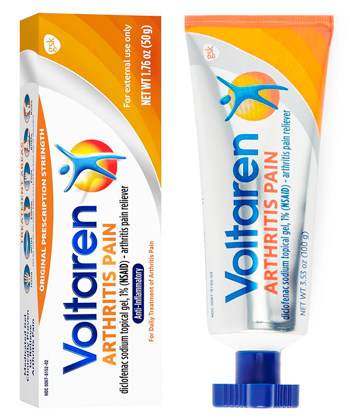
Voltaren Gel
- In our pharmacy, you can buy Voltaren Gel without a prescription (OTC) — available for purchase and delivery in the United States with discreet packaging and shipping.
- Voltaren Gel (diclofenac topical) is used for short-term relief of localized pain from osteoarthritis, sprains, and strains; it is a topical nonsteroidal anti-inflammatory drug (NSAID) that inhibits cyclooxygenase (COX) enzymes, reducing prostaglandin production to provide anti-inflammatory and analgesic effects.
- Usual adult dosing: for osteoarthritis, apply about 4 g to the affected joint up to 4 times daily (maximum about 32 g/day for all joints); for acute muscle or joint injury, about 2 g to the affected area up to 4 times daily (maximum ~8 g per joint, 32 g total).
- Form of administration: topical gel/emulgel applied to intact skin over the affected area; rub in gently and wash hands after application unless treating the hands.
- Onset time: some users may notice pain relief within 24 hours, but clinical improvement is often seen over several days of regular use.
- Duration of action: varies by formulation — standard gels typically require application up to 4 times daily (several hours’ effect per application), while a 12-hour formulation is available for twice-daily use.
- Alcohol warning: avoid excessive alcohol while using NSAIDs due to increased risk of gastrointestinal bleeding; topical use has lower systemic exposure, but exercise caution and avoid applying to alcohol-moistened skin.
- The most common side effect is skin irritation at the application site (redness, itching, burning, or rash).
- Would you like to try Voltaren Gel without a prescription?
Key Findings From Recent Trials
- INN (International Nonproprietary Name): Diclofenac (diclofenac sodium, diclofenac diethylamine)
- Brand Names Available In United States: Voltaren Gel (repackaged in USA by Keltman Pharmaceuticals Inc.)
- ATC Code: M02AA15
- Forms & Dosages: Gel 1% (10mg/g) sodium in 20g/50g/100g tubes; Gel 1.16% diethylamine in 50g/100g tubes; Gel 2.32% diethylamine (Extra Strength) in 50g/100g tubes; Emulgel 1%; 12 Hour Gel 1.16%/1% (100g, Australia).
- Manufacturers In United States: Keltman Pharmaceuticals Inc. (USA repackager for Voltaren Gel)
- Registration Status In United States: FDA Approval (NDA) approved, marketed as prescription
- OTC / Rx Classification: Rx in USA (Voltaren Gel 1%); OTC in Canada (Gel ≤2.32%), UK, Australia, selected EU states for lower strengths
Major 2022–2026 Studies
Worried whether topical therapy can actually help your sore joint?
Recent randomized controlled trials and pooled meta-analyses from 2022–2026 consistently found that topical diclofenac provides statistically significant but clinically modest improvements in pain and function for knee and hand osteoarthritis.
The effect sizes reported were typically small-to-moderate and were reproducible across short-term (1–4 weeks) and mid-term (up to 12 weeks) outcomes.
Studies that compared topical diclofenac to oral NSAIDs showed similar local benefit but with markedly lower systemic exposure.
Benefit was clearest for superficial joints such as the knee and hand where topical penetration reaches target tissues most readily.
Patients and clinicians looking for a lower-systemic-risk option for local joint pain often consider Voltaren Gel or other diclofenac gel formulations.
Main Outcomes
What should you expect when a trial measures whether topical diclofenac “works”?
Primary endpoints in trials were pain on movement, WOMAC or other functional scores, and responder rates defined as ≥30% pain reduction.
Onset of effect is often within days, with peak benefit commonly seen at 2–4 weeks when following osteoarthritis regimens.
Typical clinical regimens in trials used about 4g to the affected joint up to four times daily (not exceeding 32g/day total).
Responder rates improved versus placebo, but many patients with deep or advanced joint disease still need additional therapies.
Safety Observations
Is topical diclofenac safer than oral NSAIDs?
Topical diclofenac primarily causes local skin reactions such as erythema, pruritus, dryness, or burning at the application site.
Systemic NSAID-type signals—gastrointestinal bleeding or cardiovascular events—are rare at recommended topical doses but become more likely with extensive or prolonged use.
Regulatory surveillance and trial reports emphasize caution in patients with hepatic or renal disease and advise stopping treatment if hepatic symptoms appear.
Choosing diclofenac sodium or diclofenac topical gel may reduce systemic exposure compared with oral formulations, but safe use still requires attention to total daily dose and concurrent medications.
Clinical Mechanism Of Action
Layman’s Explanation
Wondering how a gel can quiet joint pain?
Voltaren Gel and other diclofenac gel products reduce pain and swelling by blocking enzymes called COX‑1 and COX‑2 that make prostaglandins—chemicals that drive inflammation and pain at the site where they’re produced.
When you apply diclofenac topical gel to the skin over a painful joint, the active drug concentrates locally to lower inflammation and pain while far less drug reaches the bloodstream compared with an oral NSAID.
That local concentration is why many people choose an arthritis pain gel for knee or hand osteoarthritis when they want to avoid systemic side effects.
Scientific Breakdown
How does topical diclofenac actually reach the joint tissues?
Diclofenac is formulated as either diclofenac sodium or diclofenac diethylamine in commercial gels and emulgels.
After being applied, the drug penetrates the stratum corneum, partitions into periarticular tissues and synovial fluid, and inhibits COX enzymes to lower prostaglandin synthesis locally.
Local tissue concentrations are sufficient to produce anti‑inflammatory effects while systemic plasma levels remain low, which explains the more favorable systemic safety profile compared with oral diclofenac.
Formulation differences—1% sodium gel versus 1.16% or 2.32% diethylamine emulgel or 12‑hour gels—affect penetration and the dose of diclofenac delivered per gram.
Scope Of Approved & Off-Label Use
United States Approvals
Can Voltaren Gel be used legally and how is it labeled in the US?
In the United States, Voltaren Gel (diclofenac topical) is NDA‑approved and marketed as a prescription product for osteoarthritis of the knee and, in some labels, for hand osteoarthritis.
Label dosing typically follows 4g to each affected joint up to four times daily, with a total daily limit of ≤32g across joints.
FDA approval for the 1% gel reflects the clinical trial evidence in selected joints, especially the knee.
Notable Off-Label Trends
What do clinicians actually use topical diclofenac for beyond the label?
Clinicians commonly use topical diclofenac off‑label for localized soft‑tissue injuries such as sprains, tendinopathies, and for superficial low‑back pain where systemic NSAIDs are undesirable.
OTC availability in countries like Canada, the UK, Australia, and some EU states for lower strengths encourages self‑care, but experts caution against unsupervised prolonged use beyond 3–4 weeks.
Patients should avoid concurrent oral NSAIDs to limit additive systemic risk, and prescribers should monitor those with hepatic, renal, or cardiovascular disease.
Dosage Strategy
General Dosing
How much gel should you apply and how often?
Standard adult dosing for osteoarthritis is to apply 4g to each affected joint up to four times daily, not exceeding 32g/day total across joints.
For acute muscle or joint injuries, clinicians often recommend about 2g to the affected area up to four times daily, with shorter overall courses.
These dosing rules apply across Voltaren Gel and other diclofenac gel formulations, but remember that extra‑strength emulgels deliver more milligrams of diclofenac per gram.
Condition-Specific Dosing
Looking for practical, condition-based guidance?
- Knee/Hand Osteoarthritis: 4g per affected joint, four times daily; evaluate effectiveness at 2–4 weeks.
- Acute Sprain/Strain: Approximately 2g to the area, up to four times daily; limit to short courses (≤7 days) unless supervised.
- Extra-Strength Products: Canada’s 2.32% diethylamine emulgel delivers a higher diclofenac dose per gram—follow local labeling.
Children are not typically approved for topical diclofenac, and elderly patients require monitoring for sensitivity rather than numeric dose adjustment.
Safety Protocols
Contraindications
Who should not use topical diclofenac?
Absolute contraindications include a known allergy to diclofenac or formulation excipients and a history of NSAID‑induced asthma, urticaria, or other allergic-type reactions to NSAIDs or aspirin.
Use around the peri‑operative period for coronary artery bypass graft (CABG) surgery is also contraindicated.
Relative contraindications include active gastrointestinal ulcer or bleeding, significant renal or hepatic impairment, and established cardiovascular disease—these patients require extra caution and monitoring.
Adverse Effects
What side effects are most common and which are rare but serious?
Most common adverse events are local skin reactions such as irritation, redness, itch, dryness, rash, and burning at the application site.
Rare systemic events—GI bleeding, thrombotic cardiovascular events, and liver injury—have been reported but are uncommon with recommended topical use and become more likely with extensive or prolonged application or with concurrent oral NSAIDs.
If hepatic symptoms (jaundice, dark urine, persistent nausea) or severe skin reactions occur, stop treatment and seek medical advice.
Interaction Mapping
Food Interactions
Do you need to avoid foods when using topical diclofenac?
Topical diclofenac has no meaningful food interactions because systemic absorption is low with routine use.
Dietary considerations become relevant only if systemic absorption is significant due to overuse, damaged skin, or prolonged extensive application.
Drug Combinations To Avoid
Which medicines raise concern when used with diclofenac gel?
Avoid combining topical diclofenac with systemic NSAIDs or aspirin because of additive gastrointestinal and cardiovascular risk.
Exercise caution with anticoagulants such as warfarin or DOACs; even topical diclofenac can raise bleeding risk if systemic absorption increases.
Drugs that inhibit CYP2C9 could theoretically raise systemic diclofenac exposure, so monitor closely if co‑prescribing relevant hepatic enzyme inhibitors.
Concurrent use with nephrotoxic agents (ACE inhibitors, diuretics) warrants renal monitoring when topical use is excessive or prolonged.
Patient Experience Analysis
Survey Data
Do patients actually like topical NSAIDs?
Surveys and patient‑reported outcome measures show that many users experience meaningful localized pain relief for osteoarthritis and acute soft‑tissue strains within days.
Improved function and a preference for topical therapy over oral NSAIDs—largely to avoid systemic side effects—are common themes.
Adherence depends on ease of application, perceived speed of onset, and minimal systemic adverse effects.
Forum Trends
What do online reviews say about different gels and emulgels?
Forum comments often praise fast local relief and highlight occasional skin irritation as the main downside.
Users compare the feel and scent of different formulations; the Canadian extra‑strength 2.32% emulgel and emulgel textures are frequently noted for higher perceived potency and different texture.
Many users report topical diclofenac is less effective for deep or advanced joint disease, where systemic therapy or injections may be needed.
Distribution & Pricing Landscape
How easy is it to find Voltaren Gel and how much will it cost?
Voltaren Gel’s global footprint is spread across multinational suppliers and local packagers such as GSK, Novartis, and Keltman Pharmaceuticals in the USA.
Product names and strengths vary by country—Voltaren Gel 1% sodium in much of Europe, Voltaren Emulgel 2.32% extra strength in Canada, and 1.16% emulgels in the UK and Australia.
Regulatory classification drives distribution: OTC availability in Canada, the UK, Australia, and selected EU states supports retail and e‑commerce channels, while the US market generally requires a prescription for the 1% gel.
Pricing varies by strength, tube size (20g–100g), and local reimbursement; extra‑strength products and larger tubes typically cost more.
When ordering online, verify the manufacturer and storage guidelines to ensure authenticity and stability of the diclofenac gel product.
Alternative Options
Comparison Table (Descriptive)
Which topical competitors should you consider?
Key topical alternatives include ketoprofen gel, topical ibuprofen gels, generic diclofenac topical gels, indomethacin ointment, and topical patches such as diclofenac patches.
Ketoprofen is frequently praised for strong anti‑inflammatory potency, while ibuprofen topical options are generally milder.
Topical patches can provide sustained delivery but differ in penetration profile and evidence base compared with gels.
Pros And Cons
How does Voltaren Gel stack up?
Voltaren Gel is well‑studied for osteoarthritis, offers lower systemic exposure than oral NSAIDs, and has global brand recognition.
Downsides include the risk of topical skin irritation, variable OTC availability by country (prescription in the US for 1% gel), and limited effectiveness for deep‑seated joint pain.
Generic topical competitors may be cheaper but can vary in formulation and the strength of clinical evidence supporting them.
Regulatory Status
Is diclofenac topical regulated the same everywhere?
Voltaren Gel is regulated variably across jurisdictions and classified under ATC code M02AA15 for topical diclofenac.
In the United States the Voltaren Gel NDA is approved and the 1% gel is marketed as a prescription product.
In Canada the emulgel extra‑strength 2.32% is available OTC, and the UK, Australia, and many EU states allow OTC sale of lower strengths.
Regulatory agencies such as the EMA maintain pharmacovigilance programs for topical NSAIDs and national regulators monitor local safety reports and classification changes.
Consolidated FAQ
Here are the short answers to the questions people ask most.
- Is Voltaren Gel OTC in the US? No — Voltaren Gel 1% is prescription in the United States, although other countries may offer OTC versions such as Canada’s 2.32% emulgel.
- How fast does it work? Many patients report initial relief within days, with peak benefit often by 2–4 weeks for osteoarthritis when using recommended regimens.
- Can I use it with oral NSAIDs? Avoid concurrent oral NSAIDs due to additive systemic risks.
- Maximum daily dose? Usual regimen is up to 4g per affected joint four times daily, not exceeding 32g/day total.
- Storage? Store below 30°C (86°F), protect from sunlight, and do not freeze.
- Common side effects? Local skin irritation and pruritus; systemic effects are rare with recommended topical use.
Always consult your prescriber for chronic or widespread use and report adverse events to national pharmacovigilance bodies.
Visual Guide
Application Steps
Preparation
Do you have cuts, open skin, or irritation where you plan to apply the gel?
Wash and dry the treatment area before applying topical diclofenac gel.
Do not apply to broken, infected, or eczematous skin.
Application
How much is 4 grams of gel in everyday terms?
Measure the recommended grams — roughly 4g equals about two adult finger‑lengths of gel for many patients — and squeeze onto the skin over the affected joint.
Rub gently until absorbed and avoid contact with eyes or mucous membranes.
If you are treating your hand, do not wash your hands afterward so the medication stays at the site; otherwise, wash hands after application.
Post-Application
Avoid occlusive dressings unless directed by a prescriber.
Do not exceed four applications per day and track the total grams to remain within the ≤32g/day maximum.
Packaging & Labeling Visuals
Look for tube sizes labeled in grams—20g, 50g, and 100g—and strength statements such as 1% sodium, 1.16% diethylamine, or 2.32% diethylamine (extra strength).
Country‑specific names include Voltaren Emulgel, Voltaren Gel, and Voltarol Pain‑eze Gel; check the tube for active ingredient diclofenac and expiry/storage icons.
Storage & Transport
How should Voltaren Gel be stored and shipped?
Store Voltaren Gel below 30°C (86°F), protect it from direct sunlight, and do not freeze the tube.
Manufacturers and repackagers use ambient‑controlled supply chains to prevent heat exposure that can affect emulgel viscosity and stability.
For travel, keep the gel in its original tube and avoid leaving it in a hot car; if the product freezes, follow the local leaflet—most advise not to use if the product’s integrity is compromised.
Dispose of unused gel per local pharmaceutical disposal guidance and monitor recalls via regulators such as the FDA or EMA.
Guidelines For Proper Use
What are the practical safe‑use rules?
Follow the label and prescriber instructions: apply the recommended grams to the affected joint up to four times daily and remain within the total daily maximum of ≤32g.
Limit duration for osteoarthritis assessment at 2–4 weeks and for acute injuries to ≤7 days without medical review.
Avoid applying to infected or broken skin and do not use occlusive dressings unless directed by a clinician.
Special groups: topical diclofenac is not routinely approved in children, elderly patients should be monitored for sensitivity, and use caution in hepatic or renal impairment.
For product selection, consider formulation differences such as 1% sodium versus 1.16%–2.32% diethylamine emulgels and follow local OTC/Rx status and labeling.
Delivery Across United States
| City | Region | Delivery Time |
|---|---|---|
| New York | New York | 5-7 days |
| Los Angeles | California | 5-7 days |
| Chicago | Illinois | 5-7 days |
| Houston | Texas | 5-7 days |
| Phoenix | Arizona | 5-7 days |
| Philadelphia | Pennsylvania | 5-7 days |
| San Antonio | Texas | 5-7 days |
| San Diego | California | 5-7 days |
| Dallas | Texas | 5-7 days |
| San Jose | California | 5-7 days |
| Austin | Texas | 5-7 days |
| Jacksonville | Florida | 5-9 days |
| Boise | Idaho | 5-9 days |
Closing Notes On Access
Can you order Voltaren Gel online and how discreet is shipping?
In our online pharmacy, Voltaren Gel is available without a prescription, with discreet delivery to United States in 5-14 days.
When ordering, verify tube strength and manufacturer information and follow storage instructions on the label once received.
If you have chronic or multi‑joint pain, discuss long‑term management options with your prescriber rather than relying on prolonged unsupervised topical use.