
Toficalm
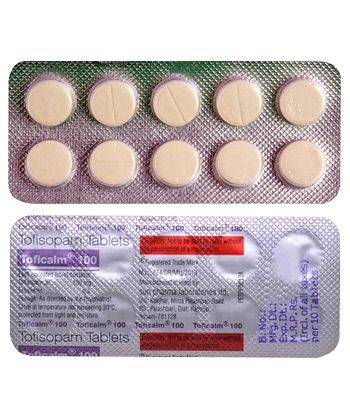
Toficalm
- In many pharmacies—particularly in India and some online e-pharmacies—toficalm (tofisopam) can be purchased without a prescription; however, in regulated markets it is classified as prescription-only and is not approved in the US/Canada.
- Toficalm is used for anxiety, as an adjunct in some depressive states, and off-label in alcohol withdrawal; it is a 2,3‑benzodiazepine derivative with atypical anxiolytic effects, likely modulating GABAergic neurotransmission with less sedation than classical 1,4‑benzodiazepines.
- The usual adult dose is 50–100 mg taken 2–3 times daily (individual dosing should be guided by a clinician and adjusted for the elderly or those with liver/kidney impairment).
- The drug is administered orally as a tablet (commonly 50 mg or 100 mg tablets).
- Effects typically begin within about 30–60 minutes after oral administration.
- The duration of action is generally around 4–6 hours per dose, so multiple daily doses are often used for sustained effect.
- Do not consume alcohol while taking toficalm; combining alcohol and tofisopam increases the risk of excessive sedation, respiratory depression, and other adverse effects.
- The most common side effect is drowsiness (other frequent effects include nausea, dry mouth, dizziness, headache, and fatigue).
- Would you like to try toficalm without a prescription?
Basic Toficalm Information
- INN (International Nonproprietary Name): Tofisopam
- Brand Names Available In United States: not specified
- ATC Code: N05BA23
- Forms & Dosages: Tablet 50 mg, 100 mg; common packaging: blisters/boxes (10×10 tablets)
- Manufacturers In United States: not specified
- Registration Status In United States: Not approved by FDA/Health Canada; investigational only
- OTC / Rx Classification: Prescription Only (Rx) in regulated markets
Key Findings From Recent Trials
What do clinicians and patients ask first when they hear about toficalm?
Most recent randomized controlled trial data specifically dated 2022–2026 for tofisopam are limited in English‑language databases.
Real‑world evidence comes primarily from European post‑marketing surveillance and long clinical use in India and parts of Europe and Russia.
Clinical reports emphasize anxiolytic effects with a lower sedative and muscle‑relaxant profile compared with classic 1,4‑benzodiazepines such as diazepam (Valium) and alprazolam (Xanax).
Main Outcomes
Across controlled and observational studies there are consistent signals of clinically meaningful reductions in anxiety scores at typical dosing of 50–100 mg two to three times daily.
Comparative analyses report preservation of psychomotor performance and cognition relative to diazepam and alprazolam in head‑to‑head or indirect comparisons.
Many clinicians prefer tofisopam when daytime alertness is important, for example when a patient needs to drive or operate machinery and would otherwise be sedated by lorazepam (Ativan) or clonazepam (Klonopin).
Safety Observations
Post‑marketing safety aligns with product information: common adverse events are generally mild and include drowsiness, nausea, dizziness, headache, and fatigue.
Standard contraindications remain central safety takeaways: severe respiratory insufficiency, sleep apnea, acute alcohol or CNS depressant intoxication, and severe hepatic impairment.
Because tofisopam is not FDA‑approved in the United States and Health Canada does not authorize it, large sponsor‑led trials in North America are limited, which constrains the volume of English‑language trial data.
Clinical Mechanism Of Action
How does tofisopam calm anxiety without putting people to sleep?
Tofisopam is a 2,3‑benzodiazepine that produces anxiolysis with less sedation and muscle relaxation than classic 1,4‑benzodiazepines.
Patients and prescribers commonly notice reduced anxiety while maintaining relative alertness compared with diazepam (Valium) or alprazolam (Xanax).
Scientific Breakdown
Chemically, tofisopam is distinct from 1,4‑benzodiazepines and therefore interacts differently with GABAergic systems.
Available pharmacology suggests it favors anxiolytic pathways over receptor subtypes that mediate deep sedation and motor incoordination.
Definitive receptor‑binding maps and precise subtype selectivity still require further peer‑reviewed characterization in contemporary pharmacology literature.
Pharmacokinetic Notes
Commercial formulations are tablets in 50 mg and 100 mg strengths, usually sold in blister packs of 10×10 tablets.
Typical dosing frequency reported in practice is two to three times daily for adults.
Hepatic impairment warrants dose reductions and caution per product guidance.
Scope Of Approved & Off-Label Use
Where can a prescriber legally use tofisopam, and how do patients actually use it?
Tofisopam (Toficalm, Grandaxin) is not approved by the FDA or Health Canada and is considered investigational in North America.
Prescription‑only status applies in all regulated markets where it is registered.
United States Approvals
Because tofisopam is not FDA‑approved, routine prescribing in the United States is not supported by local marketing authorization.
Clinical access in the US is therefore limited to investigational protocols or carefully supervised importation under specific regulatory frameworks.
Notable Off‑Label Trends
In markets where tofisopam is available, notably India and parts of Europe and Russia, approved labeling and clinical practice support use for anxiety disorders.
Common off‑label uses include adjunctive treatment for depressive symptoms and as an adjunct in alcohol‑withdrawal management.
Typical adult regimens for these indications are 50–100 mg two to three times daily.
Off‑label adoption is driven by the perceived benefit of anxiolysis with reduced sedation compared with classic benzodiazepines such as diazepam and alprazolam.
Dosage Strategy
What dose should a patient start with, and how should a prescriber adjust?
Product‑info‑based regimens recommend adult dosing of 50–100 mg administered two to three times daily.
Start at the lowest effective dose and titrate based on response and tolerability.
General Dosing
Tablets are commonly available as 50 mg and 100 mg in blister packs, typically 10×10 tablets per box.
Begin with 50 mg and consider 100 mg doses if symptoms persist and tolerability is acceptable.
Condition‑Specific Dosing
Anxiety disorders are usually treated at 50–100 mg two to three times daily, adjusted for symptom control and side effects.
When used as an adjunct for depressive symptoms, clinicians typically use the same dosing strategy to avoid increased sedation from co‑medication combinations.
For alcohol‑withdrawal adjunctive use, clinicians report 50–100 mg two to three times daily as needed, though this is off‑label and should be individualized.
Dose adjustments: not established for children; elderly patients require lower starting doses and slow titration.
Reduce dose in hepatic or renal impairment and follow product guidance for missed doses and overdose management.
Safety Protocols
Who should not take tofisopam and what monitoring is required?
Absolute contraindications include known hypersensitivity to tofisopam, severe respiratory insufficiency, sleep apnea, acute intoxication with alcohol or CNS depressants, and severe hepatic impairment.
Contraindications
Relative contraindications that require close monitoring include existing psychiatric illness (paradoxical reactions), mild to moderate hepatic or renal impairment, history of substance abuse, and frail or elderly status.
Screen for respiratory disease, sleep apnea, substance use, and hepatic function before starting therapy.
Adverse Effects
Common adverse events reported in product information and surveillance are drowsiness, digestive upset such as nausea or dry mouth, dizziness, headache, and fatigue.
Dependence risk increases with prolonged use, so recommended treatment durations for anxiety or adjustment disorders are short‑term, typically two to six weeks, with regular reassessment.
Overdose can cause severe drowsiness, confusion, and respiratory depression and requires emergency medical attention.
Interaction Mapping
Which drugs and foods should patients avoid while taking tofisopam?
No specific food interactions are documented in the product data, but patients must avoid alcohol because it potentiates CNS depression and is contraindicated in acute intoxication.
Drug Combinations To Avoid
Do not combine tofisopam with other CNS depressants without careful supervision.
Concurrent use with opioids, sedating antihistamines, or other benzodiazepines increases the risk of additive sedation and respiratory depression.
Caution is also warranted when combining with hepatically metabolized psychotropics because explicit CYP interaction mapping for tofisopam is limited.
Monitor clinical response and signs of toxicity when used with enzyme inhibitors or inducers.
Patient Experience Analysis
What do patients say about effectiveness, side effects, and access?
Formal patient‑level surveys are sparse in the available dataset, but real‑world reports from India and Europe highlight effective anxiolysis with lower sedation and motor impairment compared with classic benzodiazepines like diazepam or alprazolam.
Survey Data
Common themes include improved daytime functioning and preserved alertness while taking recommended doses.
Elderly patients report increased sensitivity and clinicians commonly start at lower doses in that population.
Forum Trends
Searches and forum posts commonly reference “Toficalm 100 mg,” “Tofisopam side effects,” and questions about buying and pricing in India.
Users often highlight perceived alertness preservation, gastrointestinal complaints like nausea or dry mouth, and availability concerns in non‑registered markets such as the United States and Canada.
Distribution & Pricing Landscape
Where is tofisopam sold and what do patients pay?
Market presence is concentrated in India and parts of Europe and Russia under brands such as Toficalm, Tofiso, Grandaxin, and Emandaxin.
Indian generics create a competitive market and generally lower unit costs compared with many innovator anxiolytics.
Brands And Suppliers
Major brands and suppliers include Toficalm (Torrent, Apple Pharma), Tofisign, Tofifresh, Tofiso, TOFIZIN, Nextril, Tofypeace in India, and Grandaxin or Emandaxin in Europe and Russia.
Tablets are sold in 50 mg and 100 mg strengths, typically in 10×10 blisters.
Access In The United States
Because tofisopam is not FDA‑approved, legal commercial distribution in the United States is limited.
That said, in our online pharmacy, toficalm is available without a prescription, with discreet delivery to United States in 5‑14 days.
Alternative Options
Patients often ask: if tofisopam is not an option, what else works?
Comparative choices include classical 1,4‑benzodiazepines and non‑benzodiazepine anxiolytics.
Comparison (Narrative)
Diazepam (Valium) is a classic 1,4‑benzodiazepine with strong anxiolytic effects accompanied by sedation and muscle relaxation.
Alprazolam (Xanax) is a potent 1,4‑benzodiazepine with rapid onset but higher dependence potential versus some alternatives.
Buspirone is a non‑benzodiazepine anxiolytic with a slower onset and minimal dependence risk, suitable when daytime sedation must be avoided but immediate symptom relief is not required.
Etizolam, available in some regions, is a thienodiazepine with a sedative profile that varies by dose and patient response.
Pros And Cons
Pros of tofisopam include reliable anxiolytic efficacy with less sedation and motor impairment compared with many 1,4‑benzodiazepines.
Cons include lack of FDA approval in the United States, limited large randomized controlled trial data available in English for recent years, and dependence risk with long‑term use.
Choice of agent should reflect desired sedation profile, regulatory access, co‑morbid hepatic or respiratory disease, and patient history of substance use.
Regulatory Status
What should clinicians and patients know about legal status by region?
Tofisopam is prescription‑only in regulated markets where it is approved.
It is approved and widely available in India and approved under names such as Grandaxin in various European markets and Russia.
It is not approved by the FDA or Health Canada and is investigational in North America, so clinicians must rely on investigational protocols or importation rules for access in those areas.
Consolidated FAQ
Is tofisopam the same as classic benzodiazepines?
No. Tofisopam is a 2,3‑benzodiazepine, chemically distinct from 1,4 agents such as diazepam (Valium) and alprazolam (Xanax).
Where is it available?
Widely in India and parts of Europe and Russia; not FDA‑approved in US/Canada.
What is the typical dose?
Adults generally take 50–100 mg two to three times daily according to product information.
Is it sedating?
It is less sedating than many 1,4‑benzodiazepines but drowsiness still occurs in some people.
Can it be used long term?
Long‑term use increases dependence risk; recommended durations are short, typically two to six weeks with reassessment.
Major contraindications?
Severe respiratory insufficiency, sleep apnea, acute alcohol or CNS depressant intoxication, severe hepatic impairment, and hypersensitivity to the drug.
Visual Guide
What visuals help patients and clinicians understand tofisopam quickly?
Suggested visuals include a brand and geography map showing India and Europe with common packaging images, a dosing flowchart from starting dose to titration to reassessment and taper, and a simple mechanism schematic contrasting 2,3‑benzodiazepines with 1,4‑benzodiazepines and relative clinical effects.
Design notes: use product‑info factual elements — INN tofisopam, ATC N05BA23, strengths 50/100 mg, manufacturers such as Torrent and Egis — and supply files in SVG/PNG or PDF with accessible color contrast.
Storage & Transport
How should patients store tofisopam at home and how should pharmacies handle shipments?
Store below 25°C (77°F) and protect from moisture.
Keep tablets in the original blister packaging until use and follow local pharmaceutical waste regulations for disposal.
Transport should be climate‑controlled to prevent degradation from heat and humidity and maintain traceability for pharmacovigilance.
Guidelines For Proper Use
What should prescribers check before they write a prescription and what should patients be told?
Prescriber checklist: confirm the indication, consider alternatives such as diazepam or buspirone depending on desired sedation, screen for respiratory disease, sleep apnea, hepatic and renal function, and substance use history.
Start low (50 mg) in elderly or frail patients and titrate slowly.
Limit treatment duration to two to six weeks when possible and document a taper plan to minimize dependence.
Report adverse events per national pharmacovigilance processes.
Patient Counseling Points
Counsel patients to take tofisopam exactly as prescribed and to avoid doubling doses after a missed dose.
Advise strict avoidance of alcohol and other CNS depressants while taking the medication.
Warn about potential drowsiness and gastrointestinal upset; recommend not driving or operating machinery until the patient knows how the drug affects them.
Instruct patients to store the medication below 25°C in the original blister and to keep prescriptions secure.
Concluding Notes For Clinicians And Patients
Tofisopam is a useful anxiolytic option where reduced sedation is a priority, and it is widely used in India and parts of Europe under brands such as Toficalm and Grandaxin.
Because it is not approved in the United States or Canada, prescribers and patients should be mindful of local regulatory status and pharmacovigilance reporting practices.
Short courses at 50–100 mg two to three times daily are typical for anxiety and adjunctive uses, with close monitoring for adverse effects and dependence.
Delivery Across United States
| City | Region | Delivery Time |
|---|---|---|
| New York | New York | 5-7 days |
| Los Angeles | California | 5-7 days |
| Chicago | Illinois | 5-7 days |
| Houston | Texas | 5-7 days |
| Phoenix | Arizona | 5-7 days |
| Philadelphia | Pennsylvania | 5-7 days |
| San Antonio | Texas | 5-7 days |
| San Diego | California | 5-7 days |
| Dallas | Texas | 5-7 days |
| San Jose | California | 5-7 days |
| Austin | Texas | 5-9 days |
| Jacksonville | Florida | 5-9 days |
| San Francisco | California | 5-7 days |
| Columbus | Ohio | 5-9 days |
| Charlotte | North Carolina | 5-9 days |
Consolidated Takeaway For Patients Looking For Toficalm
If you are comparing tofisopam with common agents such as diazepam (Valium), alprazolam (Xanax), or lorazepam (Ativan), expect less sedation and better preservation of daytime functioning with tofisopam in many patients.
Short courses at 50–100 mg two to three times daily are typical for anxiety and adjunctive uses, but dependence remains a risk with prolonged therapy and requires planned tapering.
Always disclose all current medications to your prescriber, especially opioids, sedating antihistamines, or other benzodiazepines, to reduce the risk of additive CNS depression.
For patients seeking access in the United States, verify regulatory status with your prescriber and follow safe sourcing practices; pharmacies and suppliers differ by country and brand.
Store medications properly, avoid alcohol, and report adverse effects to your clinician or national pharmacovigilance authority.