
Meclizine
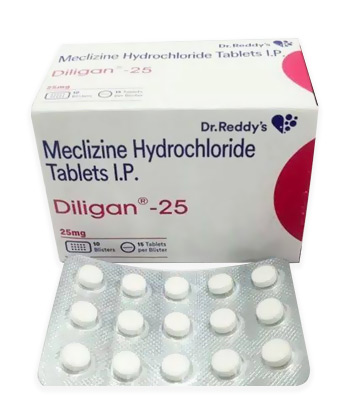
Meclizine
- Meclizine can often be purchased over the counter without a prescription in the United States and in many online pharmacies; in some countries, however, it may require a prescription, so local rules should be checked before buying.
- Meclizine is used to prevent and treat motion sickness and to help relieve vertigo and dizziness. It works as an antihistamine with anticholinergic effects, helping reduce signals in the brain that trigger nausea, vomiting, and balance-related symptoms.
- The usual adult dose is 25–50 mg taken about 1 hour before travel for motion sickness, or 25–100 mg per day in divided doses for vertigo. The maximum daily dose is typically 100 mg.
- Meclizine is available as oral tablets, chewable tablets, and, more rarely, sublingual or buccal forms.
- The effect usually begins within about 1 hour after taking it.
- The duration of action is generally about 24 hours, which is why it is commonly taken once daily.
- Do not drink alcohol while taking meclizine, because alcohol can increase drowsiness and other central nervous system side effects.
- The most common side effects are drowsiness and dry mouth. Some people may also experience blurred vision, fatigue, constipation, headache, or dizziness.
- Would you like to try meclizine without a prescription?
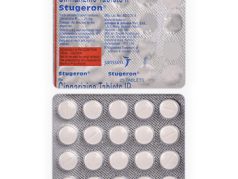
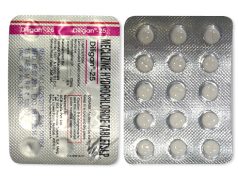
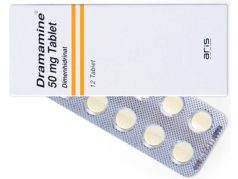
Basic Meclizine Information
- INN (International Nonproprietary Name): Meclizine (also spelled Meclozine in some regions, e.g., UK and Japan)
- Brand names available in United States: Antivert, Bonine, Dramamine Less Drowsy, Travel-Ease
- ATC Code: R06AE05 (alternate spelling meclozine: R06AD01)
- Forms & dosages: Tablet 12.5 mg, 25 mg, 50 mg; chewable tablet 25 mg, 50 mg; sublingual/buccal 25 mg (rare)
- Manufacturers in United States: Pfizer, WellSpring Pharma, Prestige Consumer Healthcare
- Registration status in United States: FDA-approved for motion sickness and vertigo
- OTC / Rx classification: OTC in the United States and many e-shops/pharmacies for motion sickness; prescription-only in some countries and regions
- Standard dosages per condition: Motion sickness 25–50 mg 1 hour before travel, repeat every 24 hours if needed, maximum daily dose 100 mg; vertigo 25–100 mg daily in divided doses, maximum daily dose 100 mg
- Typical treatment durations and regimens: Motion sickness prevention uses one tablet 1 hour before travel, then once daily as needed during travel; vertigo may be treated in divided doses throughout the day for up to several days as directed
- Storage and transport guidelines: Store at 20–25°C (68–77°F), protect from moisture and light, and keep in original packaging
- Absolute contraindications: Known hypersensitivity to meclizine, meclozine, or piperazine derivatives; children under six; severe hepatic or renal impairment is a relative concern
- Relative contraindications: Asthma, angle-closure glaucoma, prostatic hypertrophy, urinary retention, elderly patients, and pregnancy
- Common side effects: Drowsiness, dry mouth, blurred vision, fatigue, headache, vomiting, constipation, and confusion in the elderly
- Competitors and similar drugs: Dimenhydrinate, promethazine, cinnarizine, and scopolamine transdermal
Key Findings From Recent Trials
Is meclizine still worth keeping in the medicine cabinet for travel and dizziness?
For most people, the answer is yes, especially when the goal is short-term symptom relief rather than long-term treatment of a balance disorder.
Recent evidence from 2022 through 2026 has not shifted the core role of meclizine much, because the drug has long been used in routine practice for motion sickness and vestibular symptoms.
That said, current practice trends still matter in a U.S. pharmacy setting.
Meclizine remains a familiar OTC antihistamine for travel nausea, and it is still commonly used as a meclizine vertigo medication when clinicians want vestibular suppression for a short period.
Its strongest support is still prevention and symptom control, not disease modification.
For motion sickness, practical use remains straightforward: 25–50 mg about 1 hour before travel, then repeat daily if needed during the trip.
That timing is why many travelers choose it before flights, cruises, and long car rides instead of waiting until the nausea is already at full force.
In real-world clinical evidence, meclizine for motion sickness continues to be valued because it is easy to find, easy to dose, and dependable for many patients.
Safety observations have stayed consistent over time.
Sedation is the most common limiting issue, and anticholinergic effects such as dry mouth, blurred vision, and constipation are the other main concerns.
Older adults are the group most likely to feel those effects more strongly.
That is one reason pharmacists often recommend the lowest effective dose first, especially for a first-time user or someone with a history of daytime sleepiness.
For shoppers comparing motion sickness pills, familiar brands like Antivert, Bonine, and Dramamine Less Drowsy still dominate U.S. demand in tablet form.
People usually want something that works without making the whole day feel lost to grogginess, but it is important to remember that “less drowsy” does not mean non-sedating.
In practice, meclizine is best thought of as a vestibular suppressant that helps dampen the symptom cascade rather than curing the underlying cause.
If dizziness is persistent, recurrent, or tied to hearing loss, fainting, or neurologic symptoms, that is a clinic problem, not just an OTC problem.
Clinical Mechanism Of Action
Why does a simple antihistamine help with spinning, nausea, and that awful “boat ride” feeling?
Meclizine is a first-generation H1 antihistamine with anticholinergic activity.
In plain language, it calms the brain signals that tell you the room is moving when your inner ear and eyes are sending mixed messages.
That is why it is useful for travel nausea and for some forms of vertigo.
As a vestibular suppressant, it reduces stimulation from the inner ear to the brain and lowers nausea signaling along that pathway.
Its ATC code is R06AE05, which places it among systemic antihistamines in the piperazine derivative group.
The mechanism is not complicated, but the effects are broad enough to explain both the benefits and the side effects.
When the inner-ear-to-brain transmission is dampened, spinning sensations and vomiting triggers often become less intense.
That same central effect can also slow alertness.
So the tradeoff many patients notice is simple: less dizziness, but more sleepiness.
Dry mouth and blurred vision are classic anticholinergic effects, and they show up because the medicine is affecting more than one signaling pathway.
That is also why meclizine mechanism of action matters when counseling someone who plans to drive, work a night shift, or care for children after taking it.
People sometimes expect a mild drug because it is sold over the counter, but H1 antihistamine activity can still be very noticeable.
For patients who want a practical mental picture, think of it as turning down the volume on the nausea pathway and the inner ear’s “motion” signal.
That is helpful for travel sickness and some dizzy spells, but it is not a fix for every cause of imbalance.
Scope Of Approved And Off-Label Use
What can you actually buy or use meclizine for in the United States?
In the U.S., meclizine is FDA-approved for motion sickness and vertigo.
It is widely sold OTC under brand names such as Antivert, Bonine, Dramamine Less Drowsy, and Travel-Ease.
That broad access is one reason it shows up so often in pharmacy baskets before holidays, road trips, and cruise season.
Its core approved use is travel prevention.
A standard adult dose is 25–50 mg about 1 hour before travel, followed by once-daily dosing if needed, with a maximum daily dose of 100 mg.
Clinicians also use it for short-term dizziness control when the symptoms sound vestibular in origin.
That said, it is not a universal vertigo cure.
Some causes of dizziness do not respond well, and conditions such as Ménière’s disease may need a different plan unless a clinician specifically recommends it.
Patients often ask about meclizine over the counter versus prescription-only access.
In the United States, it is commonly OTC for motion sickness, while some countries, including Australia, keep it prescription-only.
That makes it a practical travel medication for U.S. shoppers, and in our online pharmacy it is available without a prescription, with discreet delivery to United States in 5-14 days.
Brand familiarity matters here too.
People searching for Bonine or Antivert usually want the same active ingredient, just under a label they already recognize.
In the pharmacy aisle, familiar packaging can make the choice feel safer, especially for first-time travelers who just want a simple motion sickness tablet.
Dosage Strategy
How much should an adult actually take, and when should it be taken?
Meclizine dosing is usually condition-driven and pretty simple, which helps explain its popularity.
For motion sickness, adults commonly take 25–50 mg about 1 hour before travel.
For vertigo, the usual range is 25–100 mg daily in divided doses, with a maximum daily dose of 100 mg.
Tablets are sold in 12.5 mg, 25 mg, and 50 mg strengths, and chewables are also available in some products.
Rare sublingual or buccal forms exist, but tablets are the standard route for most U.S. patients.
Older adults should usually start low, often at 12.5 mg, because sedation and confusion are more likely.
That lower starting dose can matter a lot for a grandparent who wants to enjoy a family trip without feeling foggy all day.
For children under 12, safety data are limited, so label guidance or pediatric advice is important.
Children under six are generally avoided in most products because safety data are lacking.
When a family is preparing for a long drive, it helps to think ahead rather than waiting until symptoms peak.
Practical timing is one of the most important points with meclizine for motion sickness.
Taking it before exposure works better than taking it after nausea has already become severe.
For vertigo, divided doses through the day may be used for several days as directed, but that is something to follow carefully from the label or clinician instructions.
In older adults and in people with liver or kidney impairment, caution is smart because hepatic metabolism may affect tolerability.
Safety Protocols
Is meclizine safe for most people?
Usually, yes, but its anticholinergic profile creates predictable risks that should not be ignored.
Absolute contraindications include hypersensitivity to meclizine, meclozine, or piperazine derivatives.
Children under six are generally avoided because most products do not have enough safety data for that age group.
Severe hepatic or renal impairment is also a caution area, with dose adjustment sometimes needed based on clinical judgment.
Use extra care in asthma, angle-closure glaucoma, prostatic hypertrophy, urinary retention, pregnancy, and in older adults.
Common meclizine side effects include drowsiness, dry mouth, blurred vision, fatigue, headache, vomiting, constipation, and confusion in the elderly.
Most of those effects are mild to moderate, but they can still be enough to interfere with work, driving, or fall risk in a senior patient.
Overdose may cause marked drowsiness, anticholinergic symptoms, and rarely seizures.
If that happens, urgent medical help is needed.
A useful rule of thumb is this: if a patient is already unsteady or prone to falls, meclizine deserves the same respect as any sedating medicine.
Alcohol and other sedating products make the safety picture worse, so the easiest risk reduction strategy is to avoid combining them.
For people who take first-generation antihistamines at night and then need to function early the next morning, next-day sedation is worth discussing before the first dose.
Interaction Mapping
Does meclizine have strict food rules?
Not really.
There are no major food restrictions, and some people take it with food if they feel mild stomach upset.
The bigger concern is alcohol, because it can amplify sedation and psychomotor slowing.
That matters for travelers who want a drink on the plane or a cocktail at dinner after taking motion sickness pills.
Meclizine also deserves caution with other CNS depressants.
Opioids, benzodiazepines, sleep aids, muscle relaxants, and other first-generation antihistamines can all add to drowsiness and impairment.
Combining those medicines can raise fall risk and make driving unsafe.
Older adults are especially vulnerable because anticholinergic burden can stack up quickly.
Confusion, urinary retention, and dry mouth are more likely when several sedating or anticholinergic drugs are used together.
Meclizine and alcohol is one of the clearest counseling points in the pharmacy.
Even when the interaction is not dangerous in the classic sense, the practical result can still be a rough day with slowed reaction time and poor balance.
If a patient takes a bedtime sedative, a pharmacist should always ask whether meclizine is being used at the same time for travel or dizziness.
Patient Experience Analysis
What do patients usually say after trying meclizine?
Most real-world feedback is pretty consistent.
People often say it “takes the edge off” travel nausea or dizziness without knocking them out completely, although drowsiness is still the most common tradeoff.
That is one reason Bonine and Dramamine Less Drowsy remain popular names in the U.S.
Patients like familiar packaging, easy OTC access, and the convenience of once-daily use before a trip.
For frequent flyers and cruise travelers, that once-daily routine is often more appealing than medicine that has to be taken multiple times a day.
When people compare meclizine reviews online, the usual discussion is not whether it works at all.
The real debate is how sleepy it makes you feel.
Many forum posts compare meclizine with dimenhydrinate, promethazine, and scopolamine patches, especially when planning long trips.
Users often ask whether Dramamine Less Drowsy vs. Bonine is truly different, and the practical answer is usually about brand preference rather than a dramatic difference in the active ingredient.
For short-term prevention, patient satisfaction tends to be best.
For continuous dizziness that needs round-the-clock control, people often need a more tailored plan.
A common story in the pharmacy is someone who bought a package for a Friday evening flight, took it before boarding, and felt relieved that the nausea never started.
That kind of simple success is what keeps this medicine in steady demand.
Distribution And Pricing Landscape
Where do most U.S. shoppers find meclizine, and what does the market look like?
In the United States, it is widely available through retail pharmacies, e-commerce pharmacies, and travel sections.
Common brands include Antivert, Bonine, Dramamine Less Drowsy, and Travel-Ease.
Packaging is usually in blister packs or bottles, with tablet strengths commonly listed as 12.5 mg, 25 mg, or sometimes 50 mg.
That range makes it easy for shoppers to compare motion sickness tablets by dose and count.
U.S. manufacturers and suppliers include Pfizer, WellSpring Pharma, and Prestige Consumer Healthcare, while generic supply comes from multiple distributors.
Internationally, the same ingredient may appear under different names, including meclozine in the UK and Japan, Bonamine in Canada, and Reisetabletten-ratiopharm in Germany.
Local product names can create confusion, so checking the label carefully is smart when traveling or ordering across borders.
Pricing varies by brand, count, and channel.
Generic products often cost much less than branded travel-sickness products, which is why many shoppers choose a store brand once they know the ingredient works for them.
For patients who are comparing value, the active ingredient is usually the main thing to match first, then the packaging, then the cost.
That approach keeps the decision practical and avoids overpaying for the same medicine under a different label.
Alternative Options
What if meclizine is not the best fit?
There are several alternatives, and each has a different balance of sedation, duration, and convenience.
Dimenhydrinate, the original Dramamine type product, has similar uses for motion sickness but is often more sedating.
Promethazine can be stronger for nausea and vertigo, but it brings a heavier sedation burden.
Cinnarizine is common in Europe and Asia for vertigo and motion sickness.
Scopolamine in transdermal patch form is useful for prevention, especially on long trips.
Meclizine’s strengths are straightforward: OTC access, once-daily convenience, and broad familiarity.
Its weaknesses are slower onset than some rescue medicines and limited usefulness for non-vestibular dizziness.
That is why it often fits best when someone wants a practical oral option with less sedation than older antihistamines, even though less drowsy does not mean non-sedating.
For a traveler choosing between meclizine alternatives, the decision often comes down to trip length, sensitivity to sedation, and whether the medicine is needed for prevention or rescue.
Short, planned trips usually favor meclizine for motion sickness, while longer or more severe cases may need a different strategy from a clinician.
Regulatory Status
Is meclizine regulated the same way everywhere?
No, and that is where a little label literacy helps.
In the United States, meclizine is FDA-approved for motion sickness and vertigo, and it is commonly sold OTC under Antivert, Bonine, Dramamine Less Drowsy, and Travel-Ease.
In Canada, it is approved as Bonamine.
In Australia, it is prescription only.
In Japan, it is available OTC as meclozine.
Across Europe, it is not centrally authorized by the EMA, but it may be registered nationally in select countries.
That is why product status can change depending on distributor and year.
Meclizine FDA approval makes it easy to find in the U.S., but local registry checks still matter when people search by alternate spellings such as meclozine or meclozina.
For patients and clinicians looking up foreign-market boxes, names like Reisetabletten-ratiopharm may show up instead of the U.S. brand names they know.
That is especially important when ordering online or when a traveler brings a product from another country.
If the question is whether a product is OTC or Rx, the answer depends on where it is sold.
In the U.S., it is generally OTC, while some countries keep it prescription-only.
Visual Guide
Would a quick step-by-step help before you buy or take a dose?
A simple dose flow can make meclizine easier to use safely.
- Identify whether you need travel prevention or vertigo control.
- Confirm age and risk factors, especially if the patient is older or has glaucoma, urinary retention, or liver or kidney impairment.
- Take 25–50 mg about 1 hour before travel, or follow the vertigo dosing plan given by a clinician.
- Avoid alcohol and do not double-dose.
- Watch for drowsiness before driving or doing anything that needs full alertness.
A brand map can also help shoppers match the product to the market.
| Region | Common Brand Names | Typical Tablet Strengths |
|---|---|---|
| United States | Antivert, Bonine, Dramamine Less Drowsy, Travel-Ease | 12.5 mg, 25 mg |
| Canada | Bonamine | 25 mg |
| United Kingdom and Japan | Meclozine | 25 mg |
| Germany | Reisetabletten-ratiopharm | 25 mg |
Label reminders matter because strengths can differ by market.
Depending on the country, tablets may be 12.5 mg, 25 mg, or 50 mg.
That small detail matters when someone is comparing brand names at the airport, the pharmacy counter, or a travel website.
Storage And Transport
How should meclizine be kept once it is at home or packed for a trip?
Store it at 20–25°C, or 68–77°F, and protect it from moisture and light.
Keeping the tablets in their original packaging is the safest choice whenever possible.
That also makes it easier to verify the brand and strength later, especially if the package was purchased under a different international name.
For travel, carry it in a day bag or carry-on if you plan to take it before or during transit.
If the product is prescription-only in your destination country, carry documentation when needed.
Do not leave tablets in a hot car, a beach bag, or checked luggage for long periods.
Heat and humidity are unnecessary risks for a medicine that is meant to make travel easier, not harder.
That simple storage habit helps preserve product integrity and avoids confusion when comparing boxes from different countries.
Guidelines For Proper Use
What are the best habits for getting the most out of meclizine without overusing it?
Use it exactly for its intended purpose: prevention or short-term symptom control.
For motion sickness, take it 1 hour before travel and repeat once daily only if needed.
Do not double up if a dose is missed.
If you miss one, take it as soon as you remember unless it is close to the next scheduled dose.
Use the lowest effective dose, especially in older adults.
Avoid driving or risky tasks until you know how it affects you.
That advice sounds simple, but it prevents a lot of avoidable problems.
A patient who takes meclizine at breakfast for a car trip may feel fine, while another person may notice unexpected next-day sedation and need to plan accordingly the next time.
If an overdose occurs, watch for severe drowsiness, dry mouth, blurred vision, or rare seizures, and seek urgent help.
If vertigo is persistent, recurrent, or accompanied by hearing loss, neurologic symptoms, or fainting, it is time for medical evaluation rather than ongoing self-treatment.
That is especially important because meclizine is not effective for every type of vertigo, and a different diagnosis may be behind the symptoms.
Delivery Across United States
| City | Region | Delivery Time |
|---|---|---|
| New York City | Northeast | 5-7 days |
| Los Angeles | West | 5-7 days |
| Chicago | Midwest | 5-7 days |
| Houston | South | 5-7 days |
| Phoenix | West | 5-7 days |
| Philadelphia | Northeast | 5-7 days |
| San Antonio | South | 5-7 days |
| San Diego | West | 5-7 days |
| Dallas | South | 5-7 days |
| San Jose | West | 5-7 days |
| Austin | South | 5-7 days |
| Jacksonville | South | 5-9 days |
| Fort Worth | South | 5-9 days |
| Columbus | Midwest | 5-9 days |
| Charlotte | South | 5-9 days |
Consolidated FAQ
Still have a few quick questions before choosing meclizine?
Is Meclizine The Same As Bonine?
Yes.
Bonine is a common U.S. brand name for meclizine.
How Fast Does It Work?
For travel, it is usually taken 1 hour before departure.
That timing helps it work before nausea starts.
Can I Drink Alcohol With It?
Best avoided.
Alcohol can increase sedation and slow reaction time.
Is It Good For Vertigo?
Yes, for some forms of vertigo.
Not every cause of dizziness responds equally, so persistent symptoms need evaluation.
Is It Safe For Children?
Safety data are limited under age 12.
Under age 6 is generally avoided in most products.
Is It Prescription-Only?
Not in the United States.
It is OTC in many settings, but prescription-only in some countries.
Quick Reference Guide
When people want a fast reminder, the safest meclizine plan is usually the simplest one.
Match the dose to the purpose, start low in older adults, and avoid mixing it with alcohol or other sedating drugs.
For travelers, the best results usually come from prevention rather than rescue.
For vertigo, short-term use may help, but persistent or unusual symptoms should be checked by a clinician.
That approach keeps the medicine useful without turning a straightforward OTC purchase into a bigger safety problem.