Frumil
Frumil
- Frumil is typically dispensed in community pharmacies and through licensed distributors; in most major markets it is a prescription-only medicine, although availability varies and in some pharmacies or online vendors it may be offered without a prescription—check local rules and the specific pharmacy.
- Frumil is used to reduce fluid overload (edema) and help manage heart failure-related fluid retention; it combines furosemide, a loop diuretic that increases renal excretion of sodium and water, with amiloride, a potassium‑sparing diuretic that reduces potassium loss.
- Usual adult dosing starts at one tablet (40 mg furosemide/5 mg amiloride) in the morning; dose may be increased to two tablets per day divided AM/noon if needed, with a maximum of 4 tablets/day (20 mg amiloride equivalent) under medical supervision.
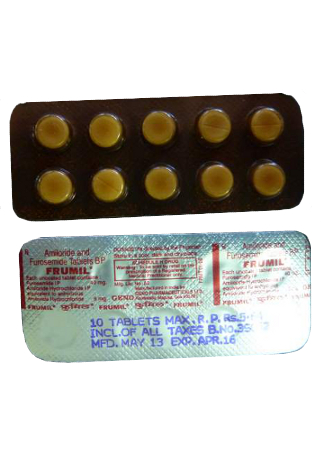
- Frumil is administered orally as an orange scored tablet designed for swallowing or splitting.
- The diuretic effect usually begins within about 30–60 minutes after oral intake (onset may vary by individual).
- The main diuretic effect commonly lasts roughly 6–12 hours, though individual response and dosing can alter duration.
- Avoid excessive alcohol while taking Frumil, as alcohol can worsen dehydration, dizziness, and low blood pressure; use alcohol cautiously.
- The most common side effect is increased urination; other frequent effects include dizziness (especially on standing), mild dehydration, and electrolyte disturbances such as low sodium or potassium.
- Would you like to try frumil without a prescription?
Key Findings From Recent Trials
Basic Frumil Information
- INN (International Nonproprietary Name): Furosemide (also known as frusemide in some markets) and Amiloride Hydrochloride.
- Brand Names Available In United States: not specified.
- ATC Code: C03EB01 (Furosemide and Amiloride combination, “diuretics, potassium-sparing and other diuretics” category).
- Forms & Dosages: Tablet — 40 mg furosemide + 5 mg amiloride, oral, scored for splitting.
- Manufacturers In United States: not specified.
- Registration Status In United States: not specified.
- OTC / Rx Classification: Prescription only (Rx, POM) in major listed markets.
What do clinicians want to know from recent studies about combination diuretic therapy and fixed-dose products such as Frumil?
Recent randomized controlled trials specifically naming Frumil (furosemide + amiloride) are limited, with most high-quality evidence through 2024 focusing on loop diuretic strategies, adjunctive potassium-sparing agents, and outpatient diuretic stewardship in heart failure.
Across 2022–2024, a clear trend favored aggressive loop diuretic dosing where diuretic resistance was suspected, with adjunctive oral potassium-sparing agents used to reduce hypokalemia and shorten hospital stays.
Observational cohort data through 2024 reported similar decongestion efficacy when amiloride was paired with furosemide versus loop intensification alone, and fewer documented hypokalemia episodes in many series.
Some cohorts signaled a higher rate of hyperkalemia in high‑risk patients when potassium-sparing agents were used without careful monitoring.
Safety messages in all reviewed work consistently emphasize electrolyte monitoring, especially in patients with reduced renal function and in elderly populations at higher risk of orthostatic events.
Regulatory safety reviews from national agencies that list Frumil reinforce contraindications in severe renal failure, pre‑existing hyperkalemia, and pregnancy, and recommend baseline lab checks.
There are no large, placebo‑controlled randomized trials isolating Frumil’s branded outcomes versus other fixed-dose combinations up to 2024, so prescribers rely on mechanistic rationale and smaller comparative studies.
Clinicians should use the existing evidence cautiously and prioritize baseline and interval laboratory monitoring when choosing a combination diuretic strategy for heart failure or refractory edema.
Clinical Mechanism Of Action
Layman’s Explanation
Why does combining two diuretics make sense to remove fluid while protecting potassium?
Frumil pairs a strong “water pill” that removes excess fluid with a potassium‑saving partner so patients lose less potassium while getting the benefits of diuresis.
That combination helps relieve swelling and breathlessness while lowering the chance of low blood potassium that can cause muscle weakness or palpitations.
Scientific Breakdown
Furosemide (Loop)
Furosemide blocks the Na+-K+-2Cl− co‑transporter in the thick ascending limb of Henle, producing potent natriuresis and diuresis.
Its rapid onset makes it useful for acute edema and congestive symptoms, but effectiveness depends on renal perfusion and protein binding.
Amiloride (ENaC)
Amiloride targets epithelial sodium channels (ENaC) in the distal nephron and reduces sodium reabsorption there.
By limiting sodium uptake in the distal tubule, amiloride reduces potassium secretion and helps prevent the hypokalemia that often follows loop diuretics.
Together the two agents act at different nephron sites for complementary effect: potent fluid removal from loop blockade plus mitigation of loop-induced potassium loss by ENaC inhibition.
Pharmacologic nuances: furosemide’s clinical effect is attenuated in poor renal perfusion, while amiloride’s potassium‑sparing action can lead to hyperkalemia if renal function declines or if used with RAAS blockers.
Onset and typical oral dosing for the marketed Frumil tablet is centered on a 40 mg furosemide/5 mg amiloride strength, with dose adjustments for age, renal function, and interacting medicines.
Scope Of Approved And Off-Label Use
United States Approvals
What is Frumil’s regulatory footprint for US prescribers and pharmacists?
Frumil as a branded fixed-dose tablet (40 mg/5 mg) is an established marketed product in the UK, Ireland, New Zealand and other markets according to manufacturer and regulatory listings.
In the United States the specific Frumil brand is not commonly marketed under that name, and local availability should be verified with FDA or institutional formularies.
US clinicians commonly achieve the same therapeutic intent by prescribing furosemide (Lasix) together with a potassium‑sparing agent such as amiloride or spironolactone when indicated.
Notable Off‑Label Trends
Fixed‑dose combination diuretics are often used pragmatically for edema due to heart failure, cirrhosis with ascites, or resistant peripheral edema when hypokalemia risk is a concern.
Prescribers favor combination approaches in patients who need aggressive diuresis but have recurrent low potassium on loop therapy alone.
Always check local approval, prescription classification, and product information before prescribing; country‑specific SPCs and PILs list exact contraindications and monitoring requirements.
Dosage Strategy
General Dosing
How should a patient usually start Frumil?
Standard adult dosing from marketed product information starts with one tablet (40 mg furosemide/5 mg amiloride) in the morning.
If additional effect is required the regimen may be increased to two tablets per day divided between morning and noon.
The maximum amiloride limit is 20 mg per day, equivalent to no more than four tablets daily.
Condition‑Specific Dosing
In edema due to heart failure, continue therapy as clinically indicated and titrate to weight change, urine output, and signs of congestion.
In elderly patients begin at the lowest effective dose and titrate cautiously because of comorbidity‑related sensitivity and fall risk from orthostatic hypotension.
Renal impairment: avoid use in severe renal failure or anuria; in mild to moderate impairment use caution and monitor electrolytes frequently.
Children: not typically recommended due to insufficient data; specialist supervision is required when used in pediatrics.
Practical titration advice: obtain serum potassium, sodium, and creatinine at baseline and again within 3–7 days after starting or changing dose, and act on those results rather than empirically increasing dose.
Safety Protocols
Contraindications
Who should not take Frumil?
Absolute contraindications include severe kidney disease or anuria, existing hyperkalemia, Addison’s disease, known allergy to furosemide, amiloride, sulfonamides, or sulfonylureas, and pregnancy or breastfeeding unless benefit clearly outweighs risk.
Exercise caution in diabetes, gout, mild–moderate renal or hepatic impairment, and in elderly patients prone to hypotension.
Adverse Effects
What should patients expect and what must be monitored?
Common adverse effects include increased urination, mild dehydration, dizziness—particularly on standing—and gastrointestinal upset such as nausea or mild abdominal discomfort.
Laboratory changes sometimes reported are low blood potassium or sodium from the loop component, though amiloride mitigates hypokalemia; liver enzyme or lipid changes may occur.
Rare hypersensitivity reactions and skin rashes are possible and should prompt discontinuation and review.
Overdose presents with severe dehydration, significant electrolyte imbalance, and hypotension, and requires hospital admission for rehydration and monitoring.
Report suspected adverse reactions to national pharmacovigilance schemes such as the Yellow Card scheme where applicable.
Interaction Mapping
Food Interactions
Are there foods to avoid while on Frumil?
There are no major food restrictions in the product data, but alcohol and a high‑sodium diet can blunt diuretic effect and worsen dehydration.
Follow clinician advice on dietary potassium—do not change potassium intake dramatically without medical input.
Drug Combinations To Avoid
Which drug combinations raise the most concern?
Drugs that raise potassium, such as ACE inhibitors, ARBs, and potassium supplements, increase hyperkalemia risk when used with amiloride and should be monitored closely.
NSAIDs may blunt the efficacy of furosemide and increase renal risk, so avoid chronic NSAID use without monitoring renal function.
Diuretics can increase lithium levels and precipitate lithium toxicity, so lithium users require close monitoring.
Digoxin toxicity risk rises with hypokalemia from loop diuretics, so monitor potassium and digoxin levels when applicable despite amiloride’s protective effect.
Avoid using additional potassium‑sparing agents such as spironolactone alongside amiloride without careful monitoring because of additive hyperkalemia risk.
Patients with sulfonamide allergies should be screened for cross‑sensitivity warnings in the product information.
Patient Experience Analysis
Survey Data
What do patients typically report after starting a combination diuretic tablet?
Patient surveys and pharmacy reports commonly note prompt relief from swelling and a marked increase in urinary frequency, which most people prefer to manage with morning dosing to avoid nocturia.
Dizziness and orthostatic symptoms are frequently cited as limiting side effects, especially by older adults and those on multiple antihypertensives.
Many patients value the single‑tablet convenience of a scored orange tablet marked “FRUMIL,” which reduces pill burden compared with separate prescriptions for loop and potassium‑sparing agents.
Forum Trends
What concerns appear online and in informal forums?
Discussion threads emphasize access to monitoring and the need for clearer counseling on when to seek care for dizziness, fainting, muscle weakness, or palpitations that could indicate electrolyte disturbance.
Pharmacist feedback from practice highlights that fixed‑dose combinations can improve adherence but increase the importance of pharmacist counseling on interactions with ACE inhibitors, ARBs, and over‑the‑counter NSAIDs.
Distribution And Pricing Landscape
Market Channels
How is Frumil distributed internationally and what about US access?
Frumil is distributed in multiple markets including the UK, Ireland, and New Zealand via manufacturers and licensed local partners such as Sanofi and national distributors listed on Medsafe or national registries.
Classification in those markets is Prescription Only, restricting over‑the‑counter access.
In many US formularies the Frumil brand is not widely listed by name; clinicians instead prescribe equivalent regimens with separate furosemide and amiloride products or other potassium‑sparing agents.
In our online pharmacy, frumil is available without a prescription, with discreet delivery to United States in 5-14 days.
Generic Versus Branded Pricing
What drives cost differences?
Branded fixed‑dose combinations typically carry a premium compared with buying generics for the individual components, but regional generic alternatives like Amifru reduce cost in many markets.
When Frumil is not on a US formulary, cost and insurance coverage depend on therapeutic interchange policies and whether prescribers write for combination brands or separate generic agents.
Procurement teams should check product packaging cues and ATC code C03EB01 when budgeting or seeking reimbursement.
Alternative Options
Comparison Table
- Frumil (Furosemide/Amiloride): Rapid loop diuretic effect plus ENaC potassium-sparing action; useful for aggressive decongestion with potassium protection.
- Moduretic (Amiloride/HCTZ): Thiazide component provides antihypertensive and chronic edema benefit but is less potent for acute decongestion.
- Furosemide + Spironolactone: Combines potent loop diuresis with aldosterone antagonism; useful in heart failure but carries endocrine side effects such as gynecomastia.
Pros And Cons
Frumil’s strengths include single‑tablet convenience and mitigation of loop‑induced hypokalemia, which can aid adherence.
Limitations include limited availability in some markets, risk of hyperkalemia if renal function worsens, and that it is not the first choice for primary hypertension management.
Choice among alternatives should reflect the clinical goal—acute decongestion versus chronic blood pressure control—renal function, interaction risk, and patient tolerance.
Regulatory Status
Agency Listings
Which regulators list Frumil and what do they classify it as?
MHRA in the UK classifies Frumil as a Prescription Only Medicine and provides a Patient Information Leaflet and Summary of Product Characteristics online.
HPRA (Ireland) and Medsafe (New Zealand) list authorized Frumil products and provide datasheets and prescribing information.
ATC classification places the combination under C03EB01.
Labeling And Classification
Product labeling across markets includes the 40 mg/5 mg tablet strength, standard dosing guidance, contraindications, and storage recommendations.
US clinicians should verify local FDA registration or use therapeutic equivalents under prevailing formulary rules before prescribing a branded combination.
Consolidated FAQ
Quick Answers For Clinicians
- Is Frumil suitable in renal failure? Contraindicated in severe renal failure or anuria; use with caution and close monitoring in mild–moderate impairment.
- What is the maximum dose? Maximum amiloride 20 mg/day (max 4 tablets/day of the 40 mg/5 mg product).
- Key interactions? ACE inhibitors/ARBs and potassium supplements add hyperkalemia risk; NSAIDs blunt loop efficacy and increase renal risk.
Quick Answers For Patients
- How to take Frumil? Take one tablet in the morning; do not double doses if you miss one and check with your prescriber if unsure.
- Common side effects? Expect increased urination, possible dizziness when standing, and potential electrolyte changes—report muscle weakness or palpitations.
- Can I buy Frumil in the United States? The brand is less common in the US; ask your pharmacist about equivalent furosemide plus amiloride options or alternatives.
Store tablets below 25°C, protect them from moisture, and report side effects to your national pharmacovigilance authority.
Visual Guide
Tablet Id And Packaging
How do pharmacists and patients identify this tablet?
The marketed Frumil 40 mg/5 mg tablet is orange, scored for splitting, and marked “FRUMIL” on one side, and is supplied in blister packs or standard pharmacy bottles depending on market.
Quick Reference Flowchart (Text)
(1) Indication: edema or heart failure → assess volume status and need for potent diuresis.
(2) Contraindications: check renal function and serum potassium; do not start if severe renal failure or hyperkalemia present.
(3) Start: prescribe 1 tablet in the morning and counsel about increased urination and orthostatic precautions.
(4) Monitoring: obtain baseline labs, recheck at 3–7 days after initiation or dose change, then periodically as clinically needed.
(5) Escalation: increase to 2 tablets/day if required but do not exceed 4 tablets/day (amax amiloride 20 mg/day).
Provide patient-facing visual aids showing the pill image, common side effects, and clear signs that require urgent care such as fainting or severe muscle weakness.
Storage And Transport
Storage Conditions
How should Frumil be stored at home and in pharmacies?
Store below 25°C (77°F) and protect from moisture and direct light.
Keep tablets in original blister packaging or bottle until use and avoid humid environments like bathrooms.
Transport Considerations
Standard ambient conditions are acceptable for pharmacy distribution; no cold chain is required for this product.
Pharmacies and wholesalers should verify batch and expiry dates on blister packs and maintain records in line with national pharmacy law.
Patients should keep medicines out of reach of children, avoid leaving them in hot cars or direct sunlight, and return unused tablets to pharmacy take‑back services when available.
Guidelines For Proper Use
Prescriber Checklist
- Confirm indication for edema or heart failure and document the clinical goal for diuresis.
- Obtain baseline serum electrolytes and creatinine and check for concurrent RAAS blockade or potassium supplements.
- Confirm pregnancy and lactation status before prescribing.
- Start at 1 tablet in the morning and plan monitoring at baseline and 3–7 days after initiation or dose change.
- Limit maximum dose to amiloride 20 mg/day and avoid use in severe renal failure or anuria.
Patient Counseling Points
Explain that increased urinary frequency and dizziness, especially when standing up, are common and to rise slowly from sitting or lying positions.
Instruct patients to report muscle weakness, palpitations, fainting, or reduced urine output promptly.
Advise against taking extra doses to make up for a missed tablet and recommend avoiding routine use of NSAIDs unless directed by a clinician.
Emphasize the need for scheduled blood tests to monitor potassium and kidney function and to store medication below 25°C in its original packaging.
Encourage patients to report adverse effects to national reporting systems and to consult a licensed healthcare professional before starting or stopping therapy.
Delivery Across United States
| City | Region | Delivery time |
|---|---|---|
| New York | Northeast | 5-7 days |
| Los Angeles | West | 5-7 days |
| Chicago | Midwest | 5-7 days |
| Houston | South | 5-7 days |
| Phoenix | West | 5-9 days |
| Philadelphia | Northeast | 5-7 days |
| San Antonio | South | 5-9 days |
| San Diego | West | 5-7 days |
| Dallas | South | 5-7 days |
| San Jose | West | 5-9 days |
| Austin | South | 5-9 days |
| Jacksonville | South | 5-9 days |
| Fort Worth | South | 5-9 days |
| Columbus | Midwest | 5-9 days |