
Colofac
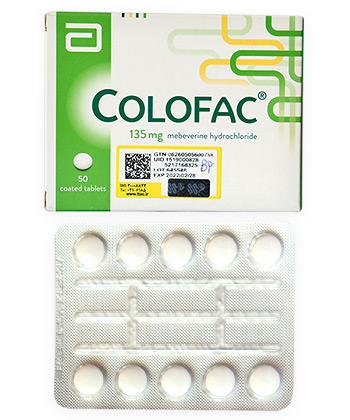
Colofac
- In many pharmacies Colofac can be purchased without a prescription (OTC) for small packs in some countries (for example UK/EU retail pharmacies), but in other countries—such as Australia, parts of Eastern Europe and Russia—it is prescription-only; online availability varies by local law and supplier.
- Colofac (mebeverine) is used to relieve abdominal pain, cramps and bowel irregularity in irritable bowel syndrome and other gut spasm conditions; it is an antispasmodic that relaxes intestinal smooth muscle and acts locally on the gut rather than producing prominent systemic anticholinergic effects.
- The usual adult dose is 135 mg tablet three times daily or one 200 mg prolonged‑release capsule twice daily; it is generally not recommended for children under 10 years and dose adjustments are rarely required for the elderly.
- Colofac is given orally as standard 135 mg tablets, 200 mg modified‑release capsules, or as an oral liquid formulation for those with swallowing difficulties.
- Symptom relief commonly begins within about 30–60 minutes after an oral dose, although individual response may vary.
- Duration of action depends on formulation: immediate‑release dosing effects typically last several hours (around 6–8 hours), while 200 mg prolonged‑release capsules are intended to provide coverage up to about 12 hours.
- Avoid excessive alcohol while taking Colofac—alcohol can worsen dizziness or other CNS effects and may aggravate gastrointestinal symptoms.
- The most common side effects are mild and may include headache, dizziness, gastrointestinal upset (nausea, diarrhea, constipation) and occasional allergic skin reactions.
- Would you like to try colofac without a prescription?

Key Findings From Recent Trials
Basic Colofac Information
- INN (International Nonproprietary Name): Mebeverine.
- Brand Names Available In United States: not specified.
- ATC Code: A03AA04 — Drugs for functional gastrointestinal disorders, specifically synthetic anticholinergics, esters with tertiary amino group.
- Forms & Dosages: Standard tablets 135 mg (1 tablet three times daily); Prolonged‑release capsules 200 mg (1 capsule twice daily); Oral liquid equivalent formulations for swallowing difficulties.
- Manufacturers In United States: not specified.
- Registration Status In United States: not specified.
- OTC / Rx Classification: OTC in some EU/UK pharmacies for small packs; prescription only in many other countries including Australia and much of Eastern Europe/Russia.
- Standard Dosages Per Condition: Adults — 135 mg tablet three times daily or 200 mg modified‑release capsule twice daily for IBS and nonspecific gut spasm.
- Dosage Adjustments: Not recommended for children under 10 years; usual adult dosing for elderly unless comorbidity suggests otherwise; use caution in severe hepatic or renal impairment.
- Typical Treatment Durations: Symptom-dependent, often several weeks to months; review if symptoms persist after two weeks.
- Missed Dose & Overdose Guidance: Take missed dose when remembered unless near next dose; do not double up; overdose rarely causes serious effects — seek medical attention if severe.
- Storage & Transport Guidelines: Store in original blister below 25°C (77°F), protect from moisture and light, keep out of reach of children.
- Absolute Contraindications: Hypersensitivity to mebeverine or excipients, known paralytic ileus, and certain hereditary carbohydrate absorption disorders for specific formulations.
- Relative Contraindications: Severe liver/kidney impairment, acute porphyrias, pregnancy (avoid unless necessary), breastfeeding (avoid unless necessary).
- Common Side Effects: Rare hypersensitivity (rash, urticaria), GI upset (heartburn, diarrhea, constipation), CNS effects (dizziness, headache, insomnia), very rare reports of angle‑closure glaucoma and false‑positive urine amphetamine screens.
- Competitors & Alternatives: Dicyclomine (Bentyl®), hyoscine butylbromide (Buscopan®), peppermint oil (Colpermin®), alverine citrate (Spasmonal®).
- Typical Use Cases: Relief of abdominal pain, cramps, and bowel irregularity in irritable bowel syndrome; chosen where anticholinergic side effects are a concern.
Major 2022–2026 Studies
Worried that the latest research might contradict what you read on forums?
There are limited large, high‑quality randomized controlled trials of mebeverine published in 2022–2026.
Most contemporary evidence guiding practice comes from older randomized trials, pooled clinical experience, regulatory summaries, and real‑world primary care use.
Recent trend papers and guideline updates emphasize symptom‑directed care for IBS rather than universal drug escalation.
Antispasmodics such as mebeverine remain an option for abdominal cramping, especially for patients who are sensitive to classic antimuscarinic effects like dry mouth or drowsiness.
Main Outcomes
What can patients realistically expect in terms of benefit?
Existing trials emphasize modest reductions in abdominal pain frequency and intensity with mebeverine use.
Effects on stool form and global IBS scores are variable between studies and patients.
Clinical practice tends to use mebeverine to target cramp‑related pain rather than to correct constipation or diarrhea alone.
Safety Observations
Is mebeverine safe for routine use?
Safety observations from recent case series and regulatory updates align with established labeling.
Reported adverse events are mostly uncommon and mild, with rare hypersensitivity and occasional GI upset.
Very rare safety signals include reports of angle‑closure glaucoma and false‑positive urine amphetamine tests.
Regulatory agencies (MHRA, TGA, Medsafe) continue to permit use with standard contraindications noted in product information.
Clinical Mechanism Of Action
Layman’s Explanation
Do cramps feel like sudden sharp contractions that stop you from getting through the day?
Mebeverine relaxes intestinal smooth muscle spasms that cause abdominal pain and cramping.
The effect is largely local to the gut, so most patients do not experience the dry mouth, blurred vision, or sedation that come with classic antimuscarinics.
That makes it useful for people who want cramp relief but cannot tolerate medications like dicyclomine (Bentyl®).
Scientific Breakdown
How does mebeverine work at the cellular level?
Mebeverine is classified under ATC code A03AA04 as a synthetic anticholinergic ester with a tertiary amino group.
Its clinical action appears to be more direct on smooth‑muscle membrane stabilization and modulation of calcium channels than on central muscarinic receptors.
Pharmacologically, it reduces abnormal gut contractions and spasm‑related pain.
Onset is usually within hours to days depending on formulation and symptom context.
Standard dosing options are 135 mg tablets TID or 200 mg modified‑release capsules BID, reflecting immediate‑release and MR kinetics.
Minimal systemic anticholinergic burden is consistent with reported adverse‑event profiles.
Scope Of Approved & Off‑Label Use
United States Approvals
Can you get colofac easily in the United States?
Mebeverine is marketed widely in many countries but its presence in the United States market is limited and not well documented in public registries.
Brand names listed by country include Colofac® and Aurobeverine® in the United Kingdom, Colofac® in Australia and New Zealand, and Duspatalin® in France.
Because colofac is uncommon in the U.S., clinicians more often prescribe alternatives such as dicyclomine (Bentyl®) when an antispasmodic is indicated.
Our online pharmacy stocks colofac without a prescription and offers discreet delivery to the United States in 5–14 days.
Notable Off‑Label Trends
Who might receive mebeverine off‑label?
Clinicians sometimes use mebeverine for functional gut spasm beyond classic IBS, such as postinfectious spasm or colonic spasm during diagnostic testing.
It is chosen when anticholinergic side effects pose a problem, offering a tolerable alternative to agents like hyoscine or dicyclomine.
Regulatory classification varies worldwide, with OTC availability in some EU/UK pharmacies and prescription‑only status in places such as Australia.
Use decisions focus on the patient’s symptom pattern and exclusion of contraindications like paralytic ileus.
Dosage Strategy
General Dosing
How should adults take colofac for cramping?
Standard adult dosing is 135 mg tablet three times daily or 200 mg modified‑release capsule twice daily for symptomatic relief of IBS or nonspecific gut spasm.
Children under 10 years are generally not recommended to use mebeverine due to limited data.
Elderly patients usually start on standard adult dosing unless comorbidities suggest caution.
Condition‑Specific Dosing
Does dosing change with IBS subtype?
For most IBS subtypes—IBS‑C, IBS‑D, and mixed—mebeverine dosing is the same because the goal is cramp control rather than shifting stool transit directly.
Typical treatment lasts several weeks to months depending on clinical response.
If symptoms persist after about two weeks, medical review and reassessment are recommended.
Missed doses should be taken when remembered unless the next dose is near; do not double doses.
Overdose rarely causes serious effects; treat symptoms and seek medical care if severe.
No formal dose reductions are established for renal or hepatic impairment, but exercise clinical caution in severe cases.
Safety Protocols
Contraindications
Who should not take colofac?
Absolute contraindications include known hypersensitivity to mebeverine or any excipients and known paralytic ileus.
Certain formulations may be contraindicated in hereditary galactose intolerance, Lapp lactase deficiency, or glucose‑galactose malabsorption.
Relative contraindications include severe hepatic or renal impairment and acute porphyrias.
Pregnancy has insufficient safety data, so avoid mebeverine unless clinically necessary.
Breastfeeding is generally advised against unless the benefit outweighs potential risk, as low levels may appear in milk.
Adverse Effects
What side effects should patients watch for?
Adverse effects are generally uncommon and mild, with hypersensitivity reactions such as rash or urticaria reported rarely.
GI complaints like heartburn, diarrhea, and constipation can occur.
CNS complaints such as dizziness, headache, tiredness, or insomnia have been described infrequently.
Very rare events include decreased pulse rate and cases of drug‑induced angle‑closure glaucoma.
There are isolated reports of false‑positive urine amphetamine screens after mebeverine use.
Patients should stop the medicine and seek care for signs of allergic reaction or serious visual change.
Interaction Mapping
Food Interactions
Do foods change how mebeverine works?
There is no strong evidence that specific foods meaningfully alter mebeverine efficacy.
Consistent administration relative to meals may help patients track symptom response, especially when symptoms are meal‑related.
Although very high‑fat meals can theoretically affect some MR formulations, product labels do not mandate food avoidance.
Drug Combinations To Avoid
Which drug pairings should trigger caution?
Mebeverine has relatively few clinically significant interactions according to product information.
Avoid combining it with medications that are absolutely contraindicated in paralytic ileus, or agents that could obscure acute abdominal symptoms.
Exercise caution when co‑prescribing multiple anticholinergic drugs since combined anticholinergic burden may still produce additive effects.
Monitor closely if other drugs affecting hepatic metabolism are used in patients with severe liver impairment.
Patient Experience Analysis
Survey Data
Will most people notice a real improvement with colofac?
Pharmacy reports and patient‑reported outcome themes commonly show reduced cramp severity and better daily comfort for many users.
Patients intolerant of classic antimuscarinic side effects often prefer mebeverine for tolerability.
However, not all patients respond and perceived benefit is variable across cohorts.
Forum Trends
What do online communities say about colofac?
Forum trends emphasize colofac’s favorable tolerability versus agents such as dicyclomine and Bentyl®, with less sedation and dry mouth reported.
Common complaints include variable efficacy and occasional GI upset or skin reactions.
Many patients ask about OTC availability and online purchase options, reflecting international regulatory differences.
Expectation management is crucial: mebeverine often reduces cramp pain but may not fully normalize bowel habits on its own.
Distribution & Pricing Landscape
How easy is it to buy colofac and how much will it cost?
Colofac (mebeverine) is manufactured by originators and numerous generic producers worldwide, including Abbott/Mylan (Viatris) and other regional firms.
Availability differs by country, with OTC small packs in parts of the EU/UK and prescription‑only status in Australia and many other regions.
Pricing depends on brand versus generic status, pack size, and local market regulation, with generics typically much cheaper.
Parallel imports and e‑commerce supply create price variability and occasional authenticity warnings, so purchase from licensed pharmacies when possible.
Alternative Options
Comparison Table
- Dicyclomine (Bentyl®) — Potent antimuscarinic antispasmodic with more anticholinergic side effects.
- Hyoscine Butylbromide (Buscopan®) — Effective antispasmodic with anticholinergic properties.
- Peppermint Oil (Colpermin®) — Evidence for IBS pain relief and favorable side‑effect profile.
- Alverine Citrate (Spasmonal®) — Another antispasmodic option used in some countries.
Pros And Cons
How does colofac stack up against its competitors?
Mebeverine’s key advantages are lower systemic anticholinergic activity and good tolerability for many patients.
Limitations include variable efficacy across individuals and limited availability in markets such as the United States.
Choose alternatives when anticholinergic side effects are acceptable or when stool transit adjustment is the primary goal.
Regulatory Status
National Agency Positions
What do regulators say about mebeverine?
MHRA (UK) authorizes Colofac and generics for OTC and prescription dispensing in certain pack sizes.
TGA (Australia) registers mebeverine as a prescription‑only medicine.
Medsafe (New Zealand) lists Colofac as registered with consumer and prescriber information available.
Regional registries such as ANMDMR (Romania) include mebeverine approvals for marketed products like Colofac and Duspatalin®.
Label Variation & OTC/Rx Distinctions
Why do labels look different between countries?
Label variations reflect formulation differences and country‑specific contraindications or warnings.
OTC availability is typically limited to small pack sizes in EU/UK markets, while prescription status in other countries ensures medical oversight.
Storage guidance commonly recommends keeping packs below 25°C and in blister packaging.
Consolidated FAQ
Common Patient Questions
What is Colofac?
Colofac is the brand name for mebeverine, an antispasmodic used to relieve IBS‑related cramping and abdominal pain.
What is the dosing?
Adults typically take 135 mg three times daily or 200 mg MR twice daily.
Is it safe in pregnancy?
Safety data are insufficient; avoid unless clinically necessary.
Is Colofac available OTC?
It is OTC in some EU/UK pharmacies for small packs but prescription‑only in many countries including Australia; availability in the U.S. is limited.
What are common side effects?
Rare rash or urticaria, GI upset, dizziness, and very rare ocular events or false‑positive urine amphetamine tests.
Is it suitable for children?
Generally not recommended under age 10 due to limited pediatric data.
How should it be stored?
Keep in original blister below 25°C and protect from moisture and light.
Clinician Quick Answers
What screening should prescribers do before starting mebeverine?
Confirm indication, screen for paralytic ileus and hypersensitivity, review pregnancy/breastfeeding status, and consider hepatic/renal caution.
Which formulation should be chosen?
Use 135 mg tablets TID for immediate dosing or 200 mg MR capsules BID when a twice‑daily schedule suits adherence better.
When to reassess?
Review efficacy after about two weeks and consider alternative or adjunctive therapies if benefit is insufficient.
Visual Guide
Tablet Vs MR Capsule Differences
Which form is which and why does it matter?
The 135 mg tablet is the immediate‑release form typically taken three times a day.
The 200 mg modified‑release capsule is formulated for twice‑daily dosing and should be swallowed whole.
Do not crush MR capsules as that can destroy the release properties and change tolerability or effectiveness.
Patient Counseling Infographic Points
- Purpose: Relieve cramps and abdominal pain in IBS.
- How To Take: Take at consistent times; swallow MR capsules whole.
- Timeline: Expect days to weeks for benefit; reassess if no improvement after two weeks.
- Watch For: Rash, severe dizziness, or vision changes; stop and seek care for allergic signs.
- Storage: Keep in original blister below 25°C, out of reach of children.
- Missed Dose: Take when remembered unless the next dose is imminent; do not double up.
Storage & Transport
Pharmacy Best Practices
How should pharmacies handle stock to keep potency intact?
Store mebeverine in its original blister packaging below 25°C and away from humidity and direct light.
Keep blister packs intact and segregate from bulk pantry storage to avoid degradation or misplacement.
For international shipping, verify local import requirements since some countries treat colofac as prescription‑only.
Patient Instructions
How should patients store and carry their medication?
Keep the product in the original blister, store below 25°C, and avoid exposure to moisture.
Do not use after the expiry date and return compromised packs to a pharmacy.
For large supply packs, advise patients to keep them in a cool, dry place and to check expiry dates before use.
Guidelines For Proper Use
Prescriber Checklist
What should prescribers document before starting therapy?
Confirm the indication, screen for absolute contraindications such as paralytic ileus and hypersensitivity, and note pregnancy and breastfeeding status.
Choose a formulation aligned with adherence needs and counsel the patient on expected timeline and rare but serious warnings.
Plan to reassess clinical response after roughly two weeks and document outcomes.
Patient Adherence Tips
How do you help patients stay on track with treatment?
Recommend consistent dosing times and clear instructions not to crush MR capsules.
Use simple reminders or pillboxes and reinforce that mebeverine is non‑habit forming.
Encourage tracking of symptoms with a simple diary or validated IBS symptom scale to quantify benefit.
Delivery Across United States
| City | Region | Delivery Time |
|---|---|---|
| New York | Northeast | 5–7 days |
| Los Angeles | West | 5–7 days |
| Chicago | Midwest | 5–7 days |
| Houston | South | 5–7 days |
| Phoenix | West | 5–7 days |
| Philadelphia | Northeast | 5–7 days |
| San Antonio | South | 5–7 days |
| San Diego | West | 5–9 days |
| Dallas | South | 5–9 days |
| San Jose | West | 5–9 days |
| Austin | South | 5–9 days |
| Jacksonville | South | 5–9 days |
| Fort Worth | South | 5–9 days |
| Columbus | Midwest | 5–9 days |
| Charlotte | South | 5–9 days |
Closing Notes For Clinicians And Patients
Are there simple rules to follow when choosing colofac?
Use mebeverine to target cramp‑predominant IBS or nonspecific gut spasm in patients who need a well‑tolerated antispasmodic with low anticholinergic burden.
Screen for contraindications such as paralytic ileus and hypersensitivity prior to starting therapy.
Advise patients on expected timelines, storage, and when to seek medical attention for allergic or ocular symptoms.
Consider alternative agents such as dicyclomine (Bentyl®), Buscopan®, peppermint oil, or alverine when clinical features or availability warrant a switch.
Document response and tolerability, and reassess after a short trial of approximately two weeks to determine ongoing need.